
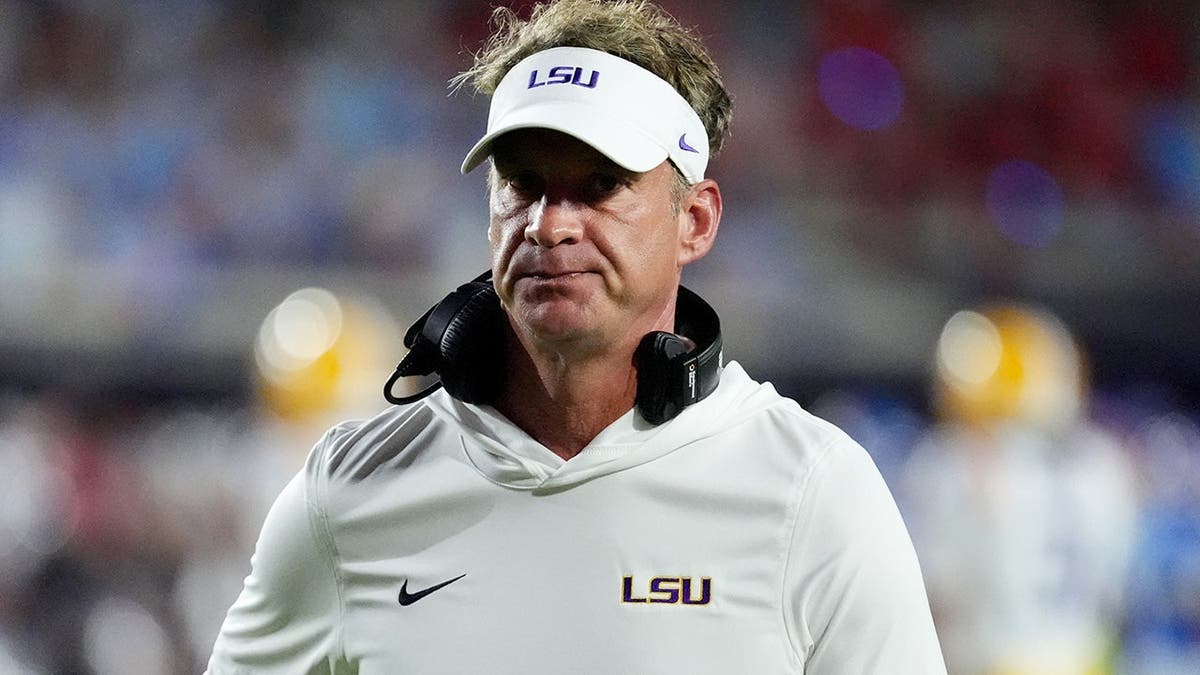
The scrutiny surrounding Lane Kiffin’s career is relentless. Many question his achievements, noting that despite the bluster surrounding him, tangible victories have often eluded him. His first season leading the LSU Tigers paints a portrait of inconsistency.
The Tigers showed promise with a decisive win over Clemson but faltered against Kentucky. A loss at Ole Miss was understandable yet problematic, representing the type of game Kiffin was expected to win. The team’s struggle with these challenges has left their College Football Playoff aspirations uncertain.
The remaining schedule poses substantial challenges. LSU faces Auburn on the road, hosts Alabama, then meets Texas in Baton Rouge, before traveling to Tennessee and concluding at Arkansas. The Tigers must navigate these hurdles successfully to remain in playoff contention, adding pressure on Kiffin.
Kiffin’s Concerns Over SEC Schedule
Kiffin’s discontent with the SEC’s new nine-game conference schedule surfaces frequently. He argues the math inherently leads to more conference losses, affecting team rankings. According to Kiffin, this structure burdens teams, impacting their depth and performance.
During a press conference, he highlighted the situation by pointing to Auburn’s performance. Kiffin indicated that stripping away their first SEC loss would elevate them significantly in rankings, suggesting the new schedule skews perceptions and outcomes.
Debating Metrics and Perceptions
Arguments surrounding metrics in college football often arise. While basketball and baseball have official ratings, college football lacks such formalized metrics. Yet, systems like ESPN’s SP+ rankings offer alternative assessments. This season, according to SP+, the Big Ten exhibits superior depth compared to the SEC, challenging the prevailing narrative.
Kiffin’s critique of the SEC’s hardship due to the schedule change seems conflicted. The SEC benefits from favorable poll treatment, with several two-loss teams ranked, unlike other conferences. These perceptions contribute to the broader debate about conference rankings and team performance.
As these narratives unfold, Kiffin remains steadfast in his views. His focus on the current dynamics of college football highlights ongoing discussions regarding schedules, rankings, and team evaluations.