
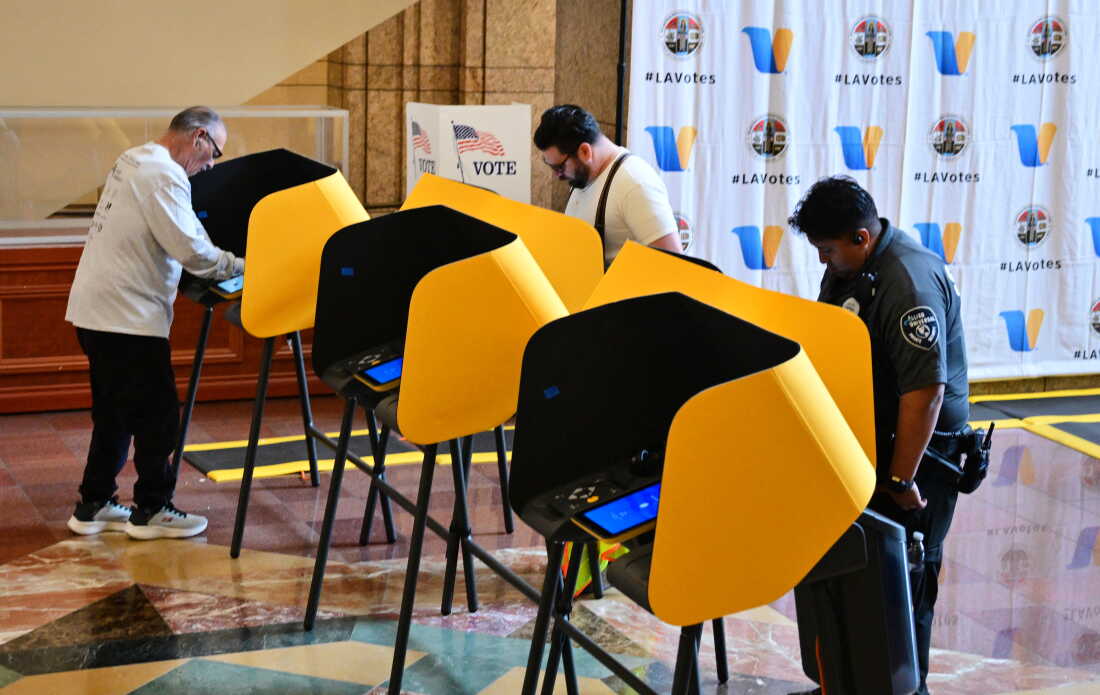
Voters participated in California’s state primary election at the Metro Headquarters Building in Los Angeles on June 2, 2026. The Department of Justice (DOJ) is requesting that California separate ballots from 20,000 individuals labeled as “likely” noncitizens. However, local officials find this list “unreliable,” noting that some individuals are listed as U.S.-born citizens.
California and local officials provided court filings on Tuesday in response to a federal lawsuit demanding ballot investigation before counting. The state argues that complying with the DOJ would violate election laws. “At best, this litigation is a reckless political stunt,” stated California in its filing, adding, “At worst, it threatens to disenfranchise thousands of Californians this election.”
This issue began when the DOJ delivered a list from Homeland Security identifying 20,000 “likely noncitizens” registered to vote. Initially, officials hesitated to examine the list due to security concerns. Later, the list was emailed for review. Los Angeles County Registrar Dean Logan’s filing shows only 7,035 of these names had local addresses, and some were duplicates.
Local officials sampled 200 names to assess data accuracy. Assistant Registrar-Recorder Monica Flores reported that 38.9% of the sampled records showed birth in the U.S., indicating citizenship. The Secretary of State’s site asks for birthplace in voter registration but doesn’t require it. Of the 200 examined, 112 had canceled or inactive registrations, with 70% lacking voting history.
The Trump administration has defended its noncitizen voter methodology without full public disclosure. Recent statistics on this issue have proven inaccurate. Acting Deputy Attorney General Trent McCotter acknowledged potential errors, stating, “There may be some names on there who it turns out ultimately are citizens; we’re not perfect,” and requested California’s cooperation.
DOJ deputy press secretary Kiersten Pels stated, “California cannot facilitate the violation of federal law.” Pels emphasized the importance of verifying ballots from listed individuals, a request California declined. On Monday, the DOJ charged 28 individuals from the list, including legal permanent residents, who may have registered unknowingly. Noncitizen voting research often points to misunderstandings, especially among green-card holders.