
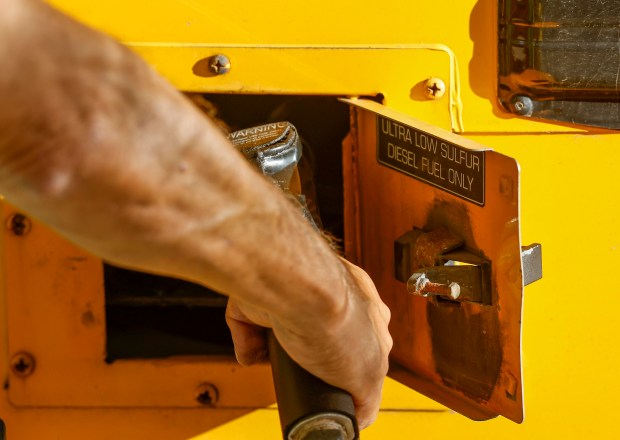
Suburban school districts, particularly those that operate their own bus fleets, are under strain from record-high diesel prices this fall. The wars in Iran and Ukraine, coupled with a power outage at the ExxonMobil refinery in Joliet, escalated diesel prices in Illinois, reaching a record average of $6.83 per gallon on September 23, as per AAA. Although prices have decreased to $6.58 per gallon, districts remain concerned.
Naperville Unit District 203, with over 120 diesel buses for its 16,000 students, is significantly affected. Lisa Xagas, District 203’s assistant superintendent of strategy and engagement, anticipates an additional $300,000 on fuel for the 2026-27 school year if current diesel prices persist. Earlier route optimization saved around 900 miles daily; however, high prices may still impact the budget.
Naperville allocated $15.6 million to transportation within a $370 million budget for the 2026-27 year. A $300,000 fuel increase raises concerns, with an existing $3.9 million budget deficit partly due to declining enrollment. Although reserves can temporarily cover the cost, Xagas highlighted potential tough decisions for the 2027-28 budget if fuel prices remain high. The district is awaiting electric buses ordered over a year ago and hasn’t planned for additional nondiesel vehicle purchases yet.
Elgin Area School District U-46, serving over 33,000 students with 331 diesel buses, also faces budget challenges. Allocating $2.6 million for 2027 fuel expenses, the district analyzes the diesel price impact. Marcy Murphy, U-46’s director of transportation, explores alternative-fuel technologies including electric and natural gas as potential solutions.
Palatine-Schaumburg Township High School District 211 transitioned from diesel to propane before the 2018-19 year, benefiting from propane’s lower costs, paying $1.15 to $1.40 per gallon. The district’s decision against electric buses stems from higher upfront and maintenance costs, as well as cold weather reliability concerns.
St. Charles Community Unit District 303 switched to gasoline-powered buses, minimizing diesel use. The district currently employs only 12 diesel buses, adapting to increasing diesel costs by optimizing usage strategies.
The Environmental Law & Policy Center’s Susan Mudd suggests electric buses offer more affordability and lower environmental impact than diesel. While propane outperforms diesel in reducing pollutants, it emits higher carbon monoxide levels. Long-term savings and government assistance make electric buses viable.
The Environmental Protection Agency’s Clean School Bus Program and ComEd’s Energy Affordability Program provide financial support to districts for adopting electric buses. Some districts benefit from federal grants, while others, like Naperville 203, face challenges due to insufficient state funds.
State reimbursement shortfalls exacerbate Naperville 203’s fiscal struggles. Illinois mandates 80% fuel expense reimbursement, but actual receivables fell short by $2.3 million in the 2026 fiscal year alone. State advocacy for increased appropriations lingers as a priority for fuel cost management.
GasBuddy’s Patrick De Haan forecasts potential diesel price reductions following the Joliet ExxonMobil plant’s return to operation, though significant drops depend on geopolitical developments involving the U.S., Ukraine, and Iran.