
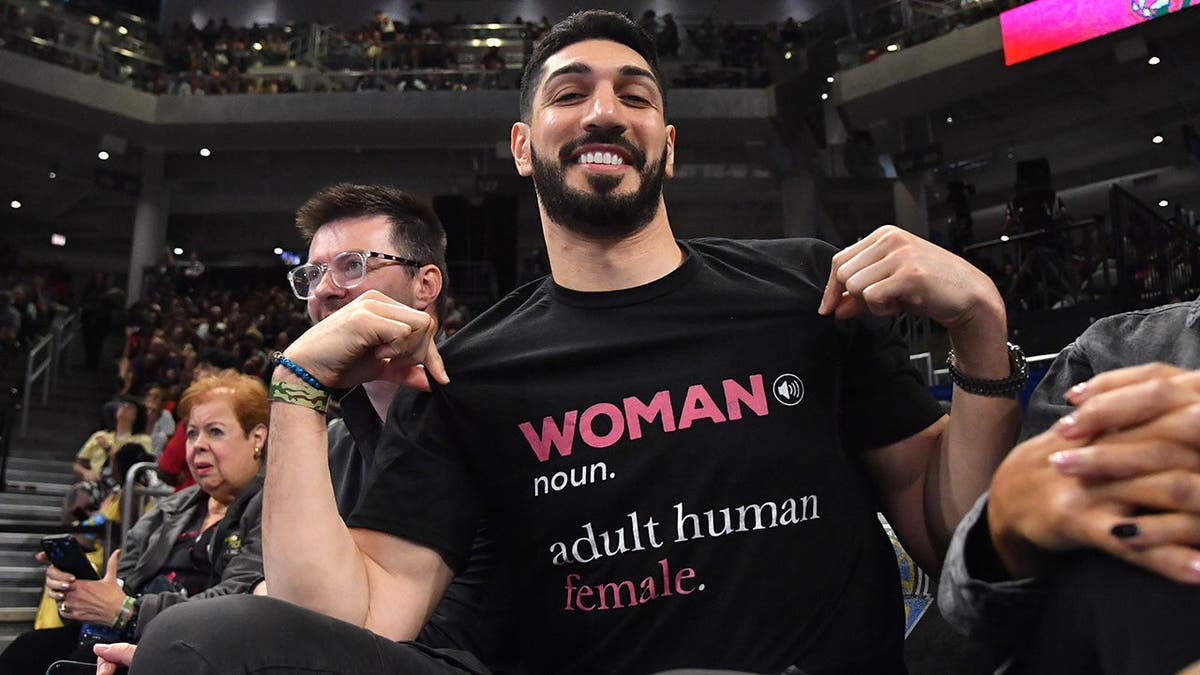
WNBA Commissioner Cathy Engelbert addressed inquiries from Republican lawmakers about the eligibility of former NBA players Enes Kanter Freedom and Royce White, stating they are ineligible for the league due to being men. Engelbert’s response, dated October 16, highlighted that the WNBA is only open to women, as requested in a letter by Rep. Marlin Stutzman and others concerned about eligibility and safety issues.
The lawmakers queried the league’s definition of ‘women’ under its collective bargaining agreement, which does not explicitly define the term but states that only women qualify to play. Stutzman welcomed Engelbert’s acknowledgment, viewing it as a biological distinction rather than based on self-identification.
Enes Kanter Freedom has contested this, questioning Engelbert’s ability to be certain of his ineligibility without a clear definition of what the WNBA considers a woman. Freedom argued his identity should be respected, expressing a desire for the league to adopt a clear policy limiting participation to biological females.
Freedom’s intent to push the league towards such policies sparked further debate, especially following supportive comments from other league figures about excluding transgender athletes. This discussion was intensified by the contrasting views within the league, as some players and coaches have voiced support for transgender inclusion. The issue of eligibility was further complicated by the league’s ongoing conversations without a concrete resolution.
The WNBA has also been scrutinized for its disciplinary procedures and handling of player-spectator confrontations, sparked by incidents involving players Natasha Cloud and Sophie Cunningham. Engelbert defended these processes, emphasizing consistency in rule enforcement and the league’s commitment to upholding a code of conduct for fans, which includes ejection for violations.
Freedom, who was ejected from a game due to conduct issues, later filed a lawsuit claiming his rights were violated. The league has faced critiques over inconsistencies in disciplinary actions, such as differing outcomes for similar confrontations.
The WNBA’s broader issues extend to national anthem protests, with players leaving the court during the anthem, drawing criticism from lawmakers like Stutzman who demand respect for national symbols.
Engelbert’s letter reaffirmed the league’s dedication to protecting its players and addressing online hate. She is set to retire in 2026; Freedom hopes her successor will make eligibility criteria explicit by specifying ‘biological females,’ which he believes would resolve his challenge.
In his comments, Freedom asserted his intention to continue his pursuit for inclusion unless the rules explicitly change. With his NBA experience, he demands clear policy explanations rather than simple declarations of eligibility status.