
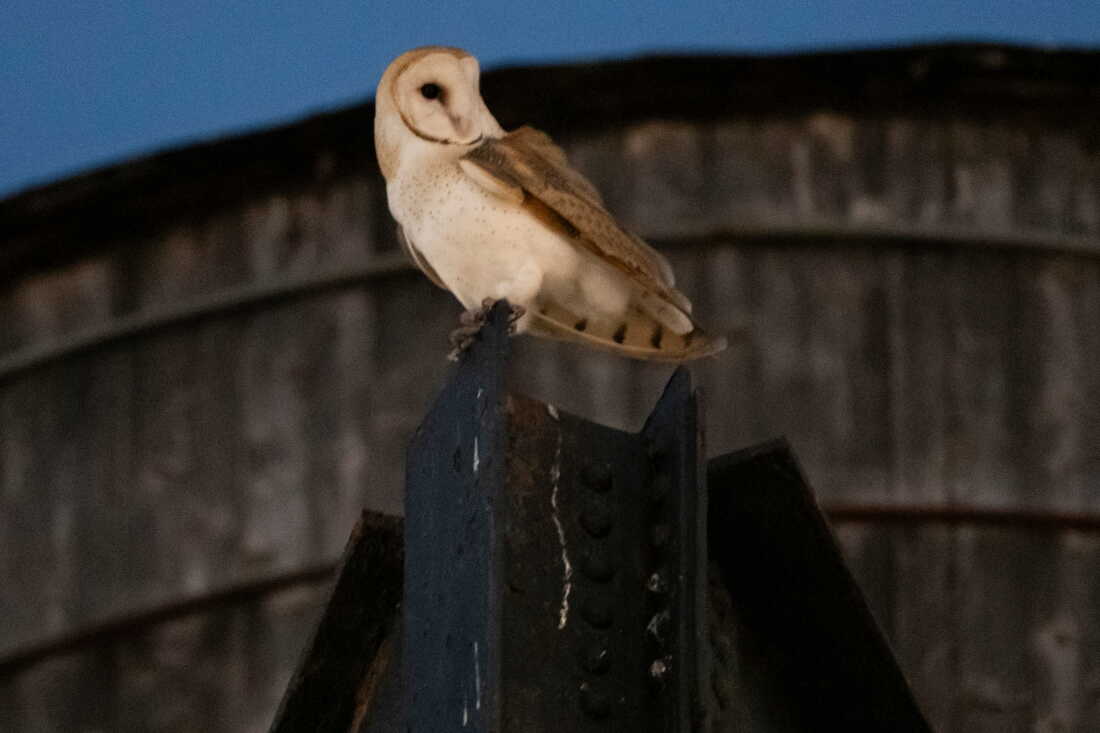
On October 14, 2026, an American Barn Owl perched on a water tower in New York’s Upper West Side. This neighborhood near Central Park has recently become home to a family of barn owls, marking the first recorded instance of such nesting in Manhattan’s modern history. These owls have drawn crowds eager to catch a glimpse of the elusive birds.
Andrew Farnsworth, a migration ecologist from the Cornell Lab of Ornithology, noted the significance of the event. According to Farnsworth, this is an unprecedented occurrence in Manhattan, a city where barn owl nesting has not been documented historically.
The owls gained public attention after Upper West Side resident Elisabeth Williams notified the local news on October 6. Williams and her husband were surprised by the presence of multiple owls atop a building near Central Park West. Initially spotting a single owl on an apartment windowsill, this encounter highlighted how unexpected nature experiences can be in a city environment.
Rare barn owl sightings have added to New York City’s bird-watching culture. Although other birds, like the American woodcocks and Pale Male, have captivated residents, barn owls remain scarce due to their declining population in New York, as reported by the state Department of Environmental Conservation.
Jessica Wilson, executive director of NYC Bird Alliance, addressed the excitement among locals. Owls, known for their nocturnal and secretive nature, pique interest and intrigue. Their presence on the Upper West Side offers a unique opportunity for bird enthusiasts and casual observers alike.
Photographers and curious onlookers regularly gather, hoping to spot the barn owls. Val Coleman, a retired resident, noted the rarity and expressed concern about the owls consuming poisoned prey.
David Barrett from Manhattan Bird Alert reported sightings of adult owls and fledglings, some carrying rodents back to their perch. He emphasized the newsworthy nature of the owls breeding for the first time in Manhattan.
Local residents had previously heard unusual screeching noises attributed to barn owls. These sounds led to confusion, with Thomas Obersteiner mistaking them for distress signals before realizing their origin.
Obersteiner, leveraging his well-positioned roof deck, has welcomed photographers keen to watch the owls. Witnessing 20 observers one night, he remarked on the fun and serious nature of the owl enthusiasts.
Williams and her husband, initially unfamiliar with bird watching, now consider joining the ranks of birders after their delightful experience with the barn owls.