
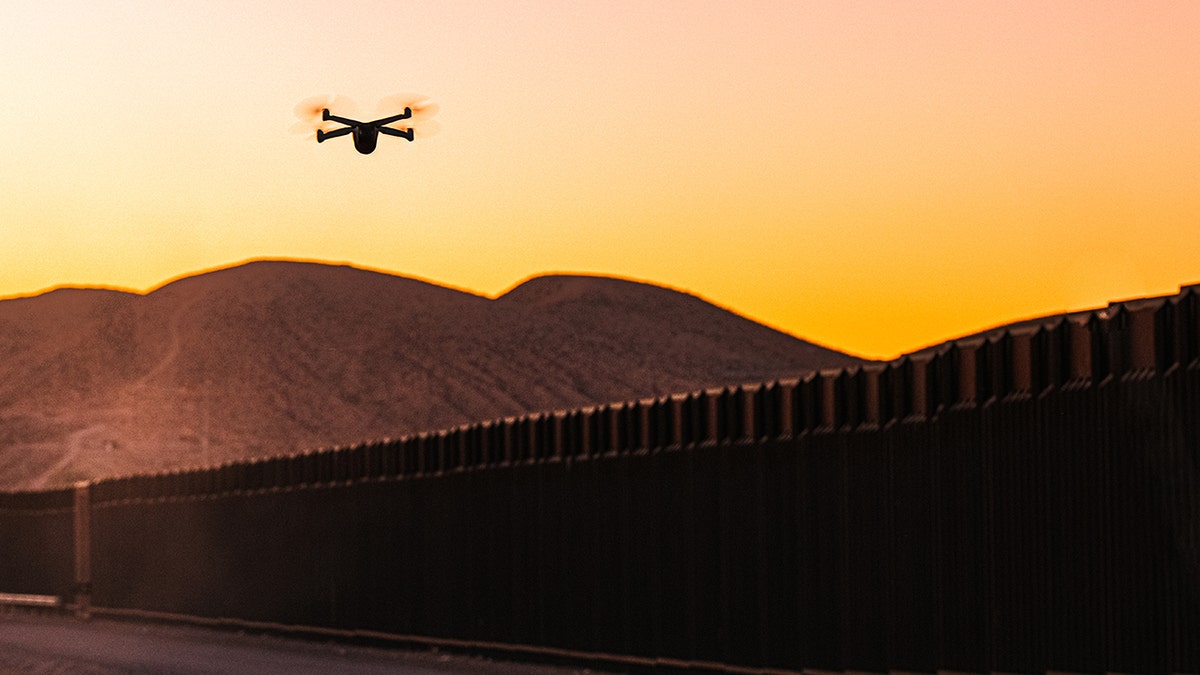
Mexican cartels are reportedly using commercial and modified drones for surveillance against U.S. security personnel along the southern border. These drones help the cartels map patrol routines and support smuggling activities. U.S. authorities are intensifying efforts to neutralize these aircraft.
Brig. Gen. Brian Filler of Joint Task Force-Southern Border revealed that, over the past 30 days, the U.S. military detected 378 drone incursions at the border. The drones are mostly commercial, equipped with cameras for surveillance, linking them to smuggling and human trafficking.
Austin Doctor, who directs strategic initiatives at the National Counterterrorism Innovation, Technology, and Education Center, remarked on the drones’ use, stating their common application is surveillance and reconnaissance. By doing so, cartels establish patterns of U.S. security personnel’s movements and facilitate smuggling operations.
A new Arizona law permits law enforcement to shoot down drones suspected of criminal activities along the U.S.-Mexico border.
A U.S. Customs and Border Protection spokesperson highlighted the growing threat: Unmanned Aircraft System technology advancements present persistent threats, including counter-surveillance, illicit cargo movement, and potential kinetic attacks.
Cartels increasingly exploit drones for various illicit activities such as monitoring law enforcement, scouting crossing points, and coordinating smuggling operations. In fiscal 2025 alone, CBP detected over 42,000 near-border UAS flights, and over 37,000 in fiscal 2026. This showcases the magnitude of this challenge.
The Department of Homeland Security has granted Counter-UAS authorities to CBP under congressional authority (6 USC 124n). U.S. Border Patrol operates across the Southwest border, extending up to 100 miles inland, for detecting, identifying, monitoring, and tracking drones.
Doctor explained cartels’ reliance on commercial drones, noting the emergence of more sophisticated aircraft, such as larger agricultural drones. Cartels innovate their drone designs, focusing on payload sizes, countermeasure resistance, and operational capabilities.
Weaponized drones are more common inside Mexico, with cartels using them for kinetic attacks on rivals, civilians, and local security forces. NCITE research identifies the Jalisco New Generation Cartel as a significant driver of drone innovation within Mexico.
Border regions’ capacities to support these activities are evident from past events. A 2025 seizure in Reynosa, Tamaulipas, involved soldiers and state police detaining a man and seizing various explosives and drone-related equipment.
In October 2025, Baja California prosecutors reported drone-delivered explosive attacks in Tijuana, albeit without injuries. Mexican authorities described this as criminal retaliation but did not publicly identify the responsible cartel.
Doctor emphasized that border regions remain critical hubs for facilitation, with increased risk of kinetic attacks.
Mexico’s response includes interdictions, counter-drone equipment, military actions, and new criminal penalties. The Águila Alta operation in Tijuana-San Diego neutralized five drones, with coordination facilitating deterrence against criminal activity.
In 2024, Mexico enacted federal laws criminalizing certain drone-related conduct, including explosives dropping, aircraft adaptations for weapons or drugs, and surveillance of public officials.
Recent operations in Tamaulipas deployed 500 soldiers, National Guard members, helicopters, drones, and mobile and fixed counter-drone systems. Operation Sable’s Navy personnel also engaged in the effort.
A Department of War spokesperson stated that Joint Task Force-Southern Border, CBP, and the Department of Homeland Security utilize layered monitoring and detection systems to address threats.
While it remains unclear how many drones are operated by cartels or which groups control flights, Doctor warns that cartels will continue to innovate and adapt, making increased counter-drone resources essential.