
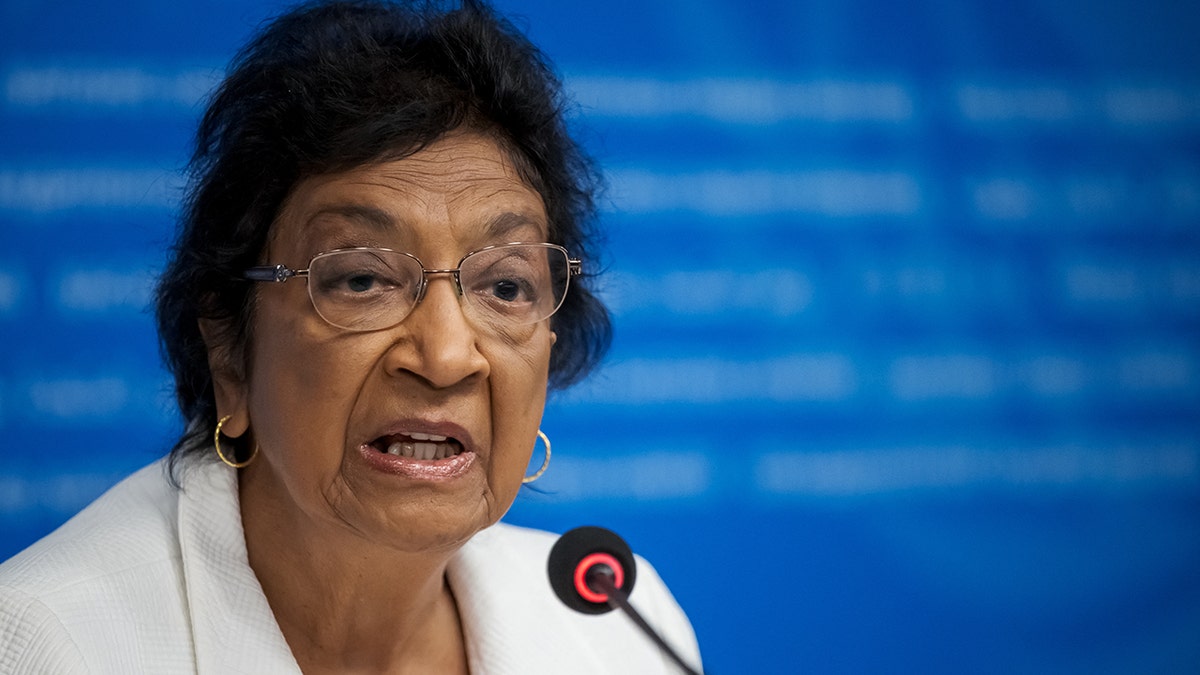
Alfred Nobel envisioned the Peace Prize as a recognition for those who made significant advancements in promoting peace among nations. Today, the prize seems to often target the international activist community. Such individuals typically echo popular sentiments, support notable causes, and align with the political outlook of certain progressive circles. The 2025 award to Navi Pillay exemplifies this shift.
Pillay gained recognition for chairing a U.N. commission that accused Israel of genocide in Gaza. Her selection appears to validate a U.N. culture where anti-Israel sentiment is seen as morally significant rather than detrimental. Her actions have often sparked controversy. For instance, after the bombing of Denmark’s embassy in Pakistan over the republishing of Muhammad cartoons, Pillay allegedly advocated for censorship rather than defending free speech. Similarly, her response to the Charlie Hebdo incident was perceived as blaming the publication for provoking unrest, rather than focusing on the violent reactions.
In 2022, she supported Miloon Kothari after he controversially spoke about a “Jewish lobby” controlling social media, although Kothari later apologized. This led to an event honoring Pillay in Berlin being cancelled when the mayor withdrew support due to her views. Reports suggest she declined to attend the Nobel ceremony for the imprisoned Chinese dissident Liu Xiaobo in 2010, citing a scheduling conflict amidst external pressure from Beijing.
The Nobel Committee has a history of contentious decisions. For example, Yasser Arafat received the award in 1994 despite his association with violent acts. In 1973, Henry Kissinger and Le Duc Tho were awarded for a Vietnam ceasefire negotiation that fell apart; Tho refused the award. In 2007, Al Gore and the Intergovernmental Panel on Climate Change were honored for their climate advocacy—an area not aligned with Nobel’s original peace vision. Similarly, Barack Obama received the prize in 2009 early in his presidency, before any major diplomatic success.
There is a distinction between advocating for peace and actively pursuing it. True peace-making entails diplomacy, compromise, and forming alliances. It often lacks glamour and avoids the spotlight of international conferences. The Abraham Accords serve as a practical example. These agreements normalized relations between Israel and several Arab nations, fostering trade, investment, and security cooperation. These working relationships replaced longstanding hostility.
The Nobel Peace Prize committee, appointed by Norway’s parliament, holds the power to identify individuals representing top moral standards. Often, they select people who echo their own progressive biases. While the Oslo-based Nobel Foundation can’t reclaim control due to Nobel’s will, the committee’s decisions can be critiqued. The prize should not continue to receive unquestioned reverence.