
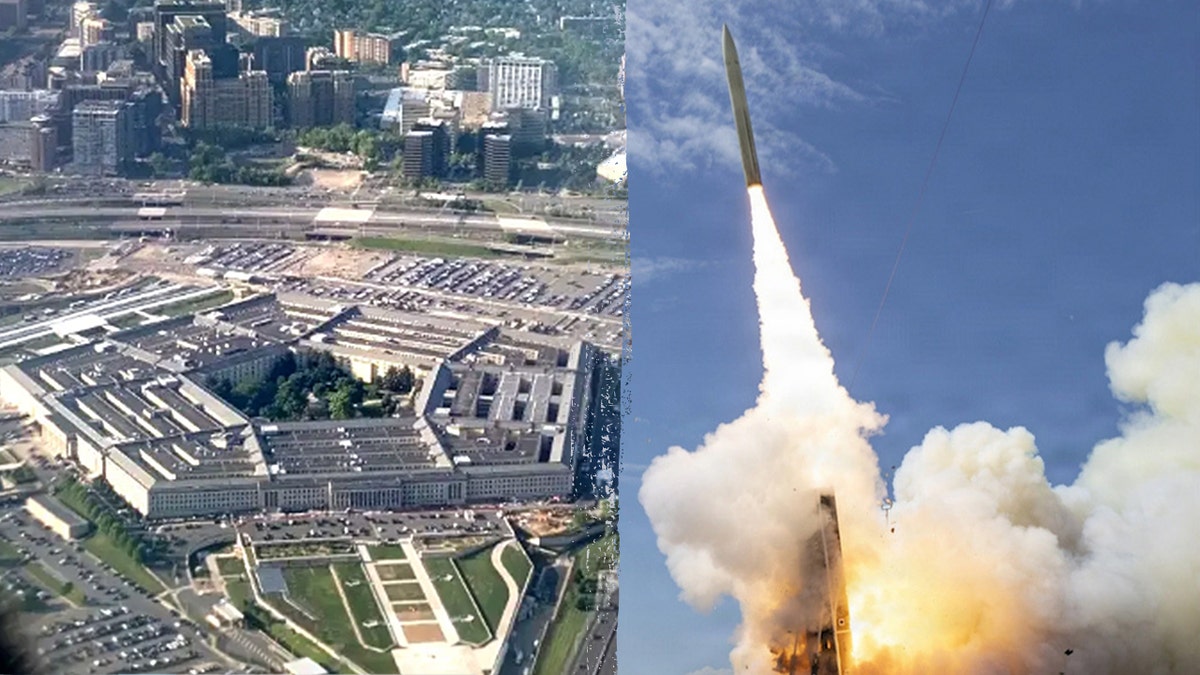
The U.S. is focusing on replenishing its missile stockpile while expanding its arsenal through the development of new weapons, including hypersonic missiles. Mark Cancian, a retired U.S. Marines colonel and senior advisor at CSIS, emphasized the need for a range of missiles, from affordable options to high-end systems like Patriot, along with hypersonic innovations.
Hypersonic weapons are gaining attention for their speed and maneuverability, traveling over five times faster than sound. Cameron Tracy, a UC Berkeley Senior Research Scholar, noted the shift in perception, with hypersonic systems seen as novel and revolutionary compared to traditional ballistic missiles.
Defense startups are working to make hypersonic missiles more affordable and producible, responding to Pentagon’s interest in expanding the arsenal. Despite their potential, hypersonic weapons come with high costs. The Government Accountability Office estimates that the Army’s long-range hypersonic weapon, the Dark Eagle, costs over $40 million per unit. The Navy’s cost for equipping Zumwalt Destroyers with hypersonics reaches $70 million per missile, including technology development costs.
There is optimism that prices will decrease as production scales up, as mentioned by Xiaodon Liang, a senior policy analyst for arms control. However, costs remain substantial when compared to other missile types. For instance, Tomahawk missiles are priced at $2.6 million, while Patriot missiles cost nearly $4 million. Precision Strike Missiles come at $1.6 million each, allowing for significantly more purchases compared to a single hypersonic missile.
Hypersonic weapons offer capabilities such as fast travel and abbreviated adversary reaction time—estimated to be sixfold shorter than with conventional missiles. These features enhance both defense evasion and strike effectiveness, leading to potentially fewer missiles needed for similar missions.
Costs are being tackled by startups offering cheaper production, like Castelion’s Blackbeard hypersonic weapon, priced under $500,000. The Army and Navy are investing in this initiative, anticipating large-scale production. Castelion plans to build the largest hypersonic weapon production factory in the U.S., projected to produce thousands annually. These weapons will support integrations into systems like the U.S. Navy’s F/A-18 Super Hornet Jets and the Army’s HIMARS.
The advantage of hypersonics lies in their speed, distance, and maneuverability, making them hard to counter, according to Bryon Hargis, Castelion’s co-founder and CEO. This enhances deterrent capabilities by maintaining responsiveness and survivability.
Though hypersonic weapons promise breakthroughs, concerns persist regarding their accuracy. Developers are engaging internationally on missile launches and intended targets, mitigating risks of misinterpretation, like potential decapitation strikes.
Technological improvements are anticipated with increased testing experience, as highlighted by Tracy. Rocket Lab is collaborating with the War Department, aiming to advance capabilities through frequent test launches using their HASTE program. HASTE is a suborbital test vehicle derived from Rocket Lab’s Electron rocket, serving government needs in hypersonic and missile defense improvements.
The testing approach encourages risk-taking and technology development by increasing test frequency and lowering costs. Despite extensive exploration in hypersonics, the U.S. military has yet to deploy these weapons operationally. Discussions have considered their potential use in regions like the Middle East.