
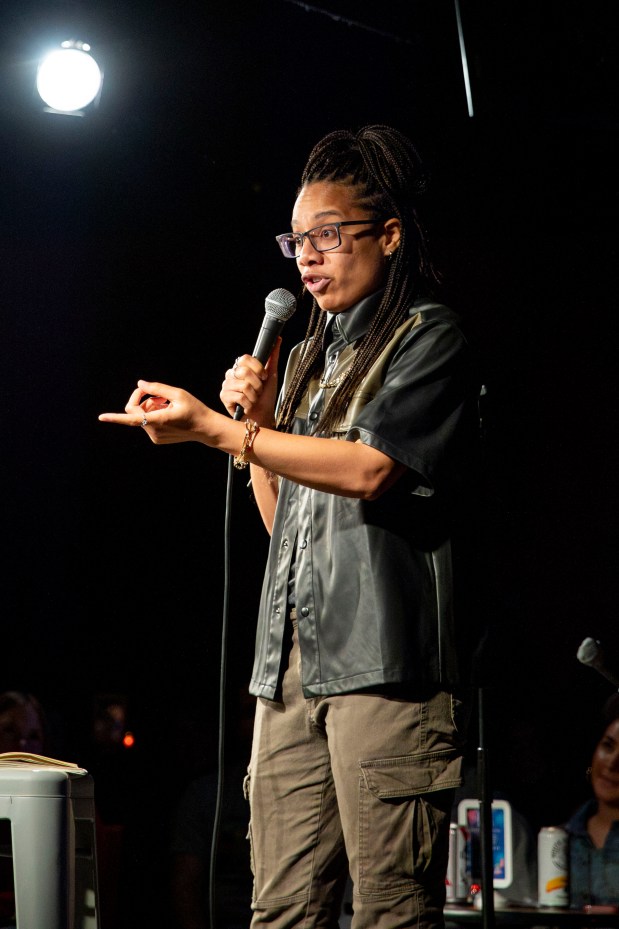
Letonia Copeland-Hardin is keenly aware of the necessity of earning audience trust. As a postdoctoral researcher at the University of Chicago, she achieves this with community members while studying the impact of pollutants on cancer risks. As a stand-up comic, she connects with the audience on stage. Now, combining both careers, she brings these skills to fellow researchers. Together with Myeshia Shelby and comic Kelsie Huff, she developed the workshop and curriculum, “Reading and Working the Room.” This free resource teaches scientists how to use stage techniques to enhance engagement with research communities.
Copeland-Hardin’s love for comedy started young; she even aspired to be a stand-up comedian when she was 9. Yet, it wasn’t until 2019, a decade into her research career, that she pursued comedy. “I started comedy to handle the stress and isolation in graduate school,” she shared. While her two careers seem different, “Reading and Working the Room” shows their intersection. Her community-engaged research involves collaboration with communities rather than researching them from the outside. “You work with community instead of on communities,” Copeland-Hardin explained. Given their work with Chicago communities historically harmed by scientists, trust-building is essential.
Performing under the name LT, Copeland-Hardin is adept at connecting with audiences. During The Lincoln Lodge’s Future of Comedy Festival, she invited the audience into her act with the question, “Y’all are familiar with Froot Loops, right?” This brought complexity and humor, as she connected on scientific topics like dissecting a fruit fly’s brain. The audience’s willingness to engage showed the potential for similar techniques among researchers.
Copeland-Hardin aims for the curriculum to help researchers build public trust, addressing a gap in scientific communication. While not all research discussions need to be humorous, engaging personally can restore community trust and enhance data quality. “Reading and Working the Room” is accessible as a standalone workshop. “Anyone interested can access it on zenodo.org,” she mentioned, noting the support from Research!America. They sought curricula addressing public engagement gaps in science. “As scientists, it is our duty to share knowledge with the public,” she asserted, rooted in her desire to connect with audiences, communities, or fruit flies alike.