
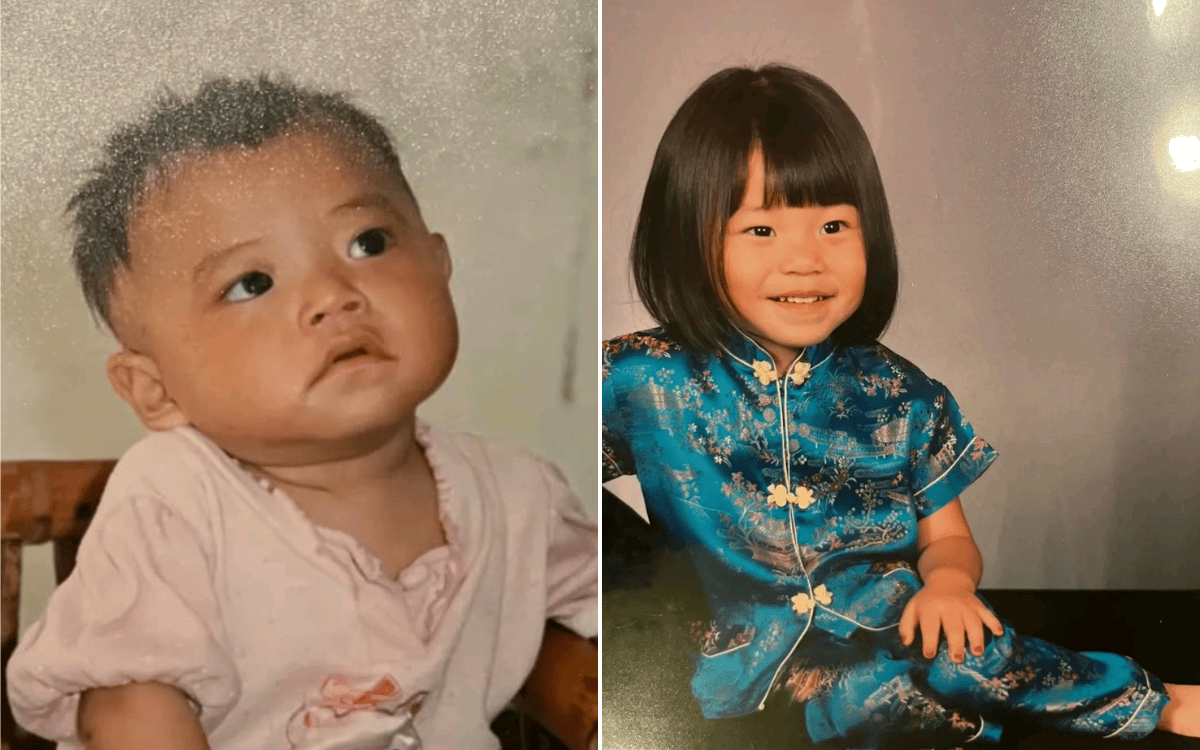
I grew up in Memphis, Tennessee, but my story began in China. At just three days old, I was left on a sidewalk in Nanchang, Jiangxi Province. For years, the idea of finding my birth family seemed impossible. This chapter of my life was closed until I had children. Social media made the once impossible seem possible, prompting me to share my journey.
I always knew I was adopted. It wasn’t a secret in my family. However, reading documents that labeled me as an “officially abandoned child” made it real that my biological family had left me. Initially, it felt negative, but my adoptive mom always believed they wanted a better life for me. As a child, this belief offered comfort, though I have doubts as an adult.
When I was 14 months old, I was adopted from an overcrowded orphanage where I was extremely sick with pneumonia. My mom feared I might not survive our first night together. The staff couldn’t care for sick babies effectively, and matching with a family saved my life. Once adopted, I received the care I desperately needed.
I have fond memories of my upbringing, filled with family activities like fall festivals and Christmas lights. My grandmother often said, “Of all the beautiful little girls, God brought you here from China to be my precious angel.” Such phrases captured the love and inclusion I felt growing up.
School presented challenges. I faced teasing about my adoption, but it subsided as classmates understood. College brought new encounters, causing me to reflect more deeply on my Chinese heritage. I daydreamed about my birth family, imagining a mother in a yellow dress and siblings. I treated my past as inaccessible and feared seeking more information. It wasn’t until college that I even researched my birth city, surprised to find it modern rather than the rural, poor place I had imagined.
At seven, I visited China with a program for “lost girls,” exploring cities like Beijing and Shanghai. It was impactful, yet I was too young to fully grasp its significance. Today, my feelings on my abandonment continue to evolve. I often wonder what my biological mother endured to make such a decision.
Motherhood altered my understanding of adoption. In 2021, I had my daughter, experiencing profound change. Holding a blood relative—someone who resembled me—was transformative. The birth of my son only enhanced this realization. Contemplating my tiny self at three days old, I grieved during postpartum but with immense joy.
Becoming a parent shifted my identity. I no longer see myself solely as an adopted child disconnected from Chinese culture. Now, I’m a Chinese mother raising Chinese children, embracing the responsibilities that come with it. My daughter, now in kindergarten, learns alongside me about Chinese culture through books and stories about my adoption.
I am beginning the search for my birth family. Alongside another adoptee from the same orphanage, we’re planning DNA tests and reaching out to organizations like the Nanchang Project and Baobeihuijia. My goal is to learn about my family history without causing them distress, understanding more about my abandonment circumstances.
While my knowledge of the one-child policy and its impact is limited, I recognize my fortune. I was adopted by loving parents and extended family who welcomed me warmly. This isn’t lost on me as I ponder the life I could have led had I stayed in China.
If I ever meet my biological parents, I want them to know: “I hope my life reflects what you wished for me when you made your decision.” While I can’t alter the past or fully grasp their reasons, I hope the life I’ve built shows their risk was worth it.
Currently, I am a stay-at-home mom planning to return to work. My ambitions have shifted over time, realizing that my family and current life represent my true pinnacle. This understanding comforts me and stirs anticipation for the future.