
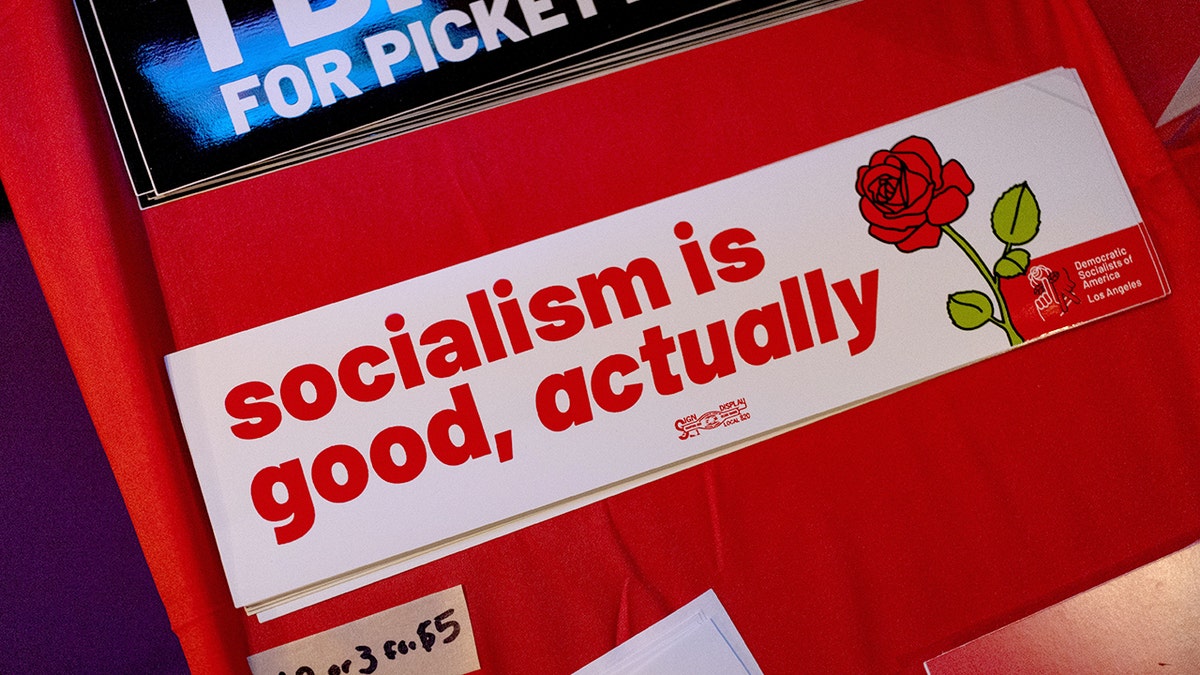
Recent developments show an increasing presence of candidates aligned with the Democratic Socialists of America (DSA) in state legislative races. This movement has caught the attention of the Republican State Leadership Committee (RSLC), who argue that such a trend might redefine the Democratic Party.
Reports indicate that at least 65 candidates with DSA affiliations will compete for state legislature seats in the upcoming general election. The RSLC predicts these races could have a lasting impact on the future of the Democratic Party.
“The statehouse trend is relevant, as several DSA-aligned Congressional candidates in 2026 have emerged from state and local organizing,” stated a memo from the RSLC. “These wins show how movement organizations can train candidates locally, equip them with political skills, and support their future Congressional campaigns.”
DSA-backed candidates occupy a crucial space not only in shaping state legislatures but in preparing for higher office. This influence provides them with governing experience, donor networks, and organizational capacity for future political endeavors.
Republicans have identified candidates who are either members or endorsees of DSA, or self-identify with the organization. Many of these candidates hold positions on issues that some voters find radical, such as the defunding of police, implementing leftist economic policies, and advocating for race-based reparations.
Police Reform and Radical Policies
Opposition to traditional policing has been a focal point among DSA-aligned candidates. New York State Senator Jabari Brisport, for instance, advocates for ending policing and incarceration, along with decriminalizing prostitution to enhance community safety.
Wisconsin State Rep. Ryan Clancy claims policing lacks dignity and value, attributing its origins to historical practices he sees as racist. He asserts that American policing cannot be reformed due to its foundational issues.
Rhetoric and Economic Focus
New Mexico’s State Rep. Eleanor Chávez has termed Immigration and Customs Enforcement “fascist.” Republicans warn that such speech might incite violence against law enforcement.
Despite vocal social positions, the DSA emphasizes economic goals. For example, New York Assemblywoman Sarahana Shrestha supports acquiring Central Hudson Gas & Electric Corp. to reduce costs, while Dylan Wegela in Michigan favors state control of utilities.
Shrestha believes that voter-friendly policies from DSA-aligned lawmakers can significantly influence the Democratic Party’s future path.
Impact and Concerns
While some in the Democratic Party view Republican attempts to associate them with socialism as misleading, others acknowledge the growing influence of the DSA among Democrats.
Republican interests focus on connecting mainstream Democrats to the DSA. A recent Fox News poll found 55% of voters have an unfavorable view of the DSA.
Although DSA gains get considerable attention, their candidates represent a minor segment of statewide legislative seats, prompting questions about their movement’s true extent.
“Socialism starts in the states and that is where we need to stop it,” the RSLC memo claims. “The DSA’s expansion in state races could dangerously shape state policies in the near term and shows an organized effort to establish power from state-level up.”