
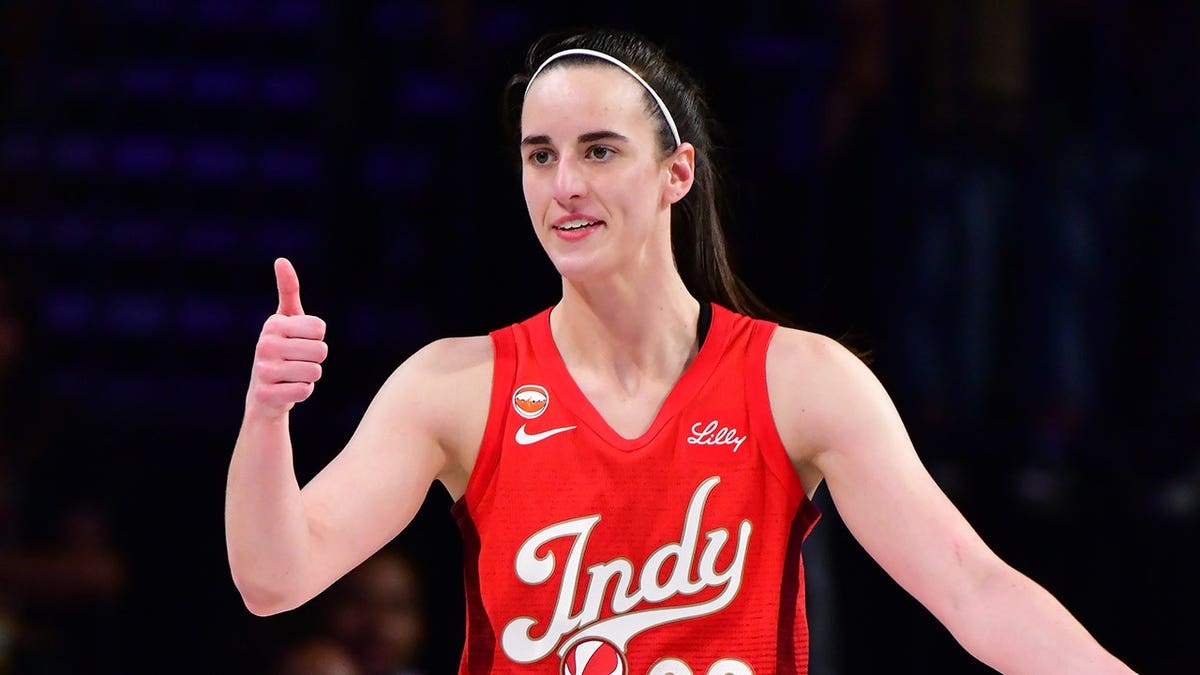
Riley Gaines and Louis Barker recounted their courtside experience at an Indiana Fever game, highlighting the standout performances of Caitlin Clark and Kelsey Mitchell, as well as a different atmosphere compared to a previous trip to Minneapolis for the WNBA. New episodes of The Riley Gaines Show are available every Tuesday and Friday at 10 a.m. ET.
The Indiana Fever’s regular-season games on major networks averaged significantly more viewers than WNBA semifinal openers on October 4. Those playoff games aired on ABC and NBC. Independent from the FOX newsroom, an OutKick review revealed that Indiana’s 10 regular-season games on networks like ABC, CBS, and NBC averaged around 2.32 million viewers. Conversely, the two semifinal openers attracted about 1.16 million viewers.
The Indiana Fever’s games consistently attracted higher viewership, illustrating Caitlin Clark’s influence on the WNBA’s television ratings.
For instance, New York–Atlanta’s Game 1 averaged 1.2 million viewers on ABC. Meanwhile, Las Vegas–Golden State averaged 1.12 million on NBC and Peacock, according to NBC data shared with OutKick.
Interestingly, Indiana’s first-round opener against Las Vegas garnered 2.11 million viewers on ABC, despite competing with the NFL. It drew approximately 76% more viewers than a New York–Atlanta semifinal on the same network a week later. Despite the increased stakes in the playoffs, the audience decreased, emphasizing Caitlin Clark’s importance to the WNBA’s television business.
The Fever’s regular-season viewership consistently exceeded that of the semifinal openers. Even Indiana’s smallest major network audience was larger. Their May 30 game against Portland on CBS drew nearly 1.3 million viewers, despite a subpar performance from Clark. A regular-season game against Portland saw more viewers than either semifinal opener in October.
On the higher end, Indiana’s August 23 game against Chicago averaged 3.31 million viewers on NBC and Peacock. In July, a game against Las Vegas attracted 2.64 million viewers. In a comparison, New York and Indiana’s regular-season meetings on CBS each exceeded 2.5 million viewers, while the Liberty–Dream semifinal drew 1.2 million on ABC.
Angel Reese’s statement that people watch women’s basketball “because of me too” was put to the test when New York games with Indiana drew over twice the audience compared to Reese’s Dream in the semifinals.
Atlanta’s first-round game captured 1.2 million viewers on ESPN, a figure lower than a Dallas–Golden State match the same night. Although the Fever’s numbers were more robust, the WNBA found success with its semifinal viewership.
Clark’s arrival in 2024 propelled the WNBA to consistently achieve over a million viewers, a feat last seen in 2008. This represents significant progress for the league.
The two semifinal openers saw about a 10% increase in viewership over last year’s pair. Sports Media Watch ranked these second and third among semifinal Game 1 audiences since 2016. The leading opener was last year’s Fever–Aces game, which attracted 1.4 million viewers.
Encouragingly, Indiana’s pull continued in this year’s regular season, with a June 27 game against Los Angeles drawing 1.57 million viewers on CBS, despite Clark’s absence.
The Fever offered a strong draw beyond Caitlin Clark’s presence. The WNBA could benefit significantly by fostering similar interest around more teams. Even Indiana’s lowest viewed first-round game, with 1.42 million viewers on Prime Video, outpaced every non-Fever first-round game. This streaming-exclusive audience also surpassed both semifinal openers on broadcast television.
The challenge now for the remaining teams is to provide compelling reasons for viewers to remain engaged. The scenarios for future audience growth remain intriguing as the series progresses. Current teams aim to match numbers that the Fever achieved early in the season.