
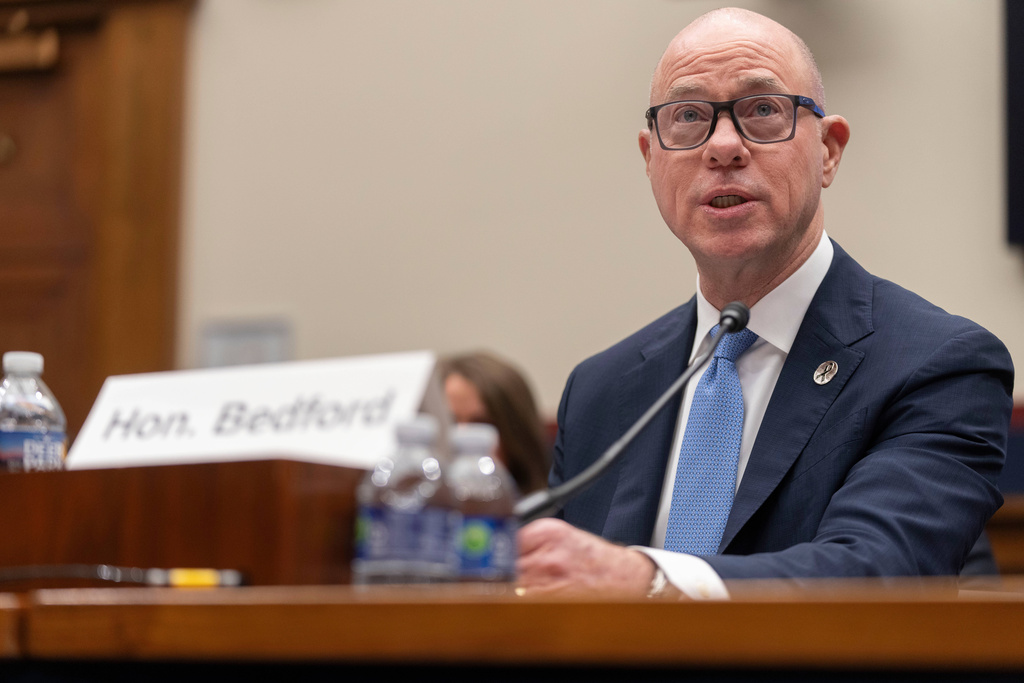
FAA Administrator Bryan Bedford spoke at a hearing of the Aviation Subcommittee of the House Transportation and Infrastructure Committee on December 16, 2025. On September 21, a critical circuit failed at the FAA’s Philadelphia approach control, known as TRACON. When the system switched to its backup, it discovered a cut fiber due to construction in New Jersey, leading to ground stops at five major Northeast airports: Newark, Teterboro, Philadelphia, LaGuardia, and Kennedy.
In an opinion piece dated October 1, Jackson Shedelbower stressed the need for Congress to approve Transportation Secretary Sean Duffy’s $30 billion funding request. Shedelbower called that day a stark reminder of this necessity. With 23 years of experience in FAA air traffic control, I acknowledge the pressing need to modernize our systems. However, Shedelbower’s argument overlooks some crucial lessons.
The State of Equipment
The equipment in use is indeed outdated. The failed circuit was scheduled for replacement, yet controllers and technicians maintain these systems with remarkable skill, keeping them operational. It is essential for Congress to invest in better tools for these professionals. Both the controllers’ union and the airlines, along with pilots, support the funding request.
The Challenges
Shedelbower cites that approximately two-thirds of old copper has been replaced with fiber or wireless links. Even so, a fiber line cut caused the issues. It highlights the irrelevance of material when facing mechanical damage like a backhoe cutting cables. He proposes investing in a modern air traffic flow management system and AI-powered software, yet these do not provide an alternative route into a control facility. Bedford pointed out that existing fiber employs the same design that has been in place for 50 years; there is a need to replace it, not merely fund it.
After incidents in Newark earlier in 2025, the FAA installed new fiber between New York and Philadelphia. The upgrade claimed to separate “two communications paths” to ensure continuous operation even if one path failed. Sixteen months later, another failure took down the Northeast. Whether the same lines were involved is uncertain; the fragile structure remains.
A History of Unmet Promises
The NextGen program launched in 2003 promised vast improvements. However, the Transportation Department’s inspector general closed its review, revealing an investment of $36 billion between FAA and airlines, producing only 16% of anticipated benefits. This shortfall resulted from undefined requirements and inter-dependent programs.
Similar patterns are apparent in current efforts. Congress authorized $12.5 billion in July 2025, yet Bedford informed Congress of a $16 billion cost for phase one. The total needed now rises to $42.5 billion. The Government Accountability Office noted phase one’s estimate excluded many costs and future phases. Only a third of the newest $30 billion funds air traffic control architecture; the rest supports unrelated infrastructure.
The Overlooked Human Element
Human resources, an unseen factor in such appeals, play a critical role. Controllers must adapt to new systems while managing air traffic; technicians must maintain transitioning systems. Transition induces risks and workload increases before reducing it. The lack of a comprehensive schedule, involving 11,389 separate project schedules, further burdens the process.
Condition-Based Funding
Funding should come with specific conditions. Ensure no critical facility relies on a single pathway by testing. Release funds against achievable milestones, overseen by the inspector general and GAO. Include controller training and technician staffing with hardware investments. Demand a full lifecycle cost analysis upfront.
Shedelbower advocates for necessary investments. While investment is crucial, effective planning and strategy must follow. Financial resources contribute to solutions, but a robust plan can prevent issues.
Vincent E. Bianco III serves as principal consultant at Marivin Consulting Services LLC, with 23 years in FAA air traffic control.