
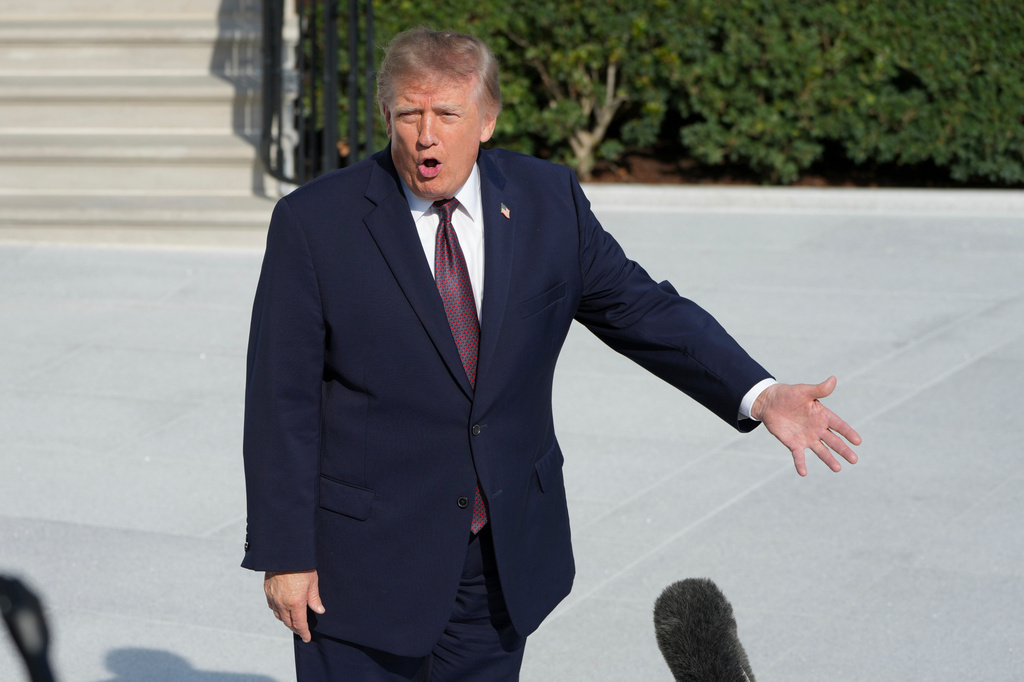
President Donald Trump, before boarding Marine One, used taxpayer funds to run political ads. These ads aim to assist Republicans affected by Trump’s poor approval ratings.
The White House’s ads have been labeled as “sheer propaganda” by a former Bush administration official. One ad is essentially a repeat of a 2024 campaign ad funded by taxpayers. Reports suggest that $20 million, allocated for border security and other purposes, has been redirected for these ads.
A White House official claims the ads are meant to promote patriotism. However, many see them as attempts to boost Trump’s support. His disapproval rating exceeds 60%, challenging the effectiveness of these ads.
Trump’s actions have extended beyond ads. His administration launched Trump TV, a government-funded channel broadcasting pro-Trump content. Soon after, attempts were made to trademark the channel’s name, indicating potential financial gain for the Trump family.
These activities coincide with press freedom attacks. CNN, MS NOW, and Politico were temporarily barred from the White House. Meanwhile, Chinese state media were given access, reflecting bias against domestic media outlets.
Republican leaders rarely confront Trump’s actions. Yet, his media bans and taxpayer-funded ads broke their silence momentarily. Challenging Trump’s corruption is crucial, but politicians hesitate, fearing political and financial repercussions.
As the election approaches, voters have the power to counter money-driven campaigns. This period challenges citizens to act decisively and make their voices heard at the polls.