
Mayor Brandon Johnson’s initiative for a non-police mental health response team has become prominent in his administration’s recent efforts. Johnson has shared videos of himself in the city’s Crisis Assistance Response and Engagement (CARE) vans, highlighting increased responses since May. Soon, the city will add a second shift for teams of behavioral health workers and EMTs, a major part of Johnson’s agenda.
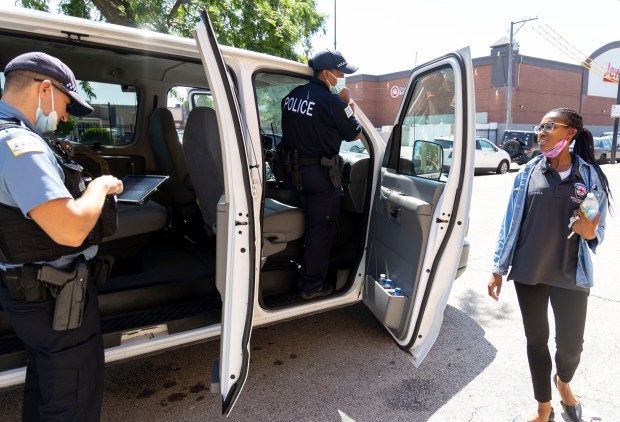
Chicago officers like Dantra Daniel and mental health clinicians such as Gabrielle Mitchell are part of the CARE team, preparing vans to respond to crises. Johnson has noted that call responses rose by 51%, yet the actual increase was a modest 100 emergency responses from May to August, below previous levels. This uptick comes after a quiet spell due to bureaucratic and political challenges in Johnson’s office.
Despite CARE’s progress, the program remains challenged. Arturo Carrillo, Johnson’s deputy mayor of health and human services, detailed that from May to August, CARE handled 115 emergency calls and 72 non-urgent requests. Johnson emphasized the newness of the program in response to critiques. City Council Health Committee Chair Ald. Rossana Rodriguez-Sanchez cited unforeseen roadblocks in a Thursday hearing.
Key issues identified include the need for citywide availability, better interdepartmental coordination, and improved dispatch systems. In May, the city expanded CARE’s reach and broadened age eligibility. Starting Monday, service hours will stretch from 8 a.m. to 10 p.m.
There is some debate over whether these issues are the root causes of CARE’s challenges. Jim Poole of the National Alliance on Mental Illness Chicago argues against inadequate usage. While expansion is essential, deeper systemic issues may hinder the program.
Johnson’s aim is to shift away from former Mayor Lori Lightfoot’s co-responder model, but police still engage in some CARE situations. This involvement does not align with Johnson’s vision, yet he reiterated the importance of circumstances dictating responses.
The transition to Johnson’s model has faced hurdles, including interagency disagreements and equipment issues. Portable data terminals were removed from CARE vans in 2025, impacting live call monitoring. Plans to reintegrate police terminals are underway.
Speakers in a recent hearing agreed on the urgent need for mental health care. Many aldermen support CARE’s mission despite the challenges. Johnson notes that specialized response teams offer a better fit for mental health crises than police officers.
The city presented data showing most eligible calls do not lead to a CARE dispatch. By August, responses improved, with more calls resulting in CARE dispatches. The Health Department plans to reinstate a public CARE response dashboard, which was taken down in 2024.
As political competitors criticize Johnson for unmet promises, Rodriguez-Sanchez emphasizes that the push for mental health prioritization started long before Johnson’s tenure. The evolution of CARE is ongoing and requires focused, consistent effort.