
Three weeks ago, Republicans placed Vice President JD Vance at the forefront during the midterm convention in Dallas. His speech focused on America’s future and resonated well with communities like St. Cloud, Minnesota. During his address, Vance emphasized his vision for a future where American businesses prioritize American workers to foster the next generation of products.
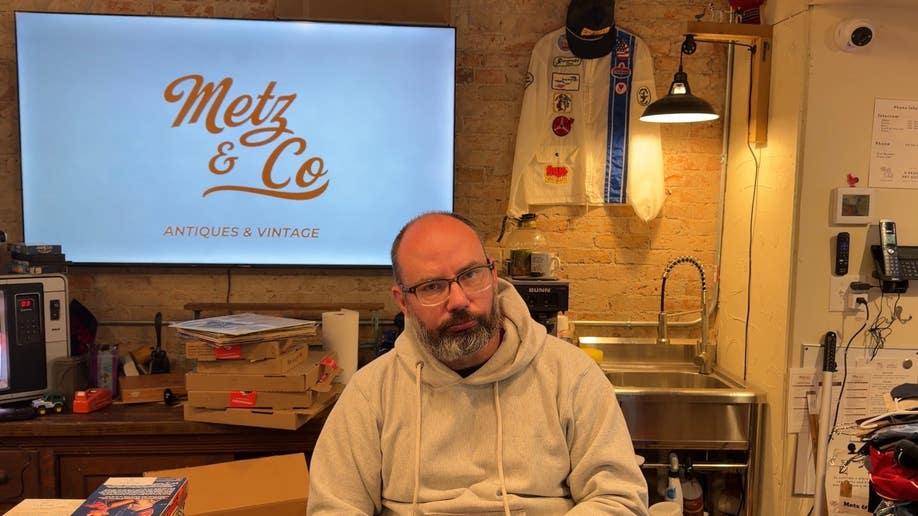
Imagining these words echoing through the historic streets of St. Cloud sheds light on the city’s current economic uncertainty. The town, with a population of about 80,000, appears neither thriving nor declining. Business owners like Chad O’Brien, who manages a vintage store downtown, see potential despite the mixed signals. St. Cloud’s thriving eateries and active civic participation hint at positive trends, yet nearly half of the town’s commercial spaces remain vacant.
A local resident, Rob, who studied at a nearby university, recalls a bustling downtown atmosphere in the early 2000s. Today, he notes a plateau in activity since COVID, a sentiment shared by many residents. Changes such as the closure of Herberger’s department store in 2018 and the decline of several factories have impacted the town’s vibrancy.
Nevertheless, pockets of growth exist. As new businesses emerge, Vice President Vance’s call to reshore manufacturing aligns with St. Cloud’s needs. Establishing a few key industries could revive the local economy, offering jobs and boosting commerce. For example, a manufacturing plant with 1,500 jobs and a tech company with 300 to 500 jobs could significantly impact St. Cloud’s dynamics.
Cultural challenges also persist, particularly concerning the city’s Somali immigrant community. The issue encompasses two problems under Vance’s focus: fraud scandals and cultural integration. Residents express concerns over fraud, with some sharing stories of misuse of government-subsidized housing. Addressing this problem forms an essential part of Vance’s agenda.
Assimilation remains a contentious topic. Trey’s experience as a phone store manager illustrates the complexities. He observes cultural shifts among Somali youth, whose ties to their heritage are weakening. While some residents view immigration as beneficial, others raise concerns about lack of integration.
In essence, St. Cloud’s downtown reflects these intersections of economic promise and cultural tension. Unlike past waves of immigrants, the Somali community does not frequent the downtown area, limiting its revitalization. The potential for economic growth lies with local blue and white-collar workers who can reignite the community’s heartbeat.
Sauk Centre, Minnesota, located near St. Cloud, inspired Sinclair Lewis’s novel Main Street, capturing American small-town life. Today, Vice President Vance’s proposals resonate with towns like St. Cloud, where reshoring jobs and focusing on American workers align with community aspirations. As the midterms progress, Vance’s leadership and commitment could shape the future of similar American towns.