
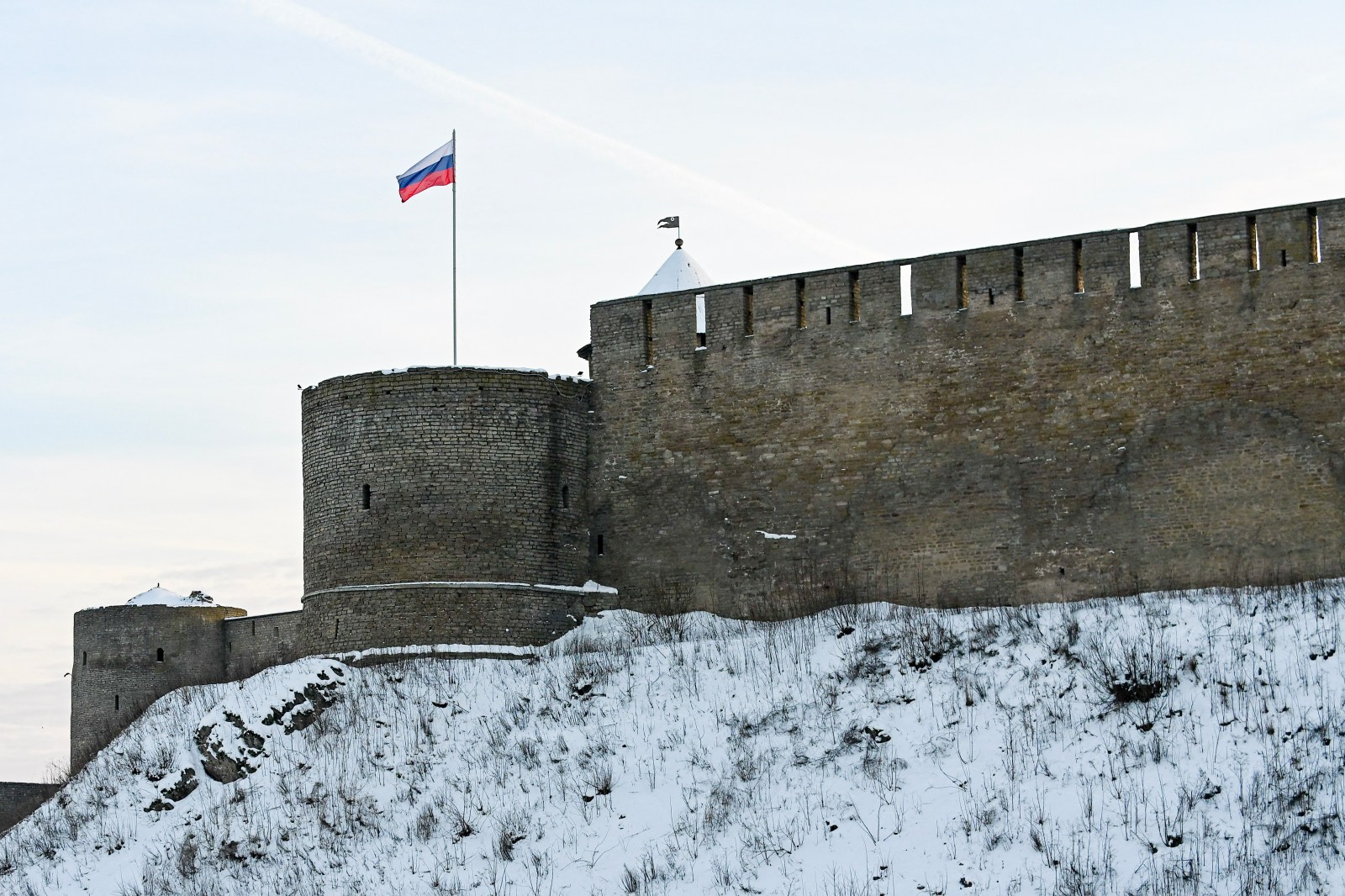
Heightened tensions between Moscow and Tallinn have stirred scenarios where Russia might stage a limited incursion into Estonia to assess NATO’s resilience. The Institute for the Study of War (ISW) outlines this possibility amid new restrictions imposed by Russia’s FSB intelligence services in two Russian districts, Kingisepp and Slantsy, near the Estonian border. This limits nighttime movement and access to parts of the Narva River shared by both nations.
These developments follow Estonia’s declaration of a potential border shutdown with Russia, should Vladimir Putin initiate a mass mobilization to offset losses in his Ukraine campaign. Concerns about Russian drone incursions, airspace breaches, sabotage, and various hybrid threats have elevated worries across the Baltic region. The ISW suggests Narva, a prominently Russian-speaking town on the border, could be a focal point for Kremlin’s strategy challenging NATO’s Article 5 mutual defense clause, where an attack on one member is considered an attack on all.
The Washington, D.C., think tank stresses no current military buildups by Russia are observed near the Baltic states, and a direct invasion of NATO remains highly improbable with Putin’s ongoing military commitments in Ukraine. Nevertheless, such a scenario could involve intricate challenges and decisions for NATO’s military operations. Newsweek has sought comments from the Kremlin and the Estonian foreign ministry.
Propaganda Campaign Lays Groundwork
The ISW offers insight into Moscow’s view of Estonia as a stepping stone towards potential conflict with NATO. It argues that Moscow might launch propaganda campaigns alleging Estonia’s oppression of Russian-speaking citizens or equate Estonian assistance to Ukraine with aiding Kyiv’s attacks on Russia. Furthermore, Russia’s military forces could deploy FPV drones near Narva and Johvi military base, using various controlled drones and long-range attack drones against NATO positions. At a favorable moment, Russian agents in Narva might seize important sites, forming a “Narva People’s Republic” (NPR) and implore Moscow to intervene.
Russia could escalate by incorporating pre-positioned drone and air defense units, avoiding direct incursions into Estonia unless provoked by Tallinn. Russian drone strikes against Estonian forces could support their operatives in Narva, forming a localized deadlock due to significant FPV strike drone activity. The Kremlin could push for de-escalation if NPR gains control in Narva while denying attacks against NATO and presenting strategic complications for the alliance.
Estonia might appeal for Article 5 activation or assistance from allied nations, yet trepidation over a limited incursion could incite reluctance among members, fearing extensive warfare with Russia. If Article 5 remains dormant, its diminished value could offer Putin an exploitable weakness. ISW suggests tensions between the U.S. and Europe over defending NATO territory might delay U.S. actions, with Russian psychological warfare further separating U.S. and European interests. Putin’s maneuver risks NATO escalation forcing choices between confronting the alliance or prolonging the Ukrainian conflict.
Echoes Of “If Russia Wins: A Scenario”
The ISW’s visualization regarding Narva isn’t a forecast but depicts potential Russian military operations challenging NATO’s response strategy. It echoes themes from If Russia Wins: A Scenario by German political scientist Carlo Masala at Bundeswehr University. Masala predicts propaganda around oppressed Russian speakers preceding operations in Narva or Hiiumaa akin to pre-invasion of Ukraine’s Donbas by Russia in 2014. He foresees NATO division over Article 5 activation weakened by diminished American engagement.
However, Masala’s timeline places aggression in 2028 post-Ukraine war favoring Moscow, with Kyiv conceding 20% of its land and abstaining NATO aspirations without solid security assurances. Masala acknowledged in October 2025 circles in Moscow doubting Article Five’s efficacy, eager to test it as Russian strategy becomes increasingly audacious, trying to divide Europeans and NATO further.