
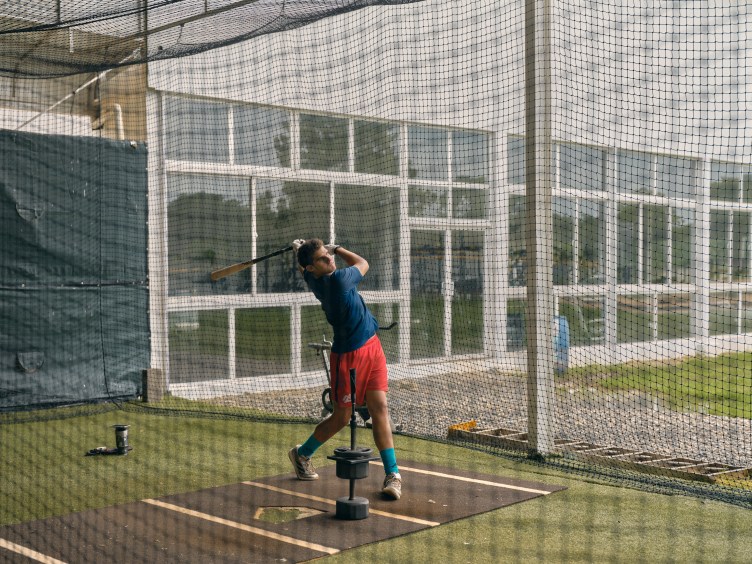
Baseball plays a pivotal role in the Dominican Republic, contributing a significant number of players to American major and minor leagues. This includes renowned athletes like Pedro Martínez and Adrian Beltré. Across the country, playing fields and training academies thrive in villages adorned with murals celebrating players who’ve succeeded professionally.
For nearly 50 years, the Dominican Republic has consistently sent more players to the major leagues than any other country besides the United States. With a population comparable to Ohio, the nation had 144 players in the major leagues last year, accounting for about 10% of the league. The Dominican baseball system is volume-driven, with teams distributing signing bonuses to roughly 450 prospects annually. Despite this, less than 10% reach the major leagues, yet these bonuses offer life-changing opportunities for players from impoverished backgrounds.
However, Major League Baseball tolerates a harmful system that disadvantages young players in favor of opportunistic trainers and predatory moneylenders.
Training System and Financial Transactions
In exchange for future earnings, trainers coach young Dominican players. Unlike players in the United States and Canada, who enter the major league system through an annual draft, Dominican players enter the system via open bidding. MLB’s attention to Dominican talent led teams to establish training academies aimed at developing young players. This sowed the seeds for buscones, who emerged as identifiers of local talent, subsequently establishing their own academies. There are now numerous such facilities, supported by approximately 6,000 trainers who provide room, board, and equipment in exchange for significant portions of players’ signing bonuses, typically ranging from 35% to 50%.
Bonuses predominantly amount to around $30,000, but can reach six or seven figures. According to ProPublica’s analysis, major league teams disbursed $1.042 billion in bonuses to Dominican prospects from 2012 to 2026. However, a considerable portion, potentially half a billion dollars, is quickly diverted to trainers and lenders.
Strategies to Circumvent League Rules
Young players train and tackle homework breaks at baseball academies near Santo Domingo, in El Mamón, where MLB teams engage in handshake deals to bypass league rules prohibiting official agreements with players under 16. These unwritten agreements see teams agree to pay players once they reach the legal age for signing, often involving individuals as young as 11. The actual payout may come years later.
The Role of Moneylenders
Preacuerdos have fostered the growth of prestamistas who persuade families to surrender portions of player bonuses for loans with exorbitant interest rates. The repeal of usury laws in the Dominican Republic 24 years ago has enabled high-interest loans targeting young ballplayers online. For example, 14-year-old Belfi Rivera agreed to a $1.8 million handshake deal with the Arizona Diamondbacks, expecting the payout at age 16. His trainer claimed $630,000 from the bonus, while Santo Caraballo, a lender, received more than $950,000.
Caraballo, tied to the late Red Sox legend David Ortiz, never contributed to Rivera’s baseball skills, yet profited significantly. ProPublica’s investigation highlighted Caraballo’s questionable business practices, and despite attempts for contact, he remained unresponsive.
An Early Success Story Turned Business Opportunity
Caraballo’s shadowed involvement began with assisting Oneil Cruz during a criminal case following a deadly car crash in 2020. Cruz’s family collaborated with Caraballo to negotiate settlements with victims’ families, leading to Cruz’s continued career as a player. The case against Cruz was dismissed, yet Caraballo launched his lending enterprise.
By 2021, Caraballo and Ortiz had partnered, forming a business venture with the Big Papi Sports Group in Florida, though its actions remain unclear. Ortiz confirmed investing millions into Caraballo’s baseball-related business, lending exclusively to trainers. Despite their personal and financial connections and Ortiz’s family welcome at his Hall of Fame induction, Ortiz’s loyalty was questioned due to Caraballo’s troubling conduct.
Resistance Against An International Draft
Ortiz’s influence became apparent during the debate over an international draft aimed at regulating Latin American prospects’ entry into the league. MLB Commissioner Rob Manfred advocated the draft, arguing it could eliminate problematic early agreements. However, the players’ union resisted, fearing that the draft would limit players’ choice of employers and diminish bonuses.
Ortiz publicly urged Dominican players to oppose the draft, revealing a potential conflict of interest due to his association with Caraballo. Though Ortiz denied any personal motives, prioritizing his views on the development of Dominican players, his motivations came under scrutiny.
Major League Baseball’s Inaction
Despite its significant economic and political influence in the Dominican Republic, MLB has taken limited action to reform the early agreement system. Though suggesting an international draft, MLB has not warned or penalized a team for early deals and has been ineffective in educating families about moneylenders.
Piñao Ortiz, a former Dominican commissioner, criticized MLB’s inaction, stating, “Major League Baseball knows how dirty the business is here, but it’s not doing anything to stop it.”