
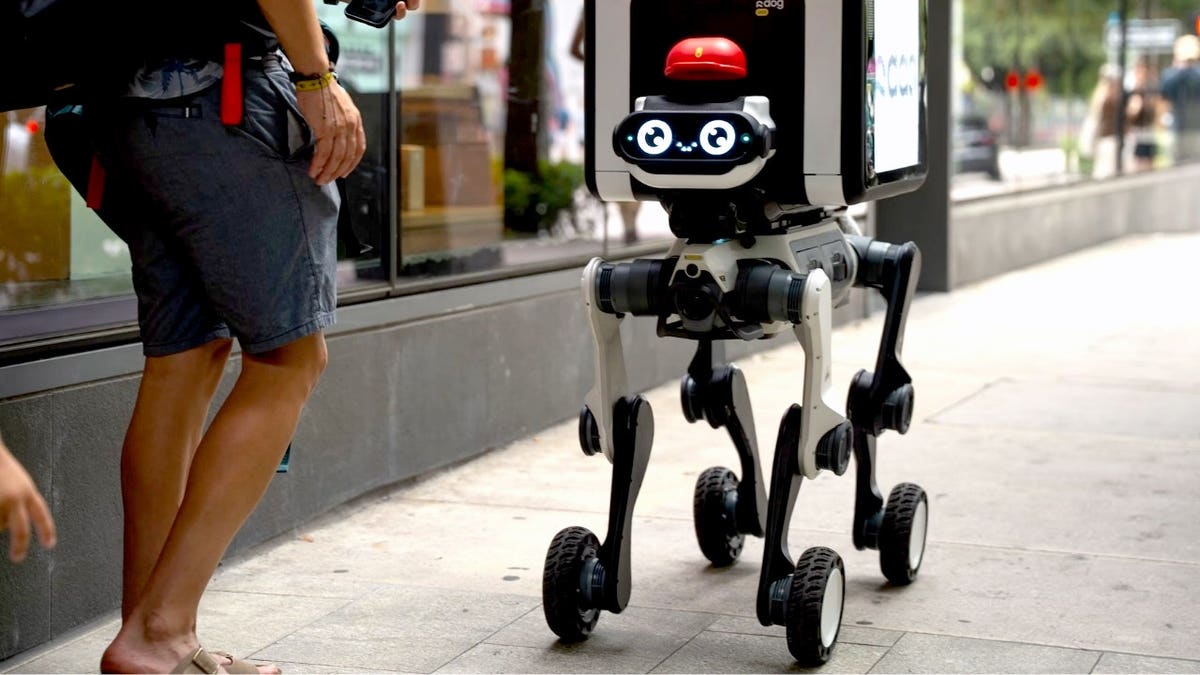
The development of robots for tasks like delivery has reached a new milestone with Robot.com’s latest creation, R-dog. This robot can tackle obstacles that challenge traditional delivery robots. It combines wheels and articulated legs to navigate challenging terrains, such as stairs and curbs. This design aims to overcome the final stretch of delivery, making autonomous delivery more practical and efficient.
Purpose and Capability of R-dog
R-dog, unveiled by Robot.com on August 11, reflects a significant step in autonomous delivery technology. This robot, resembling a dog with a friendly appearance complete with a tail, is not just about aesthetics. Robot.com designed it to deliver packages to your door, even when sidewalks and stairs pose a challenge. Each of its legs ends in a wheel, allowing it to move smoothly on even surfaces. When faced with difficult terrains, its legs adapt, enabling it to overcome obstacles.
Challenges of Robotic Delivery
The final stretch of robotic delivery—from sidewalk to doorstep—often presents difficulties. Traditional robots perform well on flat surfaces but can struggle with stairs, curbs, or awkward building entrances. R-dog’s design aims to eliminate this limitation, making it suitable for varied environments such as campuses and residential areas. The robot’s ability to complete deliveries without human intervention highlights its potential usefulness.
Delivery Mechanism of R-dog
R-dog has a large cargo compartment to carry multiple packages, including food and e-commerce orders. The delivery process is automated, allowing the robot to release packages without human help. This unique delivery method involves the package sliding out from the back of the robot, adding a touch of novelty to the process. However, specifics on how it selects the correct package from multiple orders remain unclear.
Innovative Advertising Potential
Beyond delivery, R-dog has an inventive advertising feature. It includes two video screens for displaying ads managed remotely through Robot.com’s R-ads platform. This allows the robot to generate revenue while making deliveries. The mobile nature of the ads is likely to attract more attention than static billboards, turning each delivery into potential advertising space. Robot.com tracks interactions with the robots to enhance this feature, although precise details remain undisclosed.
Advanced Navigation with AI
Effective navigation through crowded areas requires sophisticated AI. Robot.com partners with FieldAI to integrate Field Foundation Models into R-dog, enabling it to adapt to dynamic environments without prior mapping. This adaptability is crucial for handling unexpected changes in the environment, ensuring safe and efficient deliveries.
Commercial Prospects and Launch Plans
Robot.com’s experience in autonomous operations since 2017 underscores its ability to deploy R-dog commercially. With robots operational across multiple locations, including the U.S. and the MENA region, it’s poised for expansion. The company plans to introduce R-dog commercially by 2027, initially targeting college campuses for its debut due to their conducive environment for testing autonomous delivery.
College campuses offer short delivery distances and numerous obstacles such as stairs, making them ideal testing grounds for R-dog’s capabilities. While pricing details remain undisclosed, Robot.com focuses on commercial pilots rather than direct consumer sales.
Implications for the Future
R-dog could revolutionize last-mile delivery by bringing packages directly to your door instead of stopping at the sidewalk. This innovation, coupled with its advertising capabilities, offers a dual revenue stream. However, there’s a need for clarity on how personal data collected during interactions is used, ensuring privacy concerns are addressed.
As R-dog progresses towards its commercial launch, observed in real-world testing will provide insights into its practical application. The details about its unattended delivery system and data handling will be crucial in determining its overall impact. With advancements like R-dog, the delivery landscape is set to change, making it both a logistical and marketing tool.