
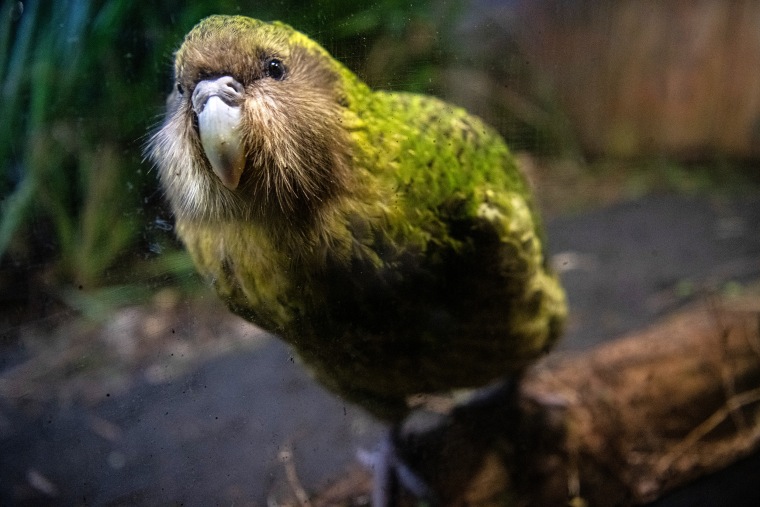
As of Sept. 1, 2026, New Zealand has reported a noteworthy increase in the population of one of the world’s most endangered parrot species, the kakapo. Officials announced that 90 new chicks have brought the population total to a record 325 birds, according to the New Zealand Conservation Department’s statement on Tuesday.
The kakapos are native to New Zealand. The recently born chicks are now reaching 150 days old, marking their independence and inclusion in the population count. Given their unique characteristics, each kakapo is vital for the species’ survival. The large, green parrots are flightless and have a waddling gait, making them vulnerable to ground predators. They are the heaviest parrot species, with males reaching up to 9 pounds. Their lifespan ranges from 60 to 90 years.
Despite this progress, conservationists caution that the kakapo remains critically endangered. Deidre Vercoe, manager of the Department’s kakapo recovery operations, noted the significance of these numbers, saying, “There is still a long road of recovery ahead, but ninety chicks in a single season is a record. In the early years of recovery, it took 16 years to produce that many chicks.”
The Kakapo Recovery Programme began in 1995 with only 51 birds, including 20 females. Over 13 breeding seasons, efforts have targeted challenges such as low genetic diversity and infertility. Highlighting the significance of predator-free environments for kakapos, the season’s success suggests promising avenues for future conservation.
There is still a long road of recovery ahead, but ninety chicks in a single season is a record. In the early years of recovery, it took 16 years to produce that many chicks.
Each kakapo is equipped with a backpack radio transmitter to track its location and monitor its activity. Originally common across New Zealand, kakapo numbers dwindled following human settlement. Hunting, habitat loss, and predators like cats and rats critically impacted their survival. Today, remaining kakapos find refuge on small protected offshore islands, relying heavily on Rimu tree berries for sustenance, which influences their mating frequency.
Tāne Davis from the kakapo recovery group mentioned that numerical success is one metric. This year, the program tested strategies to reduce management intensity, studying remote nest technology data and cutting down on supplementary feeding. “Our focus is increasingly on determining where intensive intervention is still needed and where we can start to return to more natural levels of kakapo breeding outcomes,” Tāne stated.
Many chicks will receive names in celebration of their hatch day anniversaries next year, while some will remain unnamed, symbolizing a shift towards a natural recovery path. Early projections suggest a potentially shorter interval between breeding seasons. “Our modeling indicates there may be only a two-year gap between breeding seasons this time round,” Vercoe added, highlighting ambitious plans for the species’ future.