
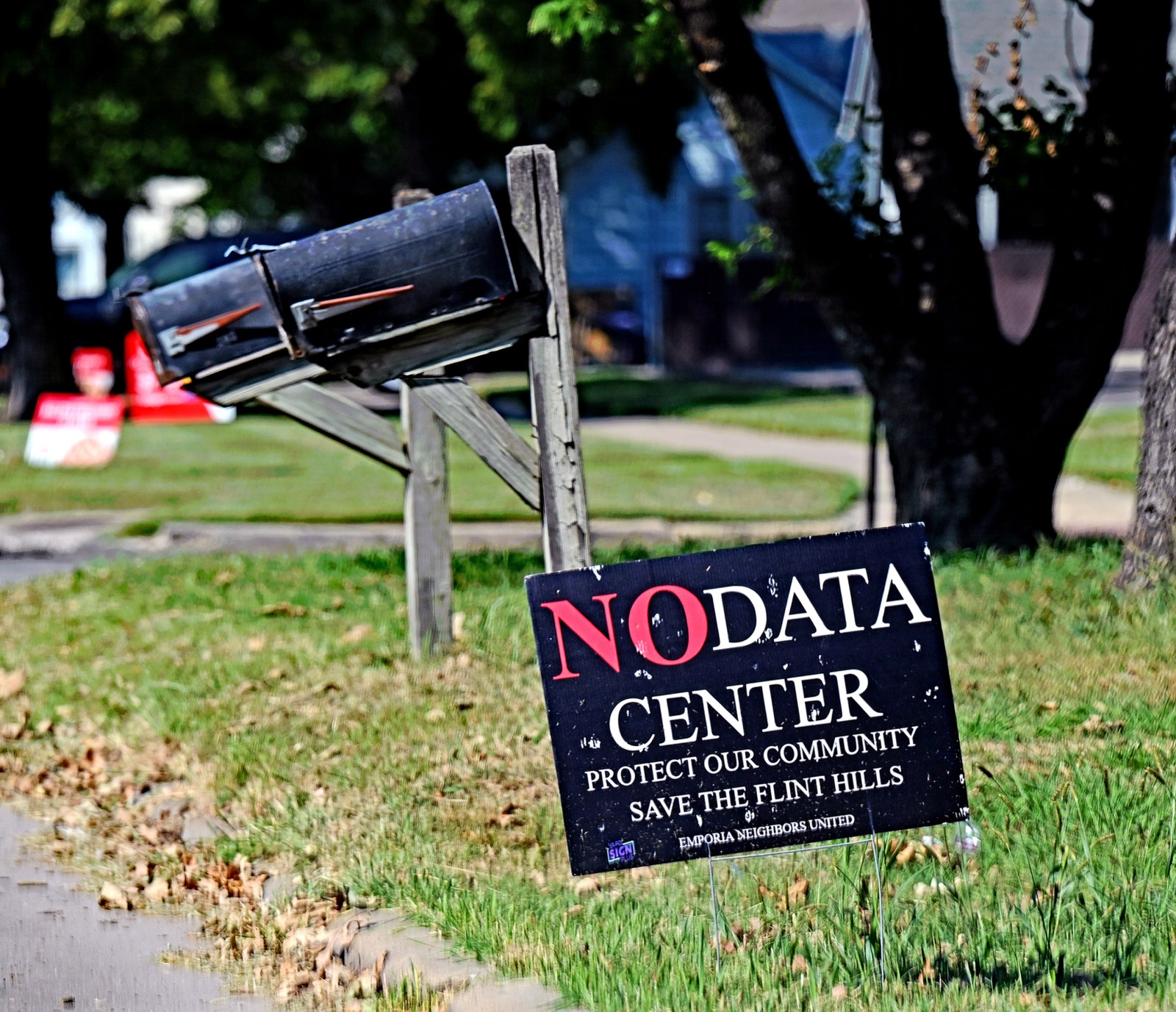
Three cities in Kansas are embroiled in legal battles over citizen petitions aiming to restrict or ban large-scale data centers. The cities of Edgerton, El Dorado, and Emporia have filed lawsuits to challenge these petitions, sparking a conflict over the balance of power between voter-driven initiatives and municipal governance.
Edgerton’s Legal Challenge
Edgerton initiated its lawsuit on August 4 against residents Carrie Schmidt and Kimberly Twente, along with the Public Trust Collective. The legal action arose in response to a petition opposing a proposed data center at Edgerton’s Logistics Park. Despite the collection of valid signatures, the city council voted to contest the petition, claiming that the ordinance was deficient in legal and factual terms.
The city argues that the petition’s inaccuracies regarding water service, electricity, and utility agreements undermine its validity. Edgerton does not provide water to the Logistics Park and relies on Evergy for electricity. The city also contends that the petition targets data centers unfairly, as other industrial projects could exceed the proposed 100,000-gallon-per-day water threshold without restriction.
“The City filed for a declaratory judgement in district court, naming individuals involved to ensure they can participate,” explained Todd Luckman, Edgerton City Attorney.
El Dorado’s Court Defeat
El Dorado filed its lawsuit on July 14 against a citizen petition intending to ban high-impact data centers and certain battery storage systems. The city challenged the petition by arguing the proposed ordinance as administrative, not legislative. However, the court ruled on August 21 that the petition was a legislative action, eligible for the voter initiative process. This setback means the city must adopt the ordinance or submit it for voting.
“The city’s decision was consequential, as it implied that residents could propose legislative measures concerning high-impact data centers,” noted Edward Wilson, involved in the campaign.
Emporia Allows Voter Decision
Emporia’s lawsuit followed a similar pattern when it challenged a petition filed on July 14 to prohibit high-impact data centers. On August 20, the Lyon County District Court mandated the city to allow voters to decide on the ordinance, slated for the November 3, 2026 general election. Emporia Neighbors United founder Jay Vehige was named in the lawsuit, although the city seeks judicial guidance on the ordinance’s legality rather than direct relief against him.
“The legal process remains ongoing, even with the measure scheduled for a ballot,” Emporia City stated.
Kansas Law and Citizen Initiatives
Kansas law provides a path for residents to propose local ordinances via petitions. Depending on the city’s classification, a specific number of valid signatures are required. Citizen initiatives become crucial as Kansas communities weigh hosting large data centers, with petitions targeting facilities consuming over 10 megawatts and 100,000 gallons of water daily.
Resident Troy Harp’s efforts in Osawatomie exemplify citizen initiatives, as he petitioned against a proposed data center near his property. His approach gained traction across cities like Edgerton, Emporia, El Dorado, and Ottawa.
The Fight for Citizen Input
Residents involved in petitions, such as Kimberly Twente, have voiced that the legal disputes are broader than specific data-center projects. They represent a fight for the right to petition public policy without litigation repercussions.
“Baker contends that constitutional rights should protect citizens from facing lawsuits just for petitioning,” said Baker.
National Opposition to Data Centers
Beyond Kansas, data centers face scrutiny nationwide amid their expansion driven by artificial intelligence and cloud computing needs. While proponents view them as vital infrastructure, opponents raise concerns about resource usage and community impact.
In Kansas, the legal confrontations are pivotal as cities and residents navigate how data center proposals can be regulated through citizen initiatives versus municipal ordinances.
Pending legal outcomes affect whether Emporia’s scheduled vote could set a precedent for future community actions against large-scale facilities.