
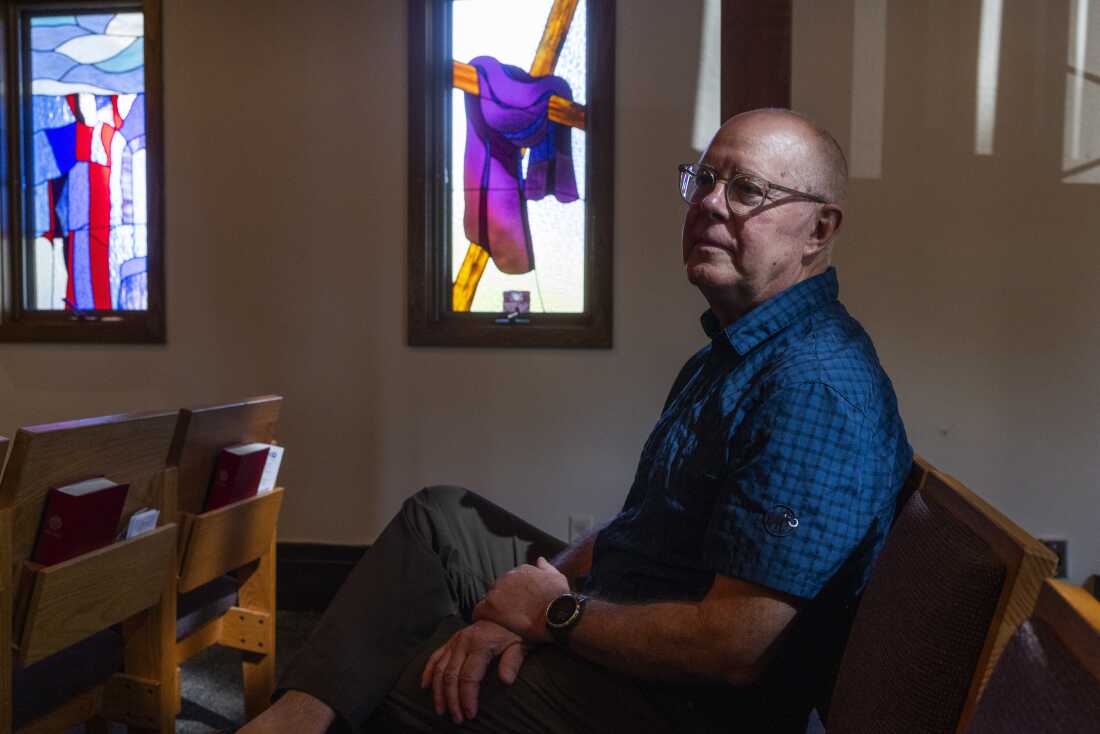
Rev. Steve Sylvester, interim pastor at Prince of Peace Lutheran Church in Roseville, Minnesota, informed his congregation that their church was surveilled by the Department of Homeland Security (DHS) during last winter’s immigration enforcement efforts. This announcement came on a Sunday morning as part of a larger federal conspiracy case against ICE protesters. Court documents revealed that an undercover DHS agent attended a meeting at the church in February, gathering details such as license plate numbers and personal information of attendees.
Sylvester expressed discomfort, saying the surveillance felt out of place and inappropriate. This incident is part of a wider federal surveillance operation involving multiple locations in the Twin Cities, including churches, schools, and libraries, according to released documents. Rachel Levinson-Waldman from the Brennan Center for Justice described the scope of surveillance as vast and resource-intensive.
The University Baptist Church in Minneapolis experienced a similar infiltration when an undercover agent attended a self-defense class. Interim pastor Cody Sanders expressed concern that such actions might foster suspicion among community members. Other locations, like the Minneapolis brewery La Doña Cerveceria, also reported undercover agents attending meetings. Sergio Manancero, the brewery’s general manager, acknowledged the government’s interest in monitoring potential threats but questioned the ethics of such surveillance.
Levinson-Waldman highlighted privacy and free speech concerns, noting that while the government holds broad authority under the Fourth Amendment, the ethical considerations remain questionable. She drew parallels between these actions and historical abuses under FBI’s COINTELPRO.
The government defended its operations, stating the focus was on individuals charged in the conspiracy rather than peaceful protesters. Prosecutors argued that actions such as planning blockades were not protected under the First Amendment. Aaron Terr from the Foundation for Individual Rights and Expression raised First Amendment concerns, suggesting that innocent individuals could be inadvertently swept up.
Documents revealed DHS obtained financial records from nonprofits and labor unions, including the Service Employees International Union and the Communications Workers of America. This raised questions about whether the investigation targets criminal activities or political movements. A government slide presented to grand jurors showed a network of 18 organizations labeled under ‘The Conspiracy.’ However, the government later clarified that these groups were not officially deemed part of the conspiracy.
Bernie Burnham, President of Minnesota AFL-CIO, criticized the surveillance, likening it to McCarthyism. Terr cautioned that such government actions could deter Americans from participating in protests or supporting advocacy groups due to fear of investigation.
The DHS and the U.S. Attorney’s Office declined to comment on ongoing investigations. A related court hearing is scheduled for this week.