
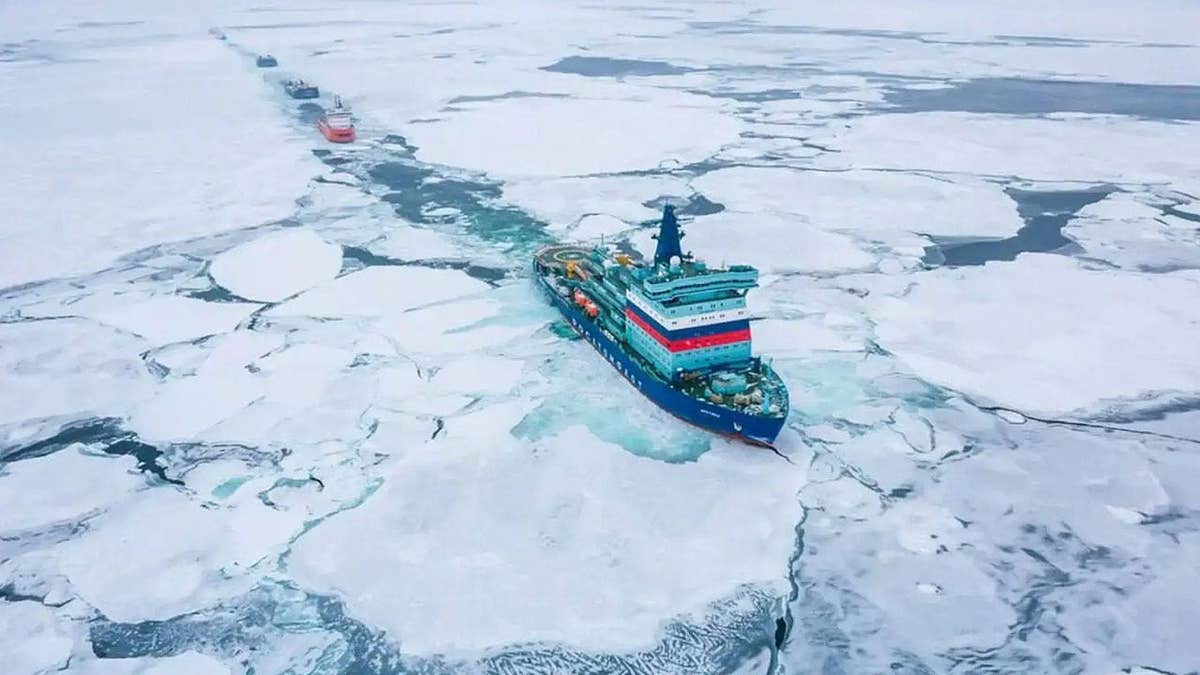
China is exploring new trade routes by initiating a regular container service to Europe through Russia’s Arctic. This move highlights a growing commercial and military partnership between Beijing and Moscow, a development increasingly seen as critical to U.S. interests.
The current scale of this service is limited, with slightly above eight voyages planned for this season. Gordon Chang, a China analyst, noted that its importance extends beyond the number of containers. He emphasized the strategic push by China as the Arctic ice melts, making the Northern Sea Route along Russia’s coast feasible for a portion of the year.
China has a major strategic push on the Arctic for various reasons,
Chang explained. The route offers alternate paths that bypass traditional choke points like the Suez Canal and Strait of Malacca.
This development comes amid a new U.S. commission report that emphasizes Russia’s growing reliance on China, opening up more Arctic opportunities for Beijing. Washington is advised to strengthen its presence in the Arctic, a sentiment echoed by President Trump’s authorization of additional icebreakers.
A White House spokesperson emphasized the Arctic region’s importance to U.S. national security and economic interests. Enhanced competition from China and Russia in this region compels the U.S. to prioritize safety and stability.
Recent reports highlight that Chinese enterprises now have a 20% stake in Russia’s Arctic LNG 2 project, demonstrating deeper economic ties. Moreover, China and Russia aim to develop year-round commercial shipping along this Arctic passage and have ventured into producing specific ice-class vessels.
The Pentagon’s 2024 Arctic Strategy outlines these climate-induced opportunities, recognizing China’s ambitions and proposing a Polar Silk Road for resource investments. The cooperation between China and Russia poses potential changes in Arctic stability, pushing the U.S. to strategize accordingly.
From a commercial perspective, the Northern Sea Route provides an alternative to the usual west-bound journey, evading certain choke points, which is vital for China.
The newly released USCC report argues that China’s relative advantage over Russia has increased post the Ukraine invasion, gaining discounted energy and access to Russian military technology.
Energy dynamics reveal China’s consumption of significant portions of Russia’s exported crude oil. Since the Ukraine conflict commenced, China purchased an estimated $372 billion in Russian fossil fuels.
Reports show Russia accelerating its Arctic route oil shipments to Asia, with China as the primary beneficiary. The growing Arctic passage volumes highlight Moscow’s aggressive maneuvers amid Washington’s concerns over Chinese-Russian cooperation near Alaska.
Chang argues that the proximity of the Bering Strait to Alaska presents a strategic opportunity for the U.S. He believes the U.S. must respond to the increased Arctic activity from China and Russia.
The intertwined military operations of China and Russia increase further pressures, demonstrated by numerous joint exercises and notable military activities in regions close to the U.S.
In response to those who may dismiss the Arctic’s strategic value, Chang asserts that the growing presence of China and Russia necessitates a sturdy U.S. counter-presence.
Such developments underscore the need for vigilance and a strategic U.S. response to potential shifts in the geopolitical landscape driven by Arctic ambitions.