
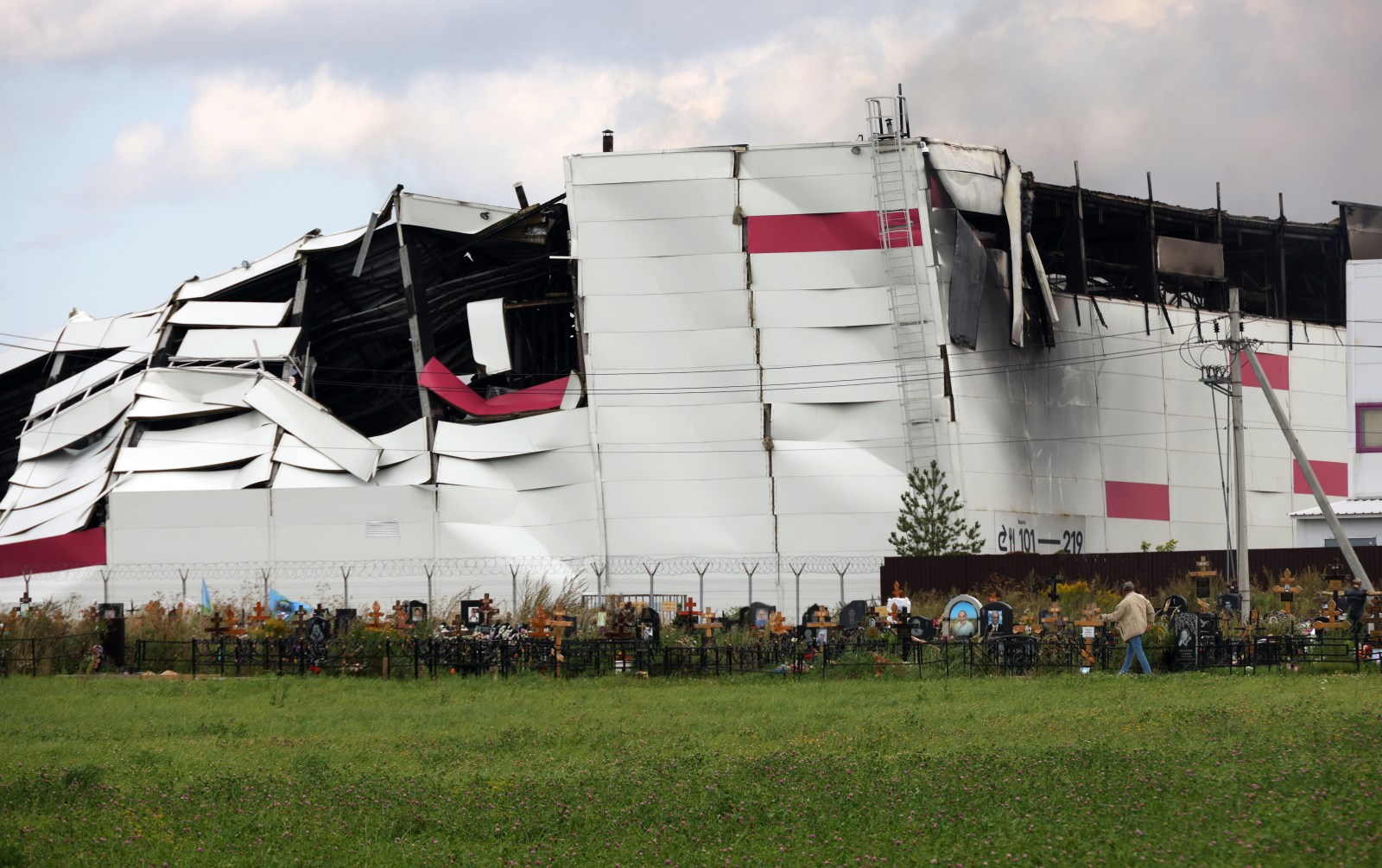
Company branding is being removed from trucks transporting goods from Wildberries, a major Russian e-commerce firm. Reports show Ukrainian drones have targeted Wildberries’ facilities, leading to significant disruptions. The company delivers a range of goods, from clothing and electronics to groceries and household items. Ukrainian authorities claim these warehouses supply drone components and navigation equipment for Russia’s military, although Moscow denies the allegations.
To mitigate the impact of repeated drone strikes, Wildberries appears to have altered its strategy. Social media users posted videos suggesting the company’s branding is being stripped from its trucks. Eastern European news outlet NEXTA commented: “Wildberries also seems to be hoping that unmarked trucks will make it harder to identify which warehouses they are servicing.” In another strategic move, The Moscow Times reported the company ceased displaying military-related products on its website and removed references linked to the “special military operation,” the term used by the Kremlin for the invasion of Ukraine.
Political science professor Aurélien Colson from ESSEC Business School explained the implications of Ukraine’s strikes on Wildberries. “First, the war will no longer remain something Russians watch from a distance,” he said. “Second, the boundary between civilian commerce and military logistics has collapsed in Russia’s war economy.” Newsweek reached out to Wildberries and the Kremlin for comments.
The strikes have had broader economic repercussions. Wildberries, along with its competitors, constitutes roughly 8.5% of Russia’s GDP and employs over 5% of the nation’s workforce. These businesses are vital in supplying goods amid sanctions impacting Russia’s economy. Radio Free Europe/Radio Liberty’s tracker indicates Wildberries has faced 25 attacks across various locations: St Petersburg, Krasnodar, and Yekaterinburg. The first reported attack was on a logistics center in Kotovsk in July. On August 16, Ukraine’s Ministry of Defence confirmed that Wildberries’ largest warehouse, a 250,000-square-meter complex in Podolsk, was hit. By early August, Ukrainian strikes had destroyed over 1.18 million square meters of Wildberries’ warehouse space, reportedly affecting one-fifth of its total capacity.
The Institute for the Study of War reveals the seven most significant strikes impacting Russia’s economy. The think tank highlights the strain on Russia’s air defenses and its inability to protect essential infrastructure. “By hitting highly visible commercial infrastructure, Ukraine is bringing some of the war’s consequences back to the society from which the war was launched,” said Colson. This strategy not only pressures logistics but also challenges the domestic perception of the war. Colson suggests that these strikes could impact the battlefield, given the military’s reliance on informal supply chains for materials available at Wildberries.
Vuk Vuksanović from LSE IDEAS notes that the strikes on Wildberries’ warehouses are part of a broader 40-day campaign by Ukraine to urge peace talks. This operation aims to persuade Western support for Ukraine and apply domestic pressure on Russia by directly involving its population. “However, it cannot be said that it produced the desired results,” remarked Vuksanović. He points out Russia’s ability to escalate further, citing previous retaliatory strikes on Ukrainian infrastructure.
This article was contributed by Newsweek editors Matthew Robinson and Cristina Diciu.