
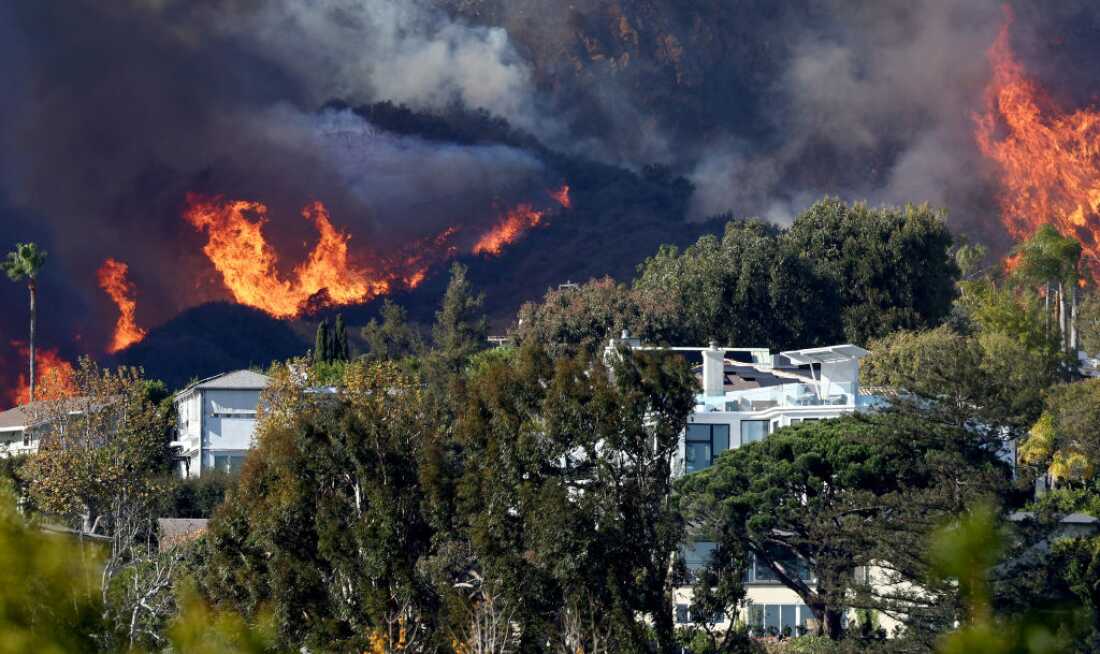
Recent findings from wildfire experts indicate that homes surrounded by dense vegetation face a heightened risk of catching fire, as evidenced by events like the 2025 Palisades Fire. California has enacted new regulations to address this concern. Homeowners are now required to manage the plant life within five feet of their structures. This protective measure aims to prevent homes from igniting during wildfires.
Research shows that dry, dense vegetation can facilitate the spread of wildfires. In extreme scenarios, high winds can carry burning embers beyond the main fire. These embers, when trapped in vegetation, can ignite and spread to nearby buildings.
The California Board of Forestry and Fire Protection reached this decision after extensive discussions and delays. Initially, complete vegetation removal within five feet of a house was considered, except for well-maintained trees. This proposal caused concern in some communities over greenery loss and yard maintenance costs. A compromise was made concerning the types of plants allowed within this area, known as Zone Zero.
Acceptable plant types include lawns, flowers, and non-woody plants up to 18 inches tall, unless positioned directly under the house’s roofline. Trees are permissible, provided branches are trimmed five feet from any structure. While these rules apply immediately to new constructions, existing homes will gradually adopt them, affecting almost 2 million homes in high-risk areas.
California’s approach reflects a growing awareness of more extreme wildfires, partly attributed to rising temperatures from climate change. In the past decade, over 57,000 homes and buildings have been destroyed in the state due to wildfires. Yana Valachovic from the University of California Cooperative Extension emphasized the existential crisis affecting finances, health, and real estate markets at a recent hearing.
Western states are debating how to prepare for wildfires. Fires that begin in natural areas can swiftly become urban fires, endangering homes in unexpected regions, as seen in the 2025 Los Angeles fires. In Spokane, Washington, three fires ravaged dense neighborhoods, destroying over 800 homes. Homeowner meetings highlighted concerns about property rights, wildlife habitat depletion, and maintenance costs.
Research supports that vegetation management reduces wildfire risk. Experiments indicate that even green plants can ignite during extreme wildfires. Previous analyses show that homes with vegetation predominantly within six feet of their exterior walls face higher risks of destruction. Managing vegetation also offers firefighters better access to defend structures, creating “defensible space.”
California’s pioneering role in wildfire policy has resulted in regulations adopted elsewhere. The state mandates the use of fire-resistant construction materials, a practice now mirrored by a few other states. While absolute guarantees on house survival don’t exist, combining protective materials with vegetation management enhances protection. Insurance companies in California provide discounts to homeowners enhancing fire resistance.
The enforcement and inspection of these new rules will be managed locally and by state agencies conducting annual home inspections. Inspectors have the crucial task of educating homeowners about regulations. Todd Lando from the Central Marin Fire Department noted that inspections are quick and straightforward when Zone Zero remains clear of combustibles.
For existing homes, the vegetation rules will be implemented no earlier than 2029. Inspectors will initially focus on educating homeowners before enforcing compliance, balancing flexibility with safety in wildfire-prone areas.