
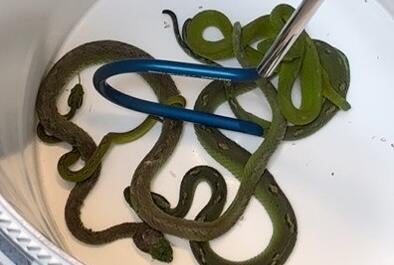
U.S. border agents uncovered endangered reptiles in a moving pillowcase within a vehicle, leading to the arrest of Georgina Bribiesca Chavez, 66, from Tijuana, Mexico. The incident occurred as she attempted to cross the U.S.-Mexico border, where agents stopped her due to an outstanding arrest warrant.
Chavez faces charges of wildlife trafficking, accused of smuggling exotic reptiles in collaboration with Salvador Pelayo, who was arrested in July. Both are implicated in a scheme to transport reptiles across borders.
Discovery at the Border
Chavez was detained on August 10, attempting to enter Mexico from the U.S. Customs officers, aware of the warrant linked to a wildlife trafficking investigation, arrested her and impounded her vehicle. During the search, officers found a concealed compartment behind the rear seats containing pillowcases closed with ties and tape.
One pillowcase displayed movement, prompting officers to bring them to the San Diego Zoo for examination. Upon inspection, zoo staff discovered 60 abronia lizards, four venomous yellow-blotched palm pit vipers, three caimans, one baby crocodile, and an indigo snake inside. Many of these species are protected under international agreements, classified as endangered or threatened.
Outcome and Legal Proceedings
Unfortunately, the three caimans did not survive the ordeal, passing away before receiving care. Authorities noted that Chavez failed to inform the Customs and Border Protection (CBP) officers about the reptiles, leaving them stranded in the vehicle under high temperatures for nearly a day.
“These animals were not cargo — they were living creatures subjected to dangerous conditions for profit,” U.S. Attorney Adam Gordon stated.
The surviving reptiles remain stable under the zoo’s care. Chavez, in a court appearance, pleaded not guilty to the charges. Pelayo, 28, who is believed to have worked with her, also entered a not guilty plea.
Details of the Trafficking Scheme
According to court documents, Chavez and Pelayo began their illegal activities in 2023, targeting the U.S. market with plans to sell exotic reptiles. Their activities led to an undercover investigation by the U.S. Fish and Wildlife Service. The investigation documented multiple illegal sales, including those of protected turtles, with involvement in several undercover transactions.
Authorities estimate the pair earned tens of thousands of dollars from these sales, operating through shipping centers around San Diego.