
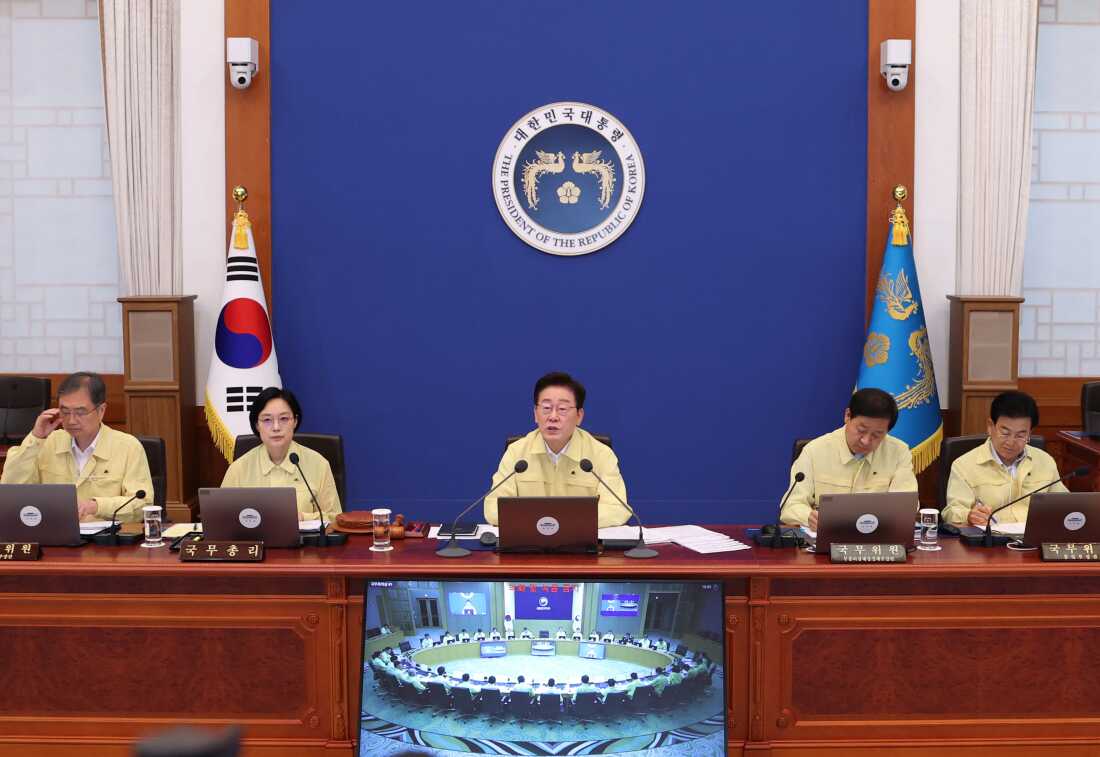
South Korean President Lee Jae Myung addressed national security concerns during a cabinet meeting in Seoul on Tuesday, August 18, 2026. His comments followed U.S. President Donald Trump’s unexpected decision to significantly reduce joint military exercises with South Korea. This decision surprised many South Koreans and highlighted the importance of the U.S.-South Korean alliance.
Trump’s announcement came through a social media post shortly before American and South Korean troops began their annual Ulchi Freedom Shield exercises. These exercises are crucial for maintaining military readiness against threats from North Korea. Trump cited his positive relationship with North Korean leader Kim Jong Un and South Korea’s refusal to join the U.S. in conflict with Iran. There were no prior discussions with South Korea about this decision, raising doubts about the reliability of the U.S. commitment.
The potential weakening of the U.S. defense support could destabilize South Korea’s security. The nation remains under the protection of the U.S. nuclear umbrella, which promises U.S. retaliation in case of an attack by North Korea. Currently, the U.S. stations around 28,500 troops in South Korea. South Korean public confidence has already been shaken due to recent U.S. policy actions, like tariffs and immigration raids.
A South Korean newspaper editorial stated that this move could strain the Korea-U.S. alliance, inciting public concern. The editorial criticized the U.S. for seemingly respecting North Korea more than its ally, South Korea.
Lee Stresses US Alliance Importance
In his cabinet meeting, President Lee emphasized the need for a robust military partnership with the United States, stating that national security will strengthen with a solid alliance. He underscored the importance of South Korea’s growth in military capability as a valuable ally. President Lee advocates for a self-sufficient defense strategy as well.
The scope of the downsized joint military exercises was not specified. Both South Korean and U.S. forces previously indicated the drills would remain comparable in scale to past years and incorporate recent conflict lessons. North Korea, however, views them as provocative and has promised retaliation.
Meanwhile, the possibility of renewed discussions between Trump and Kim Jong Un remains unclear. Since diplomatic efforts stalled in 2019, experts suspect Kim will only engage if greater concessions from the U.S. are offered. Kim has been bolstering his military capacity and aligning with Russia.
President Lee’s office expressed the hope that Trump’s rapport with Kim could lead to meaningful dialogue for peace on the Korean Peninsula. This view, however, faced criticism from conservatives, who highlighted security over diplomatic engagements.
Alliance Confidence in Question
Trump defended the reduction in military drills, labeling them as expensive and wrongly signaling hostility to North Korea, which he described as respectful during his presidency. He also noted South Korea’s reluctance to join U.S. efforts in Iran’s denuclearization.
Lee’s administration indicated discussions with the U.S. about South Korea’s potential role in protecting the Strait of Hormuz. Leif-Eric Easley, an academic from Ewha University, remarked on Trump’s view of alliances as transactional. He noted South Korean leaders’ understanding of the need for continuous negotiation over economic and security matters with the Trump administration. Consequently, South Korea remains cautiously engaged within this relational framework.