
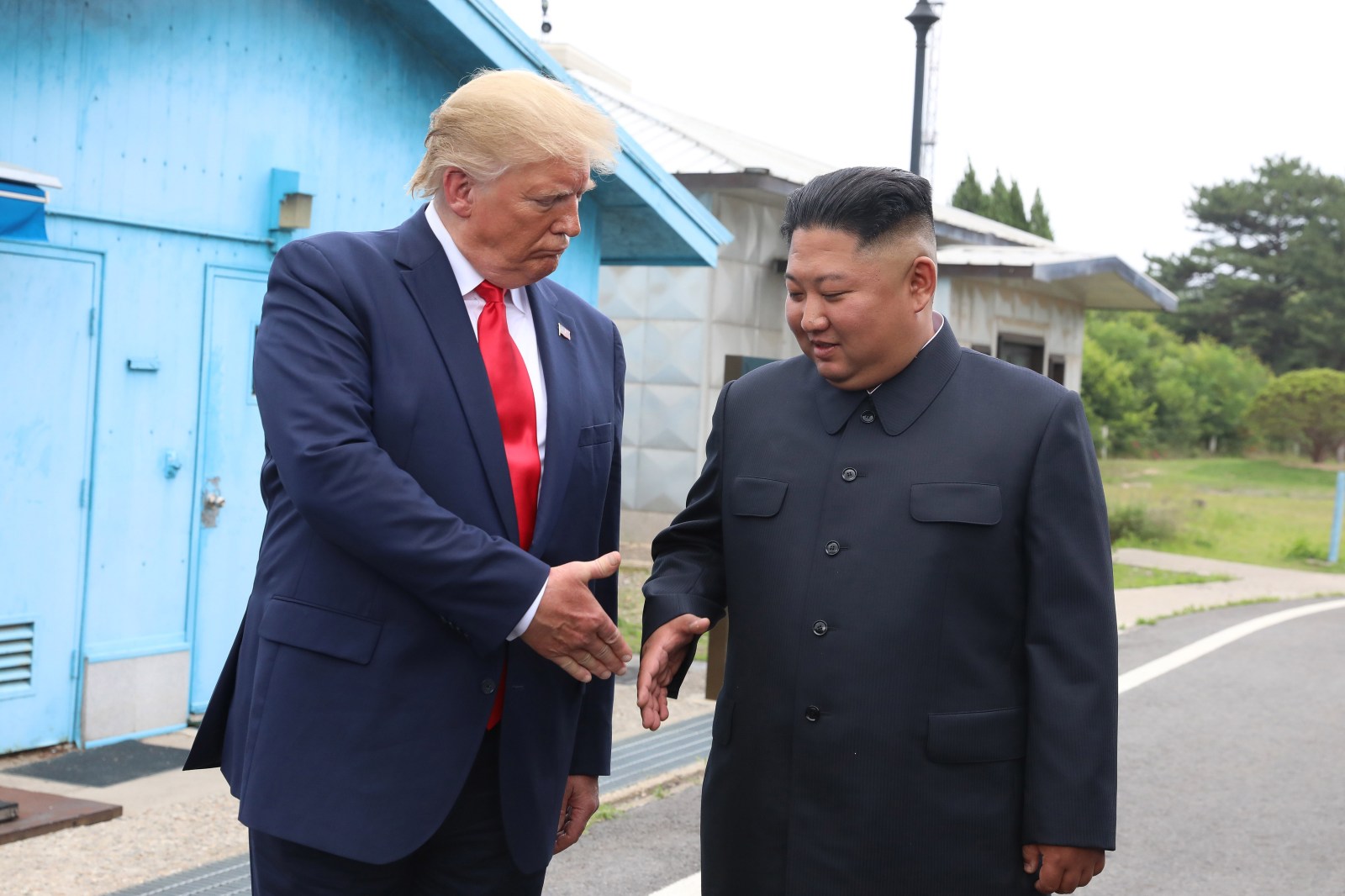
President Donald Trump’s intention to withdraw funding from joint military exercises with South Korea could undermine trust between the United States and key regional allies, according to South Korean analysts. On Tuesday, Trump posted on Truth Social expressing dissatisfaction with the costly drills. He instructed Secretary of War Pete Hegseth to scale them back, citing his positive relationship with North Korea’s leader, Kim Jong Un. Trump also mentioned South Korea’s refusal to send military help for the U.S. efforts in Iran.
During Trump’s first term, he met with Kim three times, attempting to reduce North Korea’s nuclear and missile programs. Trump remains open to a future meeting with Kim.
A Concession to Kim?
Trump’s statement coincided with the start of the Ulchi Freedom Shield, a 10-day exercise between American and South Korean forces aimed at preparing for potential conflict with North Korea. North Korea’s Foreign Ministry labeled the exercise as preparation for aggression.
Kim’s regime is now stronger than during their last meeting in 2019. North Korea continuously advances its missile programs and expands nuclear facilities, embedding nuclear capabilities in its constitution. The regime also gains insights from veterans of the Russia-Ukraine war.
According to Sean King, an Asia scholar, Trump’s decision exposes the U.S. as an unreliable ally. King highlighted that flattery from Kim and Chinese President Xi Jinping could pull Trump away from traditional alliances, serving the interests of North Korea and China. He noted the longstanding cooperation between North Korea and Iran, sharing missile data and technology.
Newsweek contacted the White House and North Korean Embassy for comments.
Mixed Signals Across the Pacific
Critics often accuse Trump of favoring authoritarian leaders like Kim, Russian President Putin, and Xi Jinping while disparaging U.S. allies. Recently, the USS George Washington departed from Japan to the Middle East, leaving the Western Pacific without a U.S. aircraft carrier temporarily.
Elbridge Colby, a top Pentagon official, had recently reassured allies of U.S. commitment to regional security. However, conflicting messages from Washington could spark doubts among allies, including Japan, South Korea, and the Philippines, about the reliability of such assurances.
Kim’s Takeaway
Experts in South Korea believe Trump’s actions suggest that applying pressure yields results. Kim Jong Un might feel encouraged to wait for more U.S. concessions rather than rushing to negotiate.
This approach might signal Trump’s openness to a fourth summit without expecting significant nuclear concessions, potentially aligning with his domestic political priorities.
Ban Kil Joo, a South Korean academic, warned that Trump’s decisions could embolden adversaries like North Korea, Russia, and China, posing increased risks to international security.