
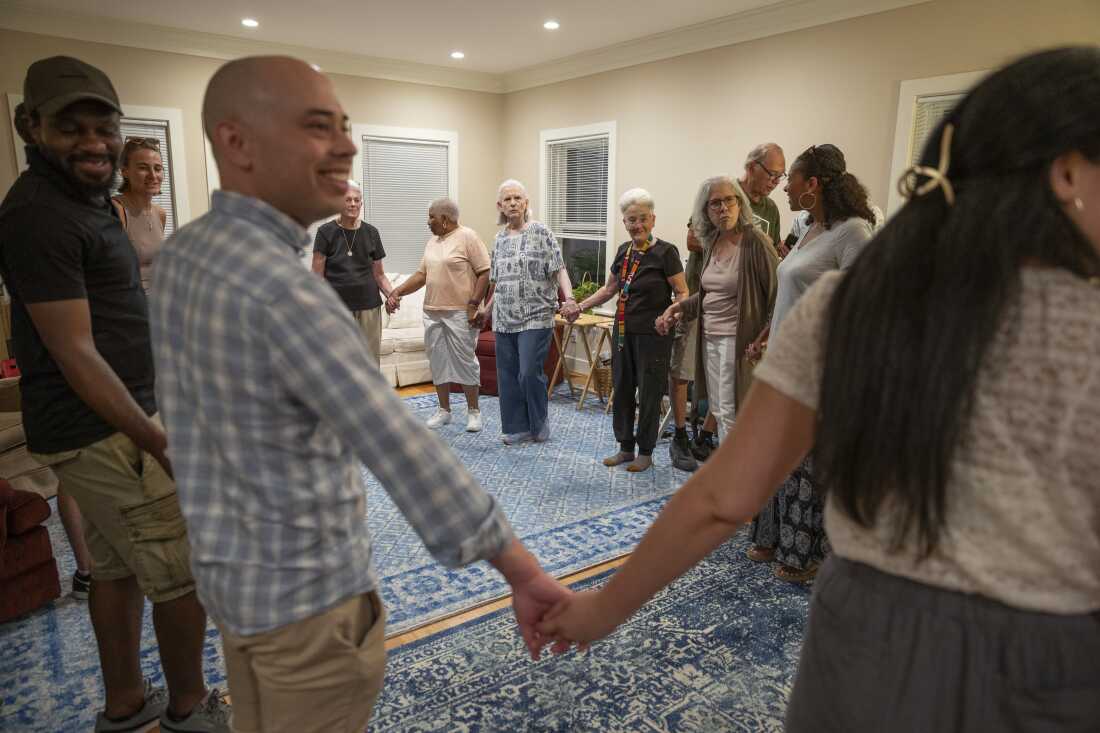
On July 31, 2026, in Washington, D.C., the Anne Montgomery House closed its doors after a decade of service. The community celebrated with a traditional Greek dance, reflecting the spirit of togetherness cultivated by the Society of the Sacred Heart. Charlotte Kesl captured this poignant moment for NPR.
Sister Diane Roche’s Journey
Sister Diane Roche smiled as she sat on the front porch, reminiscing about the home’s opening. For ten years, Anne Montgomery House provided affordable accommodation in Northeast Washington, D.C., for young women pursuing education and careers in one of the nation’s priciest cities. As Sister Roche, aged 76, pondered the closing, she expressed the deep commitment required to run the house: “I’m 76 years old and running a house like this takes a lot of energy,” she said. The house represented a vibrant community she would dearly miss.
A Unique Living Model
Anne Montgomery House, part of several similar homes managed by the Society of the Sacred Heart, offered more than affordable housing; it provided a community. Sister Roche, part of the international religious order, has actively worked across Haiti and the Democratic Republic of Congo, setting up intentional communities like this in St. Louis and New Orleans. The home bore the name of Sister Anne Montgomery, reflecting a legacy of peace activism and commitment to community.
Life at Anne Montgomery
Residents like Abigail Bulman, who moved there for a fellowship, discovered more than just inexpensive rent. Meals and daily routines turned strangers into lifelong friends. Bulman reflected, “I thought this was going to be a place that we pray in the morning, I had chores to do, and then I was going to go to bed here.” She found unexpected friendships that transformed her experience.
At the home, shared rent ranged from $500 to $700 monthly, significantly lower than Washington, D.C.’s typical rates. Sister Roche emphasized the importance of this affordability, especially for those on tight budgets: “The stipend for a Ph.D. is something like $700 a month,” she noted. This financial relief enabled young women to pursue their aspirations in an expensive city.
Cultivating Community
Sister Roche aimed to forge a diverse community, urging residents to share meals, reflect together, and engage in service. The experience not only enriched the residents’ lives but also brought joy and new perspectives to Roche herself. “You just become people together,” she said, cherishing the connection with the women.
Adjusting to Closure
Mary Gardner joined the community in 2024 during an internship on Capitol Hill. For her, Anne Montgomery House was more than lodging; it was a haven after exhausting days. Sister Clare Pratt provided emotional support: “I’d come home venting and angry or upset,” Gardner recalled. “Just listened” was Pratt’s comforting approach, offering hope without judgment.
The Broader Housing Challenge
The closure of Anne Montgomery House underscores the challenges faced by young professionals in expensive cities. In the U.S., young adults struggle with housing costs. A report by Zumper highlighted the steep median rent in major cities, while Harvard’s Joint Center for Housing Studies noted a record 22.7 million households spending substantial portions of their income on rent. Ingrid Gould Ellen from NYU pointed out that intentional communities like Anne Montgomery House offer crucial stability and mentorship to young adults.
Final Fairwell
On the final night, the house buzzed with former residents, friends, and celebration. Volunteers served Creole dishes while Sister Roche led a joyful Greek dance. Funmilayo Erinfolami, pursuing space physics, packed her belongings. The Nigerian native cherished the community she found at the house.
As Sister Roche transitions to an apartment, leaving behind communal Friday nights, she plans to continue aiding refugees and potentially serving along the border. “Nuns never retire,” she remarked, acknowledging that while homes and apartments differ, community remains essential.