
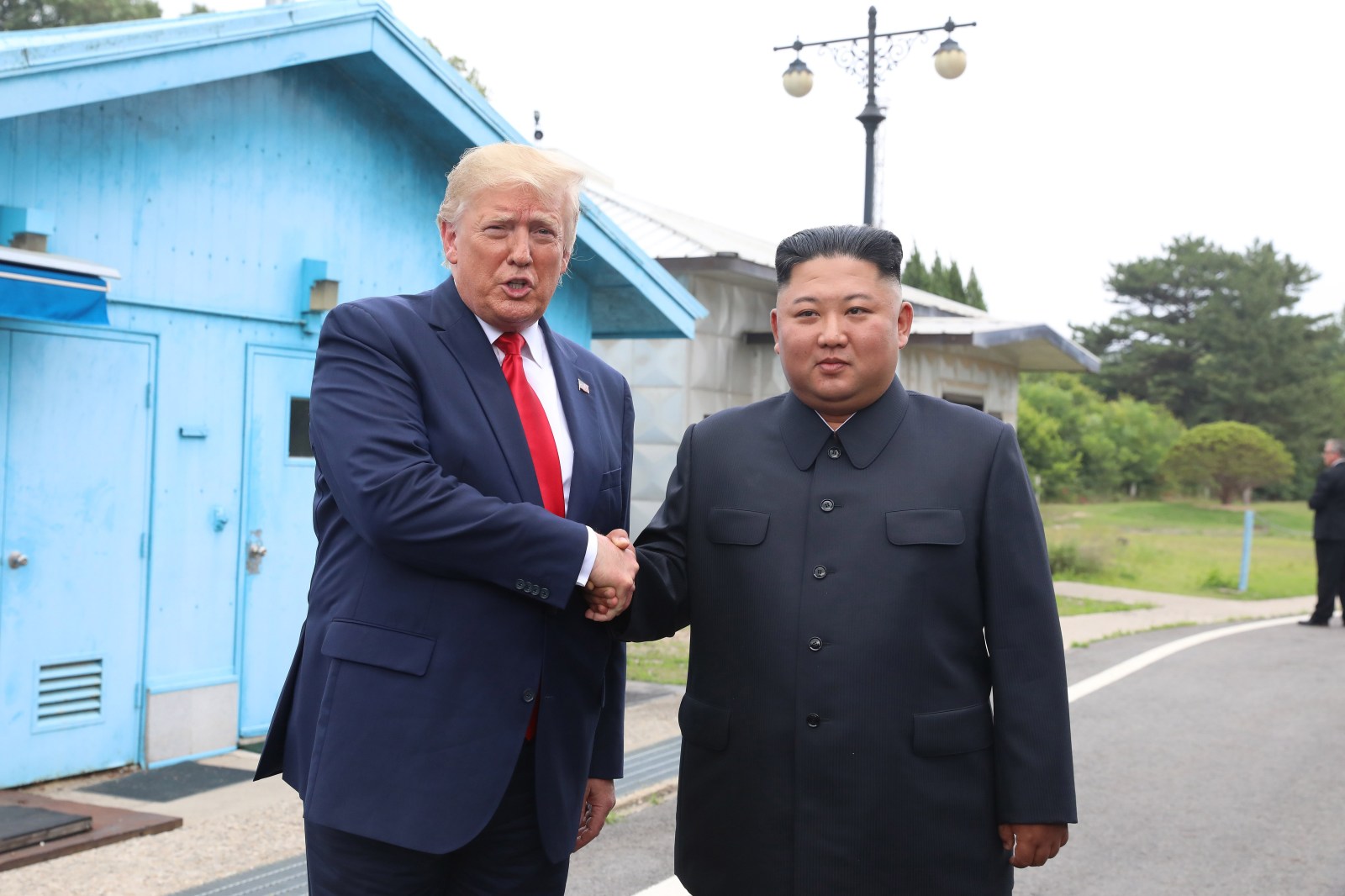
Trump’s Post and Directive
President Donald Trump announced on Sunday his instruction to Defense Secretary Pete Hegseth to significantly reduce upcoming military exercises between the U.S. and South Korea. He cited that these drills portray a “hostile” stance towards North Korea, despite his good relationship with its leader, Kim Jong Un.
In a Truth Social post, Trump expressed dissatisfaction with the U.S. agreeing to joint military exercises with South Korea, labeling them costly and unnecessary. He stated, “Based on my very good relationship with Kim Jong Un, of North Korea, I am not happy with the fact that the United States has long ago agreed to participate in Joint Military Exercises with South Korea.” Though Trump instructed a reduction, he admitted it was “too late to cancel” them entirely.
Importance of the Issue
This issue concerns one of the most delicate aspects of Northeast Asian security. Annual military exercises between the U.S. and South Korea are designed to enhance readiness among allies and deter North Korean aggression. Pyongyang has consistently condemned these exercises as invasion rehearsals, often reacting with threats, missile tests, or military displays.
The timing of the remarks is also crucial as North Korea strengthens ties with Russia and China, posing a challenge to regional security according to U.S. and allied officials. Any reduction in exercises might face opposition from defense officials and analysts who see them as critical for deterrence on the Korean Peninsula.
Trump’s Perspective
Trump’s stance aligns with his personal diplomacy approach with Kim Jong Un, whom he met thrice during his first term. He argued North Korea has been “unthreatening and respectful” under his presidency, suggesting the exercises send an “inappropriate and hostile” message. He highlighted the financial burden on the U.S. due to these drills.
In his interaction with South Korean President Lee Jae Myung, Trump quoted Lee’s response to a query about participating in efforts related to Iran’s denuclearization as “No thanks.” The Pentagon’s plan concerning the upcoming Ulchi Freedom Shield exercises remains unclear amid Trump’s directives.
North Korea’s Longstanding Opposition
Trump’s comments coincide with North Korea’s recent criticism of the Ulchi Freedom Shield exercises starting August 17. North Korea’s Foreign Ministry issued a strong warning, emphasizing readiness to counter any perceived aggression, and accused Washington of pursuing military dominance in the region.
The exercises, involving U.S. and South Korean forces, are intended to boost joint operational readiness. Recent reports indicate that North Korea views expanding U.S. military cooperation with South Korea and Japan as an increasing security threat.
Rising Tensions
Tensions have heightened on the Korean Peninsula. On Sunday, South Korea reported firing warning shots after North Korean soldiers crossed the military demarcation line. North Korean and Russian ties continue to strengthen, further invigorating regional dynamics.
Analysts argue that these evolving relationships bolster Kim Jong Un’s strategic influence, allowing greater leverage in global geopolitical arenas.
Trump’s Diplomatic History
Trump has consistently left open the possibility of renewed diplomacy with North Korea, often referencing his past meetings with Kim Jong Un as proof of their personal connection. His discussions with Kim marked the first of a sitting U.S. president meeting a North Korean leader, occurring in Singapore, Hanoi, and the Korean Demilitarized Zone.
Although talks on North Korea’s nuclear program did not progress significantly, Trump continues to reflect positively on his interactions with Kim. On Saturday, Trump posted a photo with Kim on Truth Social, highlighting their “GREAT” rapport, coinciding with North Korean criticism of the upcoming drills.
Future Implications
It is uncertain if Trump’s directive will lead to immediate changes in the Ulchi Freedom Shield exercises or future U.S.-South Korea military planning. Any modifications may attract scrutiny from defense officials and regional allies, especially as North Korea progresses its weapons development and forges military cooperation with Russia.
Trump’s latest remarks reaffirm that his policy on North Korea is deeply influenced by the personal diplomacy that was central to his first presidency’s unique relationship.