
Discussion on Race and Politics
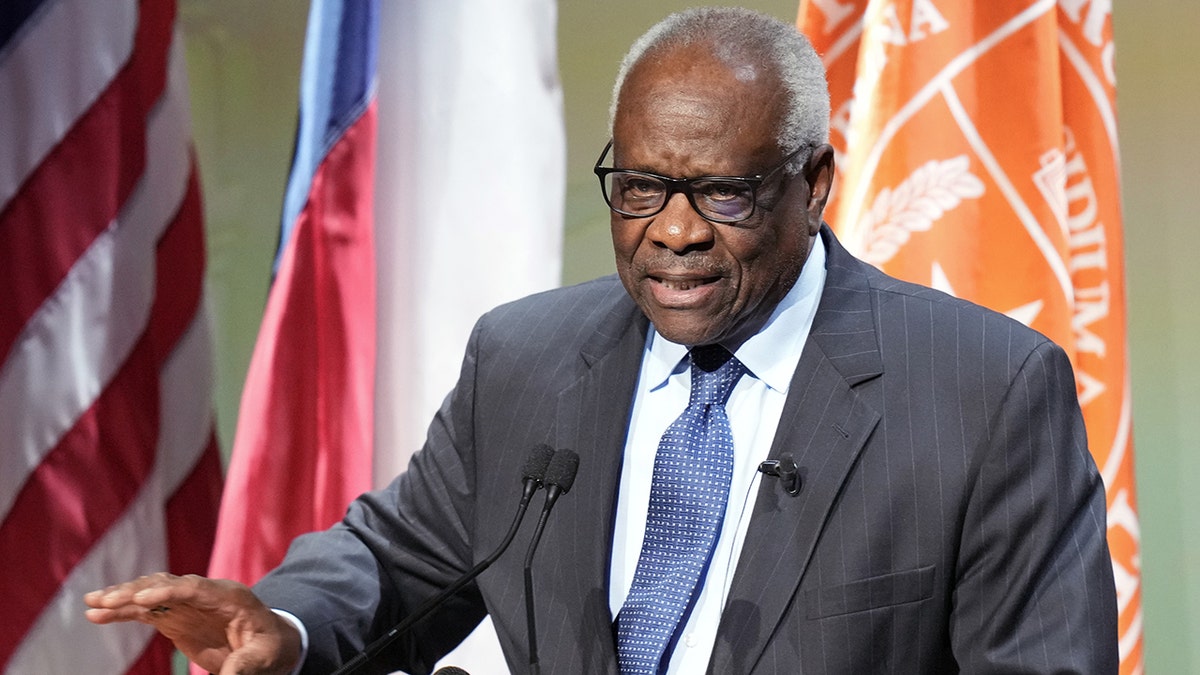
Supreme Court Justice Clarence Thomas recently discussed how his perspectives on race and politics attract criticism, particularly concerning his identity as a Black man. During a conversation at the Hoover Institution with Peter Robinson, Thomas expressed frustration with such critiques. “How stupid is that? Look at me,” he stated, challenging notions that Blackness is merely a state of mind.
Influence of Thomas Sowell
In this discussion, Thomas reflected on the significant impact economist Thomas Sowell had on his thinking. Sowell’s work, he said, gave him the confidence to challenge mainstream expectations regarding the political views of Black Americans. As a young man, Thomas felt compelled to adopt certain political beliefs but faced opposition when questioning them.
He recounted experiences from his time at Yale Law School, where he opposed school busing policies and faced criticism. He questioned the logic of sending Black children to unfamiliar schools and neighborhoods, remarking on the pressure to conform solely based on his race.
Disconnect Between Leaders and People
Thomas noted the gap between the positions held by Black political leaders and the views of ordinary Black Americans. Using school busing as an example, he pointed out the differing opinions between leaders and the community.
A pivotal moment for Thomas was his introduction to Sowell’s Race and Economics, which provided a logical basis for his burgeoning views and alleviated a sense of isolation. Thomas shared that engaging with Sowell’s work felt like a revelation, offering validation for his instincts.
Personal Journey with Sowell’s Ideas
Initially, Thomas resisted Sowell’s ideas, skeptical that a Black man should hold such views. Over time, however, Sowell’s example empowered Thomas to confidently express his beliefs, despite ensuing criticism.
Thomas emphasized the importance of independent thinking, a principle he learned from Sowell. The economist encouraged personal thought without imposing his views on others.
Overcoming Societal Pressure
Justice Thomas spoke about societal pressure on Black Americans to conform to particular ideologies, suggesting that dissent results in attacks on one’s racial identity. He highlighted the broader impact of this mindset, stating that disagreements often lead to discreditation instead of constructive debate.
Thomas concluded by affirming the value of independent thought, advocating for the freedom to form personal beliefs without succumbing to prevailing pressures.