
Controversy Over Border Infrastructure in West Texas
The Trump administration’s plan to enhance the border infrastructure through the Big Bend region in West Texas has faced opposition. Landowners, environmental groups, and local officials are concerned. They argue the new development could restrict access to isolated areas along the Rio Grande.
In this region, the Rio Grande serves as both the international boundary and a natural river system. Hence, border infrastructure is often planned inland rather than directly on the riverbank. Newsweek has reached out to the Department of Homeland Security for further comments.
The Claims and Counterclaims
During a guest appearance on ‘The Bulwark’ podcast, Isaac Saul, who founded the political newsletter Tangle, claimed federal border wall construction could result in the U.S. yielding considerable land areas to Mexico. His comments circulated quickly after a clip was shared on platform X, attracting over 375,000 views.
Saul mentioned that according to the Department of Homeland Security, upon completion of the wall, 280,000 acres of Texan land would effectively lie on the Mexican side. He emphasized that American citizens would be fenced out, losing access to critical water sources in West Texas.
Host Tim Miller summarized Saul’s statements, questioning whether these amounted to territorial concessions under the Trump administration. Saul confirmed the notion of such concessions.
Clarification from Isaac Saul
Later, Saul sought to clarify his stance in an email to Newsweek. He retracted the term “territorial concession,” explaining that Miller had introduced the phrase during the interview. The podcast, The Bulwark, presented clips framing the dialogue in this context.
Saul’s figure of 280,000 acres originated from analyzing proposed wall routes using AI analysis of Department of Homeland Security maps. Saul stressed that the issue was essentially Americans losing access to their lands, giving Mexican agricultural workers a shorter path to the river than American landowners.
The Legal and Territorial Reality
Constructing walls inland from the Rio Grande relocates thousands of acres to the river’s south side. Yet, it does not change the international boundary or grant Mexico legal ownership. The Boundary Treaty of 1970 between the U.S. and Mexico fixes the border along the river’s natural channel.
Federal contractors keep infrastructure away from the riverbanks to avoid affecting flood control and river flow, under International Boundary and Water Commission guidelines. Barriers constructed north of the river do not signify a territorial concession, sovereignty transfer, or jurisdiction change to Mexico.
The U.S. government has the authority to acquire private lands for border projects through sales or eminent domain, in line with Fifth Amendment compensation requirements enforced by the U.S. Department of Justice. This process complicates land and water access for some owners, but it does not impact land title or territorial control. Access parameters are subject to variation based on property details.
The Verdict
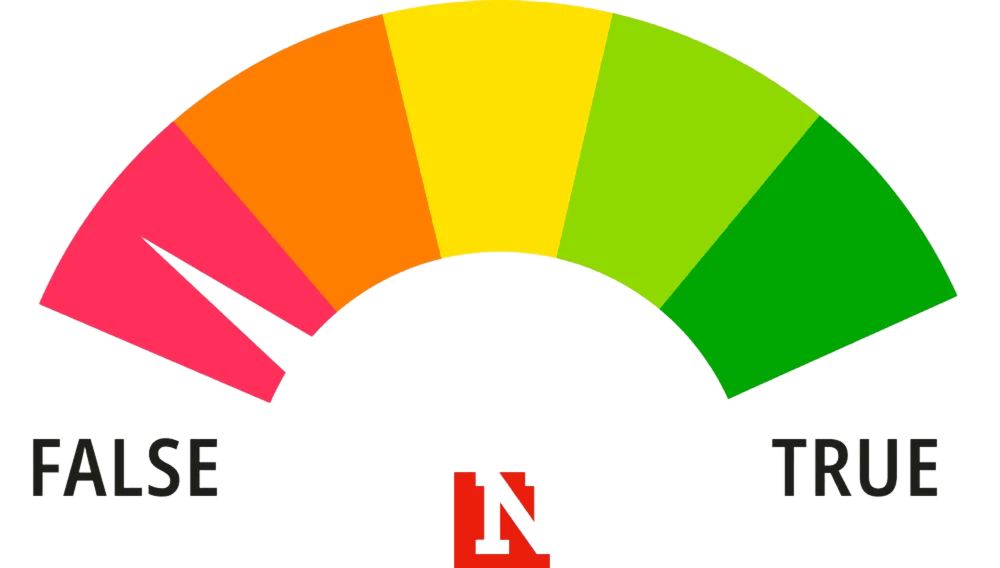
The claim of the U.S. giving land to Mexico is incorrect. While new border walls north of the Rio Grande complicate access for Texan property owners, placing land between the fence and river, the U.S. is not ceding territory to Mexico. The international border remains as established by treaty at the Rio Grande, and all land north of the river remains under U.S. sovereignty without Mexican legal rights.