
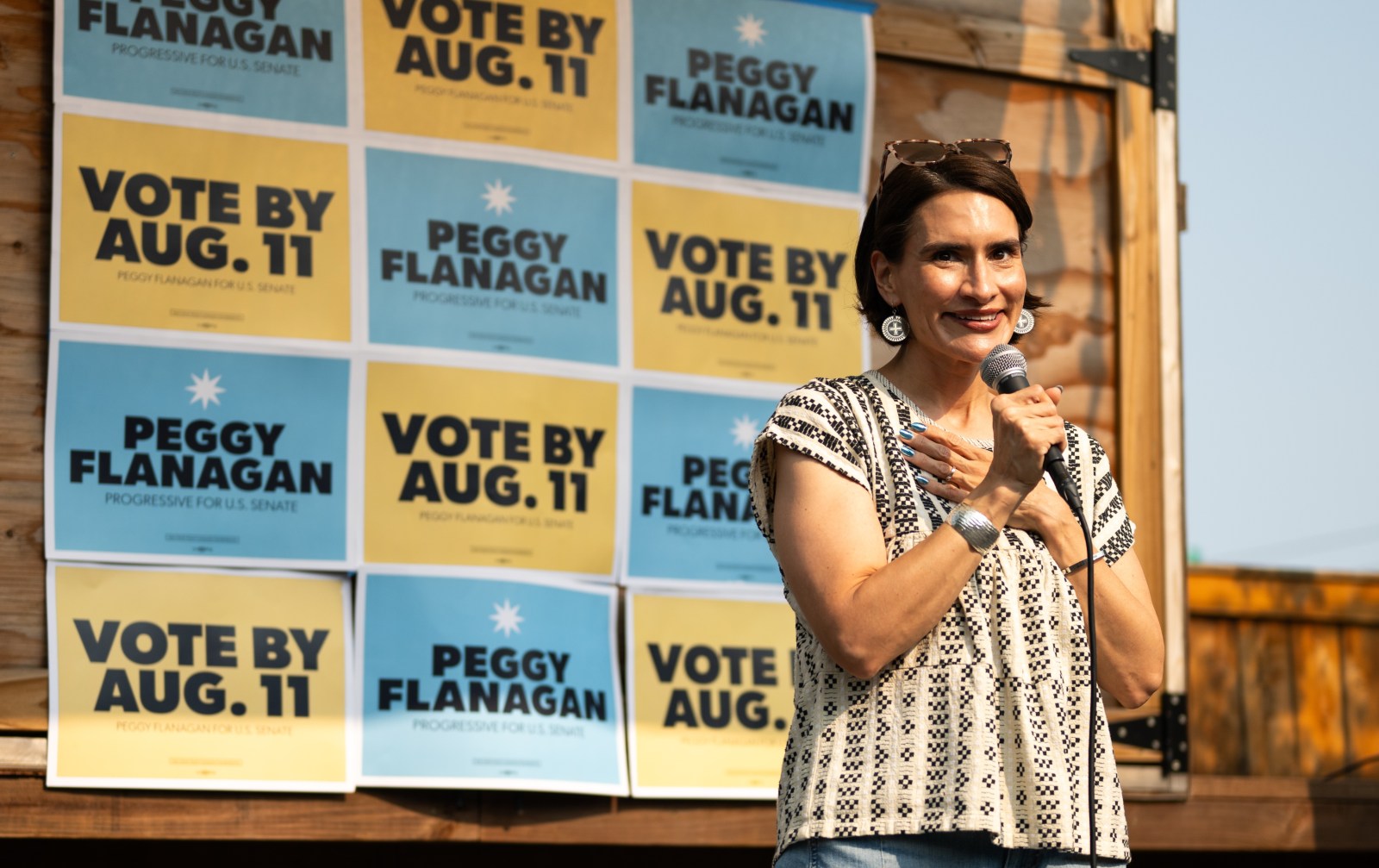
Minnesota’s Democratic voters emphasized the importance of grassroots organizing and progressive messaging over traditional campaign advertising. In a recent primary election, Lieutenant Governor Peggy Flanagan defeated Representative Angie Craig to become the Democratic nominee for the U.S. Senate. Flanagan secured 59 percent of the vote compared to Craig’s 39.4 percent, with nearly all votes tallied.
This race mirrored broader trends in the Democratic primary landscape. Flanagan’s opposition to Israel’s actions in Gaza and her refusal of corporate PAC funding presented Craig as a candidate aligned with Washington insider politics. Despite Craig raising $12.6 million against Flanagan’s $6.4 million, Flanagan received endorsements from key progressive figures like Senators Elizabeth Warren and Bernie Sanders. In contrast, Craig was backed by influential Democrats Hakeem Jeffries and Nancy Pelosi.
“Not taking corporate PAC money was one of the easiest decisions I’ve ever made,” said Flanagan, highlighting her commitment to grassroots efforts.
Craig invested $9.6 million in advertisements compared to Flanagan’s $1.9 million. However, Flanagan prioritized community engagement, organizing over 300 events across Minnesota. She focused on enacting Medicare for All, raising the minimum wage, and providing universal childcare. This approach energized voters, drawing 40,000 participants to the Minnesota Democratic-Farmer-Labor (DFL) Party precinct caucuses to select delegates for future conventions.
The momentum continued to build into the DFL convention in May, where Flanagan secured the party’s endorsement, further solidifying her position in the race.
“We had 30,000 doors knocked the weekend before the race,” Flanagan noted, illustrating her campaign’s extensive reach. “Many volunteers were first-timers.”
Flanagan now prepares to face Republican nominee Michele Tafoya, a former sportscaster. Tafoya’s campaign criticized politicians for lacking accountability in governance. Flanagan, maintaining her anti-PAC stance, expects increased external support for Tafoya from GOP allies and corporate interests.
The Minnesota Senate race has drawn national attention, but the Cook Political Report rates it as “Likely Democratic.” Minnesota’s Democratic voting history spans several decades, having consistently chosen Democratic presidential candidates since 1972.
If elected, Flanagan plans to collaborate with “The Fight Club,” a cohort of progressive Democratic senators aimed at shifting Senate dynamics leftward. She has expressed willingness to consider Senator Chris Van Hollen of Maryland for Senate leadership, signaling potential changes in Democratic leadership preferences.
Flanagan intends to connect across party lines with initiatives like “99 coffees” to foster bipartisan collaboration. She recognizes the necessity of building bridges, even with Republicans, to address institutional issues and collaborate for positive legislative outcomes.
“Voters are choosing representation that prioritizes people over corporations,” Flanagan remarked. “This election signals a change from the Washington status quo, with new voices emerging to drive meaningful change.”