
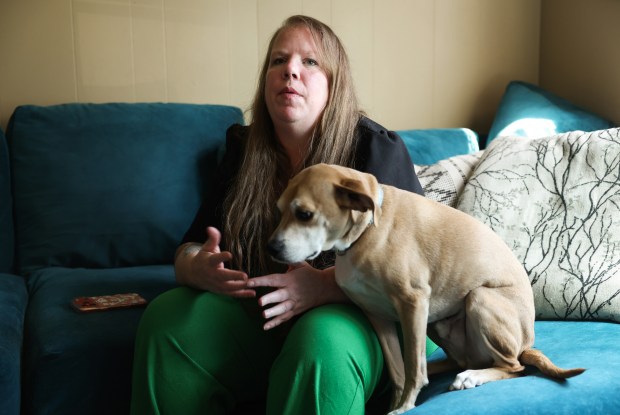
Adriane Moen, a single mother facing financial difficulties, met a man on a dating app, as many do. She thought she was starting a romantic relationship. However, court records reveal a darker turn when the Chicago man suggested she use the website Backpage, known for sex work, before its 2018 shutdown by the FBI. The relationship became abusive, forcing Moen into continuous sex work. He allegedly took up to 60 percent of her earnings. Moen, now 49, filed a federal civil lawsuit in Illinois against him.
Last month, Moen won a $50 million judgment against her alleged trafficker. This rare case offers hope for other trafficking survivors seeking justice. “I am grateful they heard my story,” Moen stated in an email to the Tribune. “It is justice, even if I may never get any payment from him.” U.S. District Judge Sara Darrow described Moen’s ordeal as “among the most reprehensible possible,” highlighting the significant harm she suffered.
Federal and state laws allow trafficking survivors to seek financial awards in civil courts. Suiting hotel chains or internet service providers often presents better settlement opportunities. Moen’s direct lawsuit against her alleged trafficker is rare, possibly the first of its kind in Illinois, according to her attorneys. Despite a system that targeted her with prostitution arrests instead of prosecuting her trafficker, a judge’s favorable ruling is satisfying for her.
“It is a novel approach to try to find justice and accountability for a survivor who already was really failed by the criminal justice system,” said Elizabeth Payne, legal director of the Chicago Alliance Against Sexual Exploitation.
Moen filed the lawsuit in 2025 in the U.S. District Court for the Central District of Illinois against a man named John Woolridge, whom she met in 2012. Woolridge did not respond to the complaint, failing to participate in the court process. The court served him via email and Instagram. He faces no criminal charges related to Moen’s case.
The complaint describes a common path for trafficking victims. Vulnerable and needing resources, Moen talked to Woolridge daily before meeting him. Once in a romantic relationship, he pressured her into sex work, promising it would solve her financial troubles.
“Trafficking isn’t just being locked in a warehouse somewhere,” Moen said in a statement to the Tribune. “It can happen with your partner. They see the money aspect and that’s all they want.” Woolridge advertised her services, set rates, and demanded earnings, escalating to hostility and abuse when she tried to leave.
Moen faced prostitution arrests in 2013 and 2014. She alleged that Woolridge’s manipulation, threats, and violence kept her trapped. By 2015, she escaped and moved in with her father. She estimated handing over around $420,000 to Woolridge.
Initially, Moen sought help from the Chicago Alliance Against Sexual Exploitation to clear her prostitution record, which led to filing the lawsuit with Chapman and Cutler LLP. Payne believes Woolridge lacks $50 million, but the judgment ensures accountability. It also provides a platform for Moen to recover some funds.
“It’s unbelievably powerful to hear a judge not only agree with liability but also define the harm of sex trafficking,” said Payne.
Moen, now residing in Rock Island, realized only through therapy in 2020 that she was a trafficking victim. She advocates for other survivors to come forward, offering support and understanding.
“It’s important for other survivors to know it’s okay to come forward,” she said in an email. “Regardless of the situation, it’s okay to tell somebody.”