
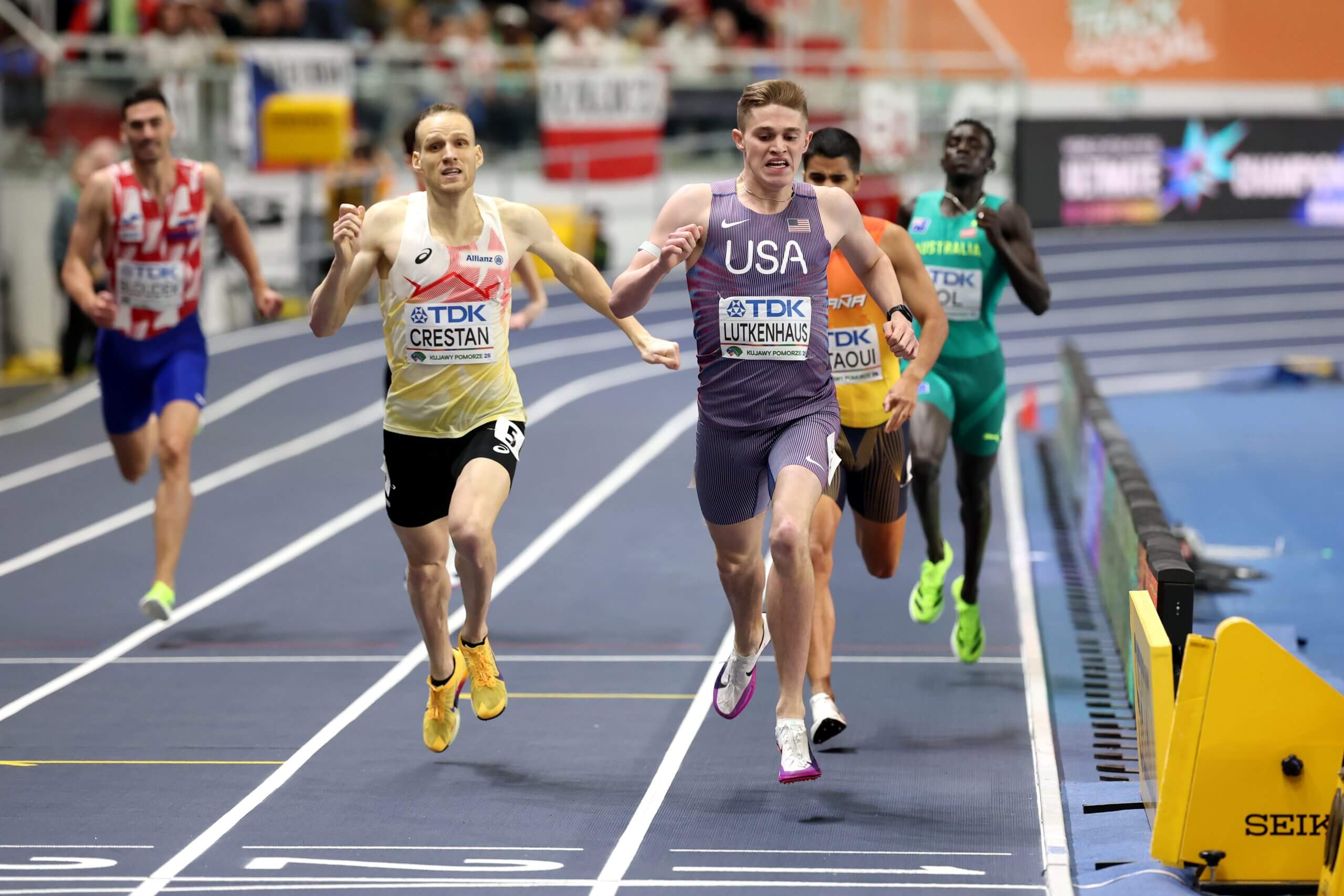
Cooper Lutkenhaus stands out as a formidable teenager in middle-distance running, despite joining video calls from his father’s account. His father, George Lutkenhaus, a proud former collegiate runner, now directs the athletics program at the Texas high school where Cooper, 17, studies. Cooper called from a school office while his dad worked nearby.
Cooper describes himself as a fairly typical teenager, aside from his running achievements. His accomplishments over the past two years speak volumes.
He began amassing age-group records, famously breaking Michael Granville’s 800m high school record set in 1996. Last year, he qualified for the U.S. nationals final, becoming the youngest in the field. Cooper finished second to Donovan Brazier, earning a spot at the Tokyo World Championships with a best under-18 time of 1:42.27.
Following these successes, he signed with Nike, marking a first for an American middle-distance runner to turn professional in high school. Just before turning 17, he became the youngest American athlete in World Championship history.
This season has been stellar for him. Cooper describes 2026 as a fantastic freshman year on the professional circuit. In eight months, he secured eight wins from 10 races, even clinching national indoor and outdoor titles in March and July.
His first major victory was at the U.S. Outdoor Title, finishing the 800m in 1:43.48. “We had two big goals: to be the U.S. Champ indoor and outdoors,” he shares, feeling satisfied ticking off these achievements. Cooper admits initial nervousness for his first indoor race of the season in New York.
Cooper’s self-assurance grew post his first win, peaking at the World Indoor Championships in Torun, Poland. Despite being the youngest by six years, he earned the world indoor champion title, making this his favorite race of the season.
In the previous year at Tokyo, Cooper did not advance beyond the heats. Reflecting on his return and subsequent indoor success, Cooper feels pride in winning not just for himself, but the country.
Cooper’s strategic racing certainly makes an impact. He ranks joint-14th on the all-time 800m list, second-fastest teenager, and third-fastest American. His gold in Torun was a testament to both physical prowess and race strategy.
His coach, Chris Capeau, emphasized making decisive moves; advice Cooper adhered to when he surged ahead at the 500m mark. Cooper recalls feeling the pace slow, urging his strategy of preemptive action with 300m to go.
Confidence built with each race. After clinching the national and world titles, Cooper relished his European experience, triumphing in the Stockholm and Oslo Diamond League meets.
In Stockholm, he outpaced North American 800m record-holder Marco Arop. Cooper acknowledges nervousness, but relished competing against a global field. Despite minor regrets about pacing, it signaled good form.
In Oslo, he corrected earlier mistakes by securing an advantageous position early, beating Olympic champion Emmanuel Wanyonyi. Cooper recounts driving past academic hurdles, reinforcing a fierce competitive spirit.
One of his standout races, Cooper’s 1:42.08s in Oslo momentarily ranked as the year’s fastest until Arop bested it in Paris. His signature finishing kick defines many races, marked by resilience and fearlessness.
Cooper benefits from familial sports camaraderie. His family background fuels competitive yet supportive dynamics. Older brother George Jr. swam competitively, while middle sibling Andrew runs for the University of Tulsa.
Cooper’s versatility showed in other sports, including football, his middle-school preference over track. His quarterback role matched his athleticism and desire to impact games.
He realized track potential in eighth grade with impressive times, leading to a notable 1:47.58 in the 800m at age 15. Cooper then chose to pursue high-level competition after consulting his family.
Turning professional meant foregoing NCAA eligibility and collegiate competition. While bittersweet, Cooper’s family and coach deemed it the best decision. He still considers studying kinesiology as a future pathway to coaching.
As he contemplates long-term plans beyond athletics, the importance of body, mind, and talent management is clear. Despite precocious success, Cooper envisions Olympic glory and titles, remaining a youthful force in running.