
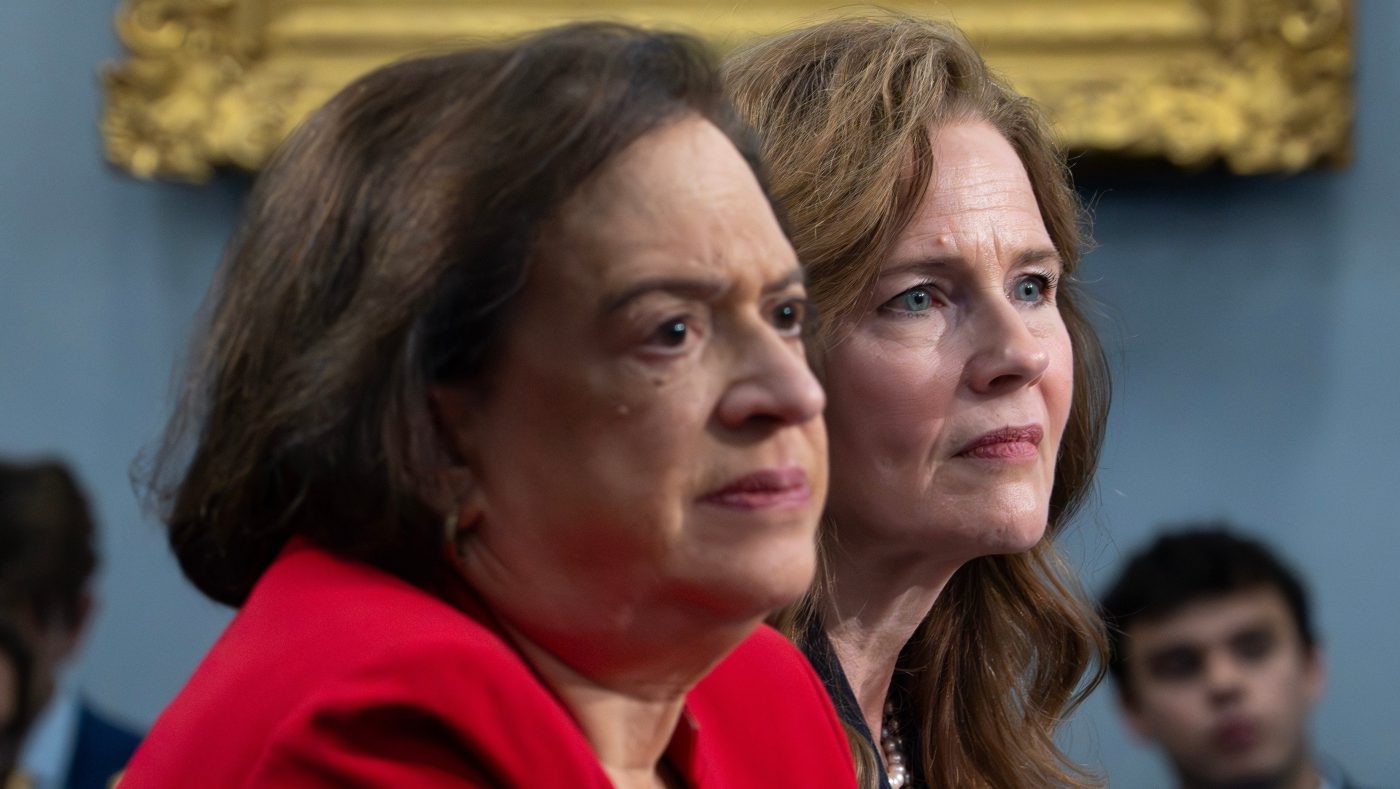
Supreme Court Justices Amy Coney Barrett and Elena Kagan recently testified before a House Appropriations subcommittee hearing. This event highlights ongoing scrutiny of the court’s role in American politics. Known political scientist Robert Dahl commented nearly five decades ago that viewing the Supreme Court as solely a legal entity overlooks its broader political significance. Americans often hold conflicting views about the court’s political nature.
Recent polling indicates shifting perceptions. Over 50% of Americans disapprove of the court’s job performance, with a notable portion accusing the court of favoring Trump administration policies based on ideology rather than law. This perception adds to worries that the court could become a partisan entity.
This perception draws parallels with historical courts known for controversial decisions. The Taney Court (1836-1864) is infamous for the Dred Scott decision’s contribution to the Civil War. Similarly, the 1930s Supreme Court faced a constitutional crisis after opposing President Roosevelt’s New Deal. Such associations are troubling for the current court.
On June 29, a decision granting the president authority to dismiss members of independent federal regulatory agencies stirred significant debate. Economist Paul Krugman criticized the court, suggesting it threatens U.S. democracy by concentrating power in the presidency.
“We have six people determined to put the catastrophically bad leader that we currently have sitting in the White House in charge of everything, which is a nightmare scenario on every level.”
Concerns about the court’s partiality are not new. In 2017-2018, Senator Sheldon Whitehouse analyzed a term’s decisions, arguing that traditionally conservative principles were abandoned for partisan gains. This perspective challenges the justices’ claims of nonpartisan motivations.
Public addresses by justices exacerbate these concerns. Justice Ketanji Brown Jackson highlighted a political undertone in Voting Rights Act rulings, prompting Justice Samuel Alito to label her comments as baseless. Such exchanges emphasize the court’s ideological divisions.
The same dynamic appeared in past decisions. Justice Antonin Scalia, critiquing the court’s legalization of same-sex marriage, described the ruling as an overreach of judicial power, devoid of traditional legal foundations.
While the public rarely reads detailed court opinions, they recognize consistent ideological splits in significant cases. This perception affects public trust. Chief Justice John Roberts and other justices emphasize the court’s nonpartisan nature. However, Justice Neil Gorsuch and Justice Amy Coney Barrett’s public reassurances face skepticism.
The current approach, marked by denial of political influence, undermines public confidence. The court must reconsider its communication strategy to rebuild trust. Americans should have clarity on whether the court functions as a distinctive political institution.
Authored by Austin Sarat, William Nelson Cromwell Professor of Jurisprudence and Political Science at Amherst College.
© 2026 Nexstar Media Inc. All rights reserved. Redistribution prohibited.