
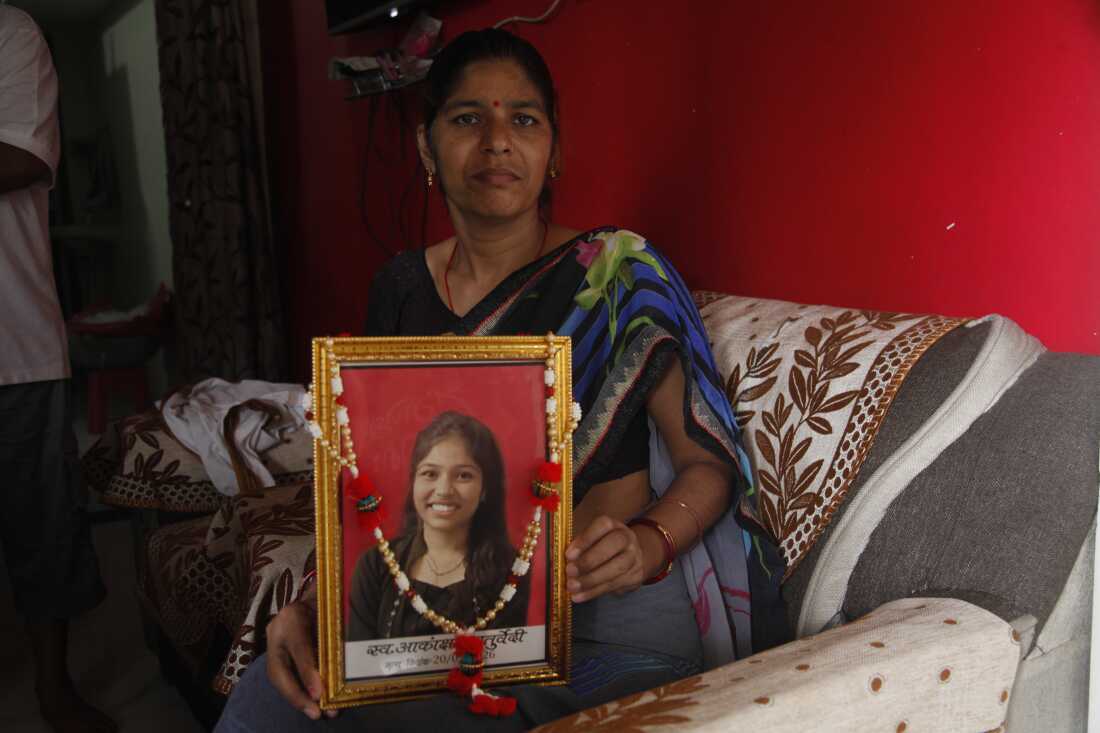
NAGPUR, India: Neelum Chaturvedi holds a picture of her 18-year-old daughter Akanksha, who tragically took her own life in May. This tragedy occurred soon after officials canceled the results of her medical examination, citing leaked questions as the reason. Akanksha’s suicide note, addressed to her parents, expressed her sorrow over the pressure to retake the exam and her perceived failure to meet expectations. The issue of student suicides in India is not new, but cases like Akanksha’s have reignited debates about the burdens placed on students by the education system.
“Mummy, Pappa,” began Akanksha’s note, reflective of a crisis affecting thousands of Indian students annually.
The pressure of high-stakes exams has long contributed to the increase in student suicides. According to The Hindu, student suicides increased from 8,068 in 2014 to 14,488 in 2024. Often, failing to clear exams is a common precursor to these tragedies. Critics argue that the complex education system, compounded by inadequate government funding and reliance on private coaching centers, fuels this crisis. Government spending on education has decreased, pushing families toward private solutions, which many cannot afford.
Maheshwer Peri, who runs a career selection company, highlights that nearly all students who successfully pass such exams do so through coaching centers. These centers have become a thriving industry, training students to navigate exams that can dictate their future careers. However, success remains rare compared to the number seeking it, placing immense pressure on students and families.
Pradip Saha, an education author, points out the lack of regulation and data on enrollments and exam success rates in coaching centers. These centers, often tied to companies offering loans, contribute to the financial strain on families who will pay anything for a chance at a prestigious career. This financial burden was evident in Akanksha’s father’s struggle to repay loans acquired to send her to coaching.
Akanksha was deeply committed to her dream of becoming a doctor, a career offering financial stability in India. Her family had moved to better their chances in the education system. Her rigorous study schedule, however, created stress that she ultimately could not overcome. The pressure was exacerbated by the sudden cancellation of exam results, leaving her devastated.
Her death sparked protests across India, fueled by a combination of factors including condescending remarks made by Chief Justice Surya Kant. Protests intensified with sit-ins and widespread public resistance. Pressure mounted until the education minister resigned, and the government promised reforms and compensation to affected families.
Political voices like Šumit Ganguly are skeptical about potential changes, arguing that entrenched interests, including financial gains from taxing payments to coaching centers, hinder meaningful reform. Meanwhile, Akanksha’s family grapples not only with their immense loss but also with the financial and emotional reality left in its wake, feeling largely ignored by government officials. Akanksha’s mother expressed despair over their situation, contemplating how they might manage to move forward.