
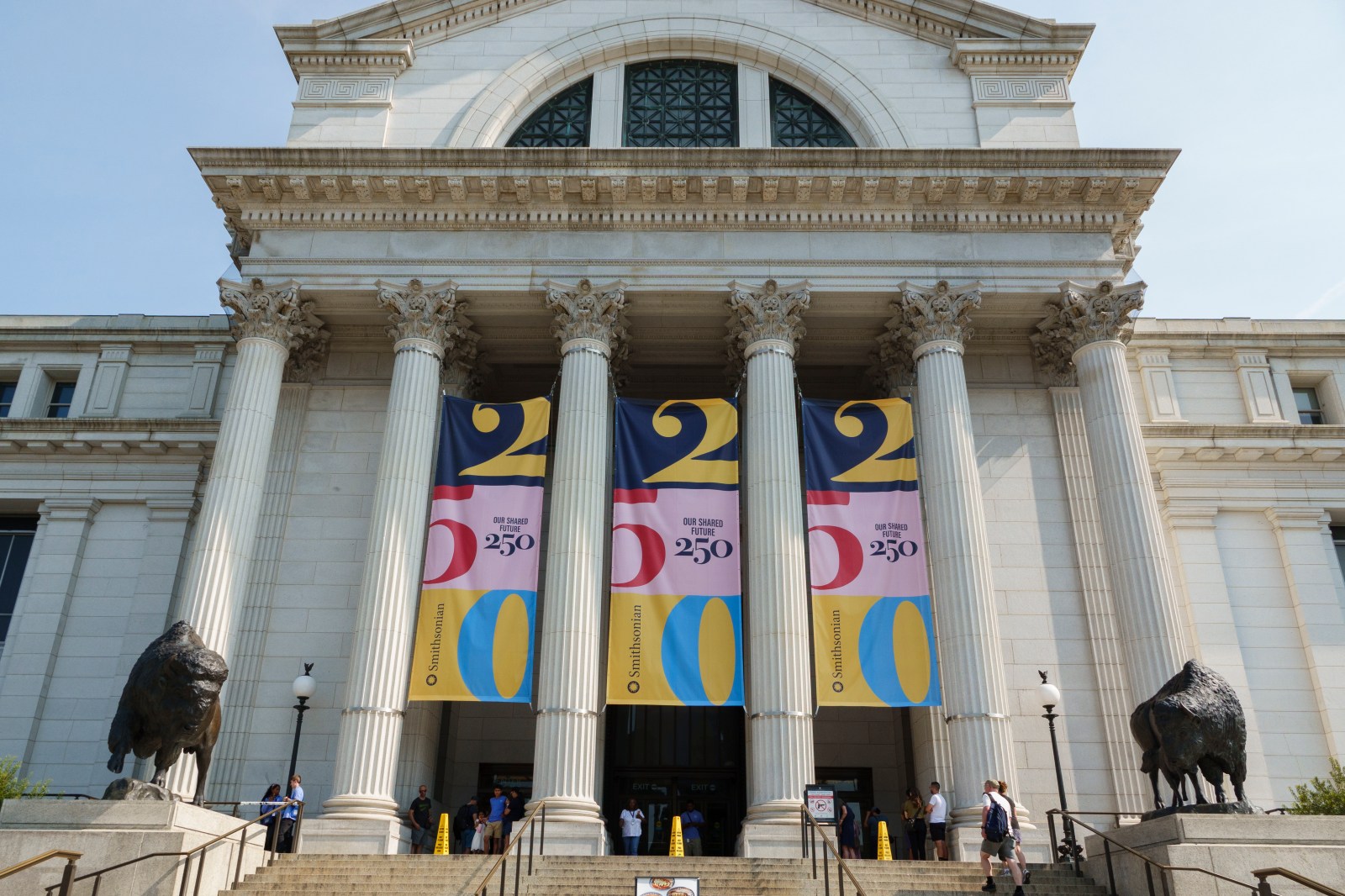
The Smithsonian Institution stands as the world’s largest museum, education, and research complex, welcoming visitors from across the globe without any charge. Over the years, it has become one of Washington’s most esteemed attractions, symbolizing a vital part of the nation’s identity. While the United States may have a shorter history compared to older civilizations, its narrative is undoubtedly unique, with the Smithsonian playing a crucial role in bringing this history to life for countless Americans.
For many, including myself, visiting the Smithsonian represents a journey through the rich tapestry of American history. I fondly recall my childhood visits to the National Museum of American History (NMAH) and the excitement of seeing the nation’s narrative unfold through its exhibits. These experiences were pivotal, and as my children grew, I ensured they too experienced the historical and inspirational offerings of Washington, D.C.
As America approached its 250th anniversary, there was anticipation about how the Smithsonian might celebrate this milestone. Visitors wondered what stories and artifacts it might unveil to commemorate America’s founding and rise. However, instead of the expected celebrations, the museum presented an unexpected narrative. The focus shifted to an interpretation of history viewed through an oppressor and oppressed lens, portraying America’s foundation as unsettling.
Recent events, including a House Oversight hearing, highlighted concerns about the museum’s current direction. The leadership appears to emphasize condemnation over celebration. A report by the White House Domestic Policy Council further emphasized this shift. During a 2024 presentation, Director Anthea Hartig suggested that the museum abandon an ‘America First’ perspective. She proposed broadening the scope of U.S. history to encompass all of the Americas.
The museum should not be in the business of erasing its borders.
This viewpoint is echoed in the institution’s Center for Restorative History, which claims to address historical harms. The center’s website suggests that it seeks to remedy exclusions using restorative justice principles. Some museum resources have addressed topics like “white supremacy culture,” presenting critiques of familial and cultural foundations considered integral to American society.
The “Girlhood (it’s complicated)” exhibit showcases these changes. Instead of focusing on the women who significantly impacted history, the exhibit includes a biological male in a space designated for women and girls, addressing issues like gun control and illegal immigration.
The NMAH houses one of the world’s most extensive collections of women’s history artifacts. Exhibits like the “First Ladies” remain popular, yet current trends seem to prioritize modern political issues over traditional historical narratives.
These changes reflect a structured bureaucratic mandate that demands each exhibit touch on topics such as race, identity, gender, environmental changes, immigration, economic inequality, technology, nationalism, and globalism. Such requirements hint at an ideological framework rather than a purely educational mission.
Historically, the Smithsonian aimed to inspire, particularly younger generations, to understand and contribute to the nation’s legacy. While history is indeed complex, acknowledging both victories and challenges enriches historical education. Museums like the Smithsonian, funded by taxpayers, should focus on education, not on advancing a political agenda.
The responsibility of Smithsonian curators is to present history truthfully. Revising it to suit current narratives undermines its integrity. Museums should educate on American history without distorting it to fit contemporary ideologies.
Representative Michael Cloud, who serves Texas’s 27th Congressional District, originally provided the perspectives in this article. The views expressed reflect his interpretations and concerns.