
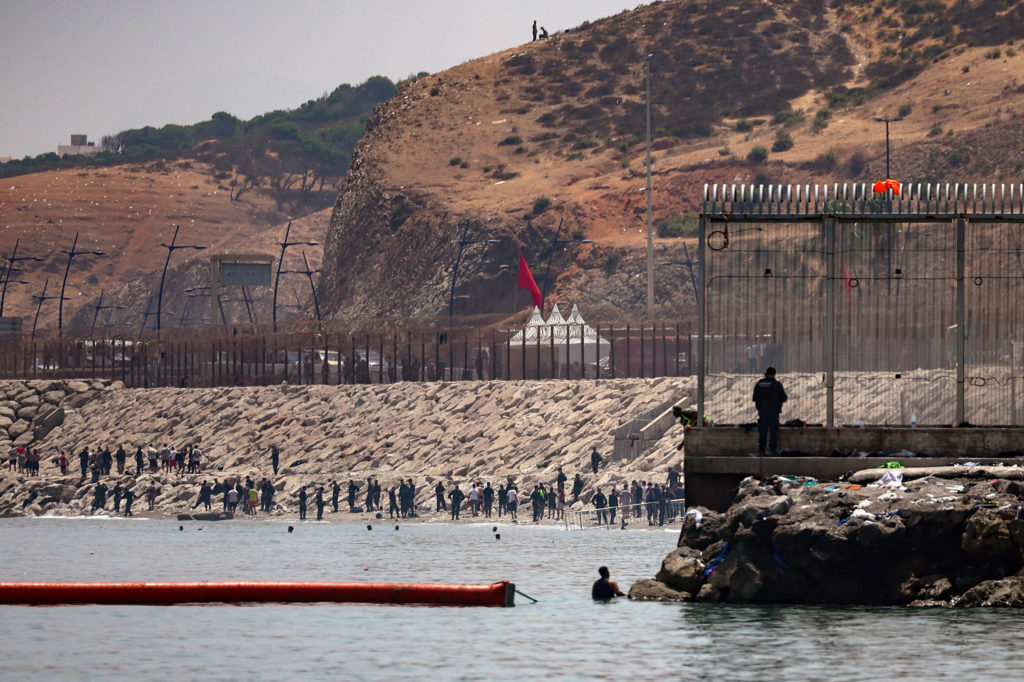
In Ceuta, Spain installed a 500-meter barrier following a massive migrant surge. Tens of thousands breached the sea border between Ceuta and Morocco, leading to a humanitarian crisis.
The Spanish government confirmed the deaths of at least 67 migrants, some due to drowning and others in a stampede at a breakwater barrier. The arrival of 50,000 to 60,000 migrants created chaos, reigniting immigration discussions in Europe.
Spain’s migration policy contrasts with others in the EU and the U.S., focusing on granting legal status to unauthorized workers to enhance its economy. This policy clash intensified with calls for Spain’s temporary suspension from the Schengen zone, which Spanish Prime Minister Pedro Sánchez criticized as prejudiced.
Spain has seen fewer illegal migrants compared to Italy or Greece in recent years. On the ground, Spanish soldiers met migrants who swam to Ceuta’s Tarajal beach. Interior Minister Fernando Grande-Marlaska emphasized Spain’s efforts to restore order with Morocco’s cooperation.
European Union countries called for a coordinated response. A letter signed by multiple EU member states expressed concern over uncontrolled migration and called for urgent talks. Italy reinstated some border controls for travelers from Spain.
Meanwhile, migrants began returning to Morocco. Many left Ceuta wounded and hungry after facing harsh conditions. Some chose to return on their own after struggling for basic needs in Ceuta.
Residents of Ceuta, like Mohamed Abdelatif, 21, noticed significant disruptions in daily life. Spanish and Moroccan forces had clashed, resulting in visible damage in the border region.
Despite the dire situation, some migrants like Mohamed Hatri expressed a determination to stay in Ceuta, citing the closure of resources to compel a return to Morocco.
This situation at Ceuta highlights ongoing challenges and complexities in European migration policies, underscoring the need for a unified response.