
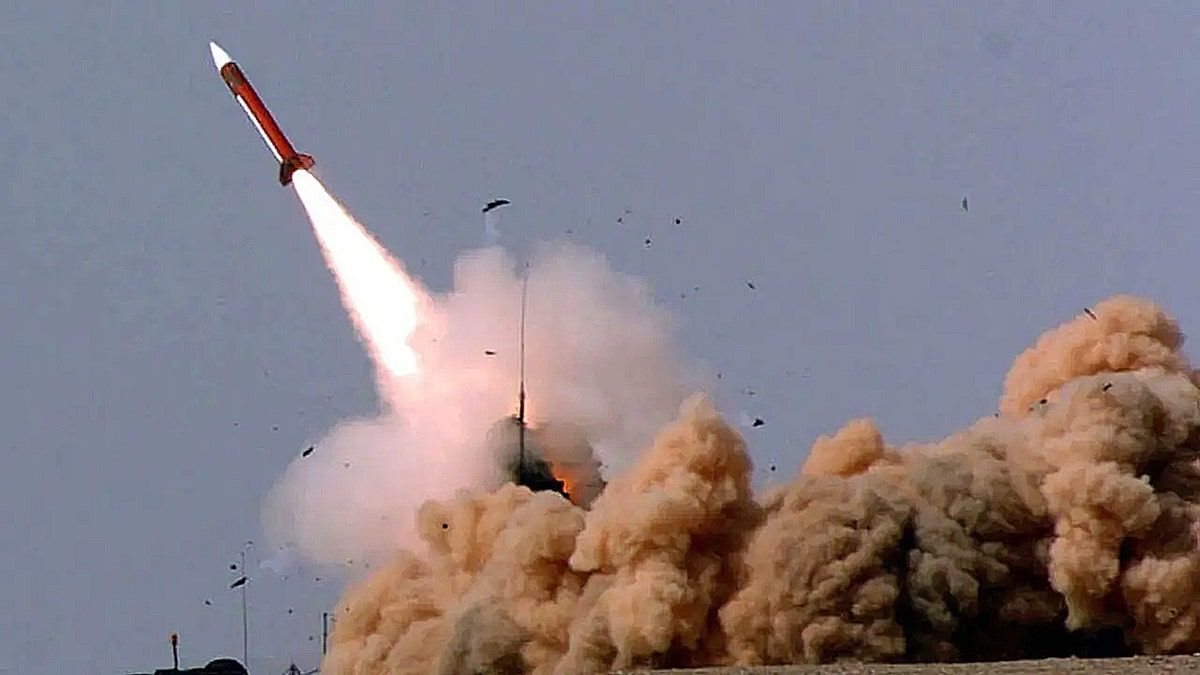
The Pentagon is dealing with a pressing challenge as its stockpile of missile defense interceptors dwindles due to ongoing conflict with Iran. Military planners worry about their capacity to maintain the current limited retaliatory strike strategy.
According to the Center for Strategic and International Studies (CSIS), open-source budget data supplied to Congress reveals that the U.S. inventory of Patriot interceptors has decreased from approximately 2,300 before the conflict to fewer than 827. Additionally, THAAD interceptor numbers have dropped from 452 to fewer than 278.
“If you look at what we’ve expended for the Patriots, for example, over half the global inventory has now been consumed in the Middle East,” said Kelly Grieco, a missile expert at the Stimson Center.
Replenishing these stockpiles could take three years or more, sparking concerns about the U.S.’s ability to protect forces and bases globally in case of another major conflict, such as one in the Pacific.
The Pentagon has requested $67 billion for fiscal year 2026 emergency funding. This includes $18.2 billion to replace advanced missile defense systems like the Patriot and THAAD. By 2031, 70% of the Pentagon’s munitions purchases are expected to be low-cost, priced at $600,000 or less.
“The munitions we use today are incredibly effective,” said Jerry McGinn from CSIS. However, he noted that these systems weren’t designed for mass production, with manufacturing taking two to three years per contract.
The Pentagon recently met with leading Silicon Valley defense firms to address the urgent need to replenish U.S. weapons stocks. These companies, including Shield AI and Anduril, face challenges in scaling up production for government needs.
Brandon Tseng, who attended the meeting, founded SHIELD AI over a decade ago. He highlighted how Silicon Valley’s interest in defense tech was minimal in the past, making funding difficult. Tseng’s company has developed the V-BAT, an AI-driven targeting system currently in use by Ukraine.
Grieco notes that Iran’s strategy of targeting U.S. bases forces the Pentagon to deplete interceptor stockpiles, increasing risks to U.S. troops as the conflict continues. Iran aims to exhaust U.S. military resources, believing their interest in the war is existential, unlike the U.S.
By Jennifer Griffin, National Security Correspondent for FOX News Channel.