
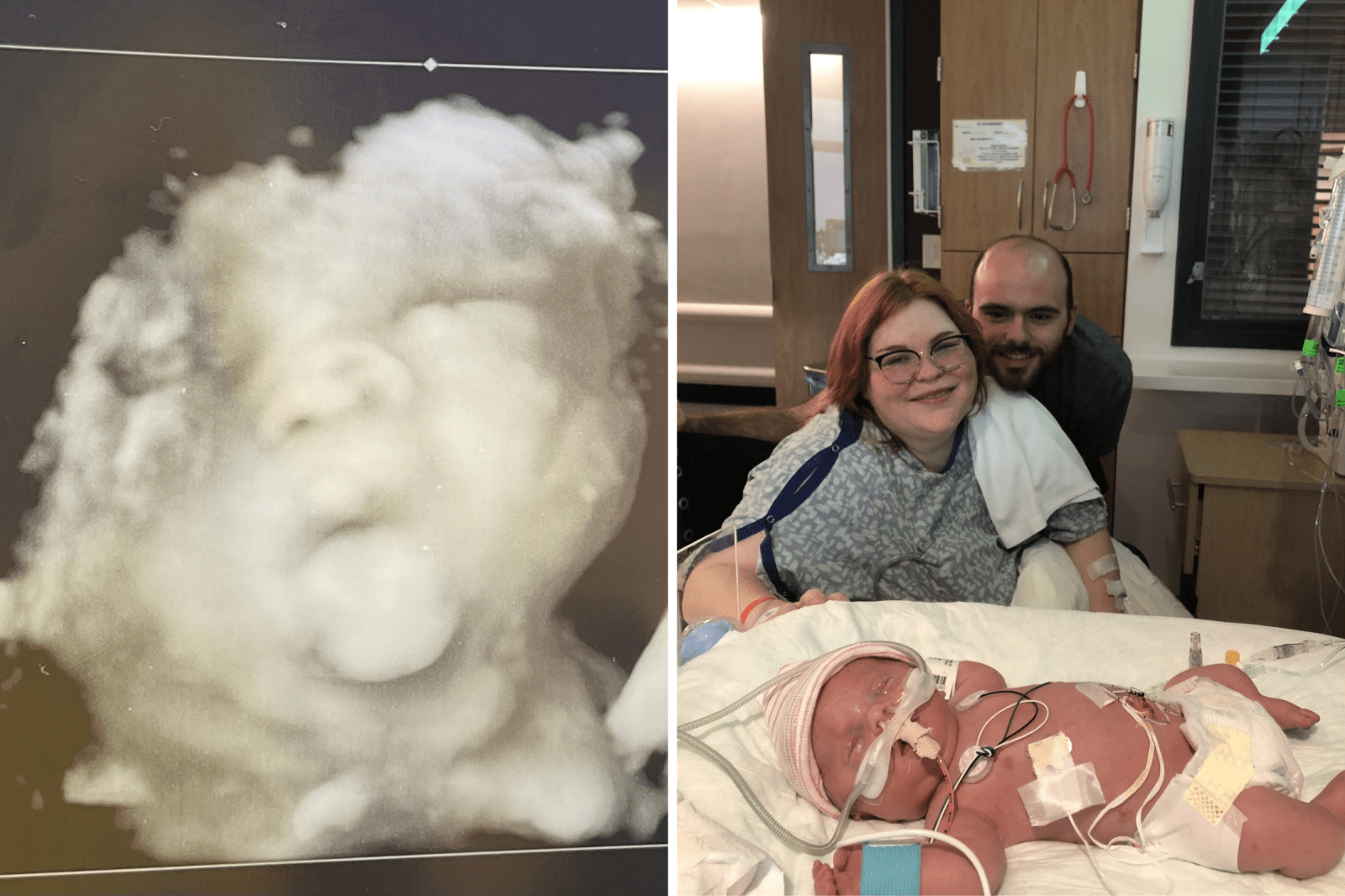
Expecting a third child in late 2024 came with both hope and fear for me. My first pregnancy ended in heartbreak when my baby died in utero at 18 weeks. This time, optimism prevailed, yet uncertainty lingered. During a 20-week anatomy scan, doctors discovered issues with my baby’s bone development. Her limbs lagged four to six weeks behind, and her skull showed a lemon shape.
I approached my OBGYN about the possibility of osteogenesis imperfecta (OI), suspecting it as the cause of my first loss. The doctor, however, believed it was a different skeletal disorder and referred me to a specialist. After further assessment, the specialist confirmed the bone fractures indicated OI, also known as brittle bone disease. The prognosis was grim; termination was strongly advised.
Devastated, I sought solace through prayer and turned to the internet for support. I connected with families affected by OI, gathering stories of those thriving despite the condition. Encouraged, I decided to fight for my daughter as long as she fought to be here.
I found a specialist willing to work with me to give my baby a chance. We planned a unique cesarean section through my previous C-section scar. It was designed to minimize the risk of fracturing her brittle bones. This involved intricate surgical methods to safely bring her into the world.
Doctors Wanted to Wait and See, but for What?
My daughter, Dani, was born on July 7, 2025, with a mutation on the 17th exon of her COL1A2 gene. Her early days involved a fierce struggle, needing pain relief and specialized care. Despite doctors’ hesitation, I insisted on aggressive treatment in the NICU, including oxygen, a feeding tube, and medication for her pain.
Dani’s exact genetic mutation was unfamiliar to the specialists. Diagnosed initially as type 2 OI, she later received a type 3 diagnosis. However, I suspect she might have type 4, which involves growth complications but is less severe.
This condition is hereditary in my family. My first child was lost to OI, Dani suffers from it severely, and a great-grandmother showed similar traits. I myself displayed mild symptoms, having broken three bones and possessing hypermobility.
My older daughter Carolyn, at age 7, shares some of these features. She is very tall but has also displayed hypermobility, already suffering an ankle and hip fracture.
Dani requires constant care and attention. Everything is done with precision, from holding to bathing her. At birth, her bones showed multiple fractures, and she has sustained several since. The fragility extends beyond her bones, impacting her skull and spine, complicating potential physical milestones.
Despite the challenges, she demonstrates resilience and joy. Dani thrives on proving her early critics wrong and finds happiness in small achievements. Developmental milestones are a struggle, but she receives various therapies and utilizes adaptive equipment to assist her growth.
Any sudden move can cause injury, necessitating soft casts at home and strict household rules. Dani’s doctors once predicted her life would be short, yet she lives on, defying their expectations and bringing joy to our family.
We Can See the Sparkle of Joy in Her Eyes
A life with OI can be challenging, but Dani exhibits a spirit and eagerness that defy the grim statistics. Awareness of OI remains limited, and misinformation is common, even among medical professionals. For parents in a similar situation, trust your instincts.
I began this path a skeptic but embraced faith through the process. I prayed for my daughter, vowing to spread love and fight for awareness of OI. Using social media on TikTok (@danis_journey_with_oi), I aim to educate others about this rare genetic condition and share our family’s experiences.