
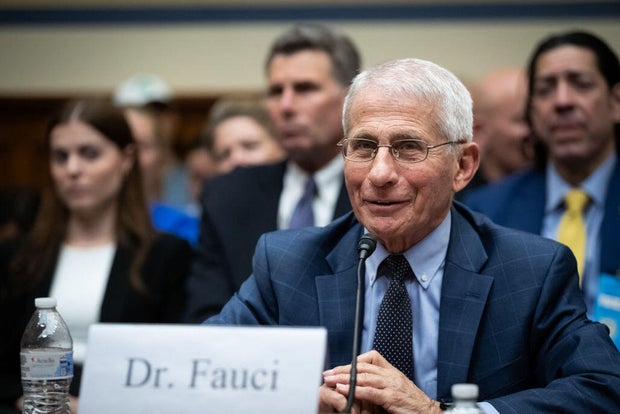
Washington — Republican Senator Rand Paul of Kentucky has made public over a thousand pages of journal entries from Dr. Anthony Fauci. This action precedes what promises to be a heated hearing with the former top infectious disease expert regarding the origins of the COVID-19 pandemic.
Paul, leading the Senate Homeland Security Committee, has called for Fauci’s testimony as part of the ongoing investigation into the coronavirus’s origins. Paul has consistently supported the theory that the virus originated from a laboratory leak at the Wuhan Institute of Virology in China. He has accused Fauci and other officials of misleading the public and Congress about the outbreak’s source.
The journal entries span from December 2019—just before the U.S. declared a public health emergency—through December 2022, when Fauci retired as director of the National Institute of Allergy and Infectious Diseases, a role he held for nearly 40 years.
Many scientists support the theory that the virus naturally emerged from infected bats, subsequently spreading to humans through other species at a Wuhan market. However, the FBI has suggested a ‘lab incident in Wuhan’ is most likely the virus’s source. The CIA released an assessment in January 2025, supporting the lab leak hypothesis but acknowledged it was determined with low confidence.
“We know the market was not the source, it was the amplifier,” Fauci wrote in January 2020. He noted that the virus had jumped from animals to humans but highlighted some experts’ doubts during a conference call about the virus’s natural origin.
Rand Paul criticized Fauci, claiming he presented conflicting messages in public and private. Paul highlighted diary entries as evidence of Fauci’s alleged dishonesty.
Entries from May 2021 reveal Fauci expressing concern over media reports on his views regarding the virus’s origin. He called for a thorough investigation and clarified his belief that the virus most likely originated from an animal reservoir.
A significant portion of Fauci’s diary reflects his interactions with President Trump and other officials. The entries describe the challenges Fauci faced due to the intense public and media attention during the pandemic. Fauci noted the unique relationship he developed with Trump despite controversies.
Fauci’s accounts of his interactions with President Trump included both positive exchanges and more contentious moments. He documented an instance where Trump accused him of economic harm related to the pandemic but later emphasized their mutual respect.
Fauci expressed frustration with Trump’s inconsistent public behavior and remarks, which he felt were often inaccurate. He also described challenges with maintaining a steady public health message amid differing views.
Fauci’s journals touch on his contentious exchanges with Senator Paul, who accused Fauci of complicity in funding research connected to the virus. Fauci consistently denied these claims, asserting that the research in question did not fit the gain-of-function criteria.
“I finished by looking him in the eye and telling him that if anybody is lying here it is he,” Fauci wrote regarding a Senate committee appearance.
Senator Paul’s release of Fauci’s journals underscores ongoing debates about the virus’s origins and the relationship between scientific and political narratives during the pandemic.