
The Democratic National Committee (DNC) is navigating significant financial challenges as the midterm elections draw near. With less than 100 days to go, the DNC’s headquarters in Washington revealed debts exceeding cash reserves by over $2 million. Concerns mount about traditional funding flows to congressional campaign committees, particularly in critical swing districts.
Federal Election Commission documents indicate that as of June, the DNC held $16.3 million in cash versus $18.5 million in debts, resulting in liabilities surpassing reserves by around $2.2 million. In stark contrast, the Republican National Committee (RNC) reported $128.5 million in cash, with no outstanding debt.
The New York Times disclosed that the DNC had requested vendors to defer billing until post-election and informed congressional leaders it wouldn’t proceed with its usual financial transfers to the House and Senate campaign committees. Additionally, approximately $840,000 was spent by the DNC and an affiliated committee on organizations in five non-voting U.S. territories since last year.
Veteran DNC member Donna Brazile highlighted the urgency of addressing these financial issues. She emphasized the need for substantial assistance for DNC Chairman Ken Martin, stating, “Ken needs help — H-E-L-P.” Financial discrepancies also extend to committees directing resources into House races; the National Republican Congressional Committee ended June with $92.7 million, compared to the Democratic Congressional Campaign Committee’s $79 million.
Recent Supreme Court rulings now permit limitless coordinated spending between parties and candidates, raising the stakes over committee reserves in competitive districts. The outcome of fewer than 20 House races could decide control, as noted by The Associated Press.
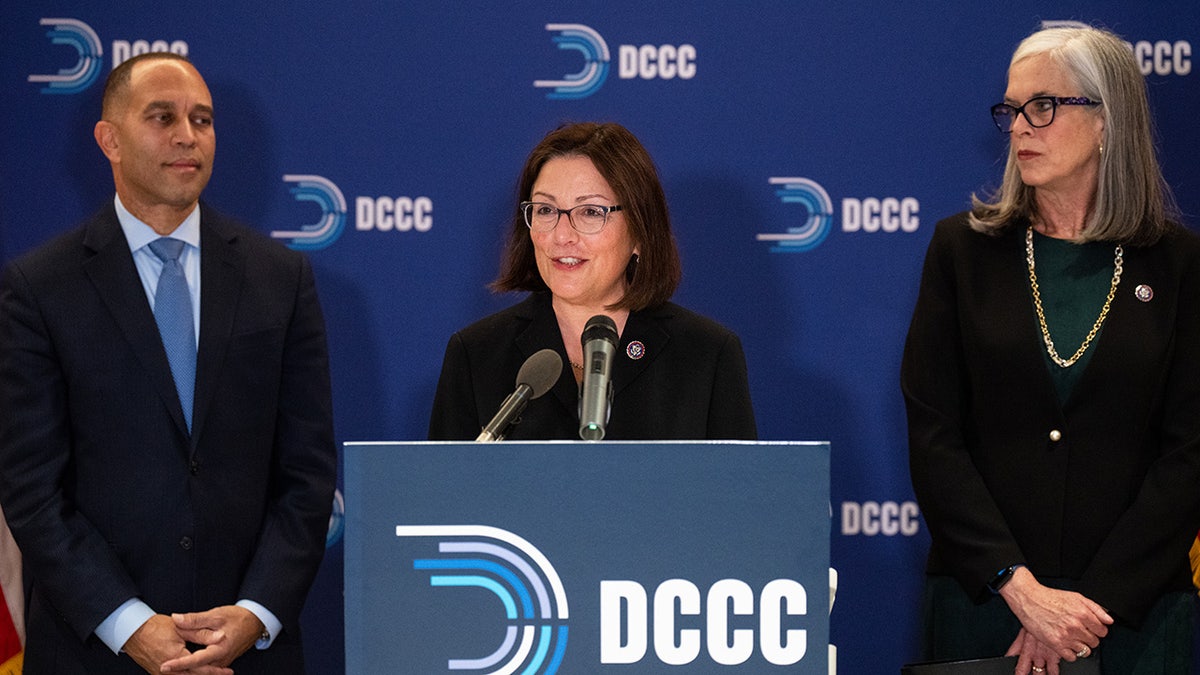
Despite financial challenges, DCCC Chair Suzan DelBene lauded a strong fundraising quarter and Democratic candidate performance. She expressed optimism about the campaigns’ capacity to mobilize support for November, aiming to install Rep. Hakeem Jeffries as House Speaker.
DNC Executive Director Roger Lau refuted claims of financial distress, asserting that vendor negotiations are standard practice. Democrats are focusing on reclaiming House control after Republicans took the majority in 2022, with midterm elections historically posing challenges for the party of the sitting president.
Previous midterms have shown varied results with Democratic overperformance in 2022 maintaining Senate control, although they lost the House. In contrast, Republicans ceded House control in 2018, while Obama’s Democrats faced setbacks in both midterms, losing the Senate in 2014.
The DNC’s investments extend beyond traditional methods. It allocates funds to state and territorial parties under a four-year State Partnership Program, dispersing over $1 million monthly across 57 parties. The initiative includes monthly payments, tech resources, and regional training camps.
DNC Chairman Martin underscores this strategy, promoting local party fortifications, claiming record fundraising achievements by a DNC without White House backing.
Additional scrutiny arose regarding financial maneuvers using headquarters as collateral for a $15 million credit line, a move consistent with prior election cycles. A DNC representative guaranteed transparency saying, “The loan documents were publicly released.”