
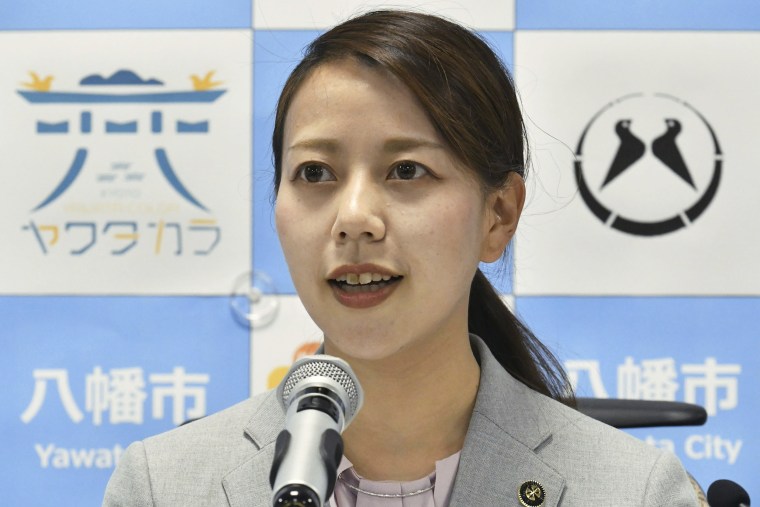
YAWATA, Japan — Shoko Kawata, mayor of Yawata city, marked a milestone by being the first sitting mayor in Japan to take maternity leave on Monday. While her decision has stirred criticism domestically, it has captured international media attention.
Kawata, who became Japan’s youngest female mayor in 2023 at age 33, faced a unique challenge. Though city employees in Yawata are guaranteed 16 weeks of maternity leave, there was no established protocol for a mayoral leave. Kawata took initiative to create one, highlighting the small number of young female mayors in the country.
In an interview with Reuters at Yawata City Hall, Kawata expressed surprise at being the first mayor to take maternity leave, stating, I was very surprised myself to learn that I am the first mayor to take maternity leave. It made me realize that until now there simply haven’t been many young women, or women in general, who have become mayors.
Before going on leave, Kawata participated in a public event on Friday. She joined a street procession for Yawata’s Taiko festival, opting to walk rather than ride the traditional mikoshi due to her pregnancy.
Japan faces challenges in bridging its gender gap, ranking 118th out of 148 countries in the World Economic Forum’s gender gap report, with political empowerment at an even lower 125th place.
Kawata sees the need for reforms, especially as Japan attempts to address its low birth rates. Japanese women have legal entitlement to around 14 weeks of maternity leave with typically two-thirds pay and a birth bonus. Government workers may receive better terms.
She emphasized the importance of creating a society where people in leadership roles feel comfortable having children. People talk about gender equality and work-style reform, but we need to build a society in which people, across all professions, including those in leadership roles, do not hesitate to have children. Otherwise, I believe continual population decline resulting from falling birth rates, and the resulting economic deterioration are inevitable,
Kawata said.
While Kawata received encouragement from colleagues and support from local residents, she faced online criticism amid extensive media coverage. Some people criticized me online, suggesting that I wasn’t doing my job and was just there to take maternity leave. That was disappointing,
Kawata remarked.
Reuters interviewed several Yawata residents who mainly supported her decision, though concerns emerged over full salary payments during her leave. Local resident Chie Fujita, a homemaker, shared her mixed views. I’m a woman, and I’ve given birth myself, so I believe that as a woman’s right, she should be able to take time off when giving birth. However, regarding her salary, I don’t really agree with her receiving 100% of it while she’s on leave,
Fujita expressed.