
Spain’s Second World Cup Victory
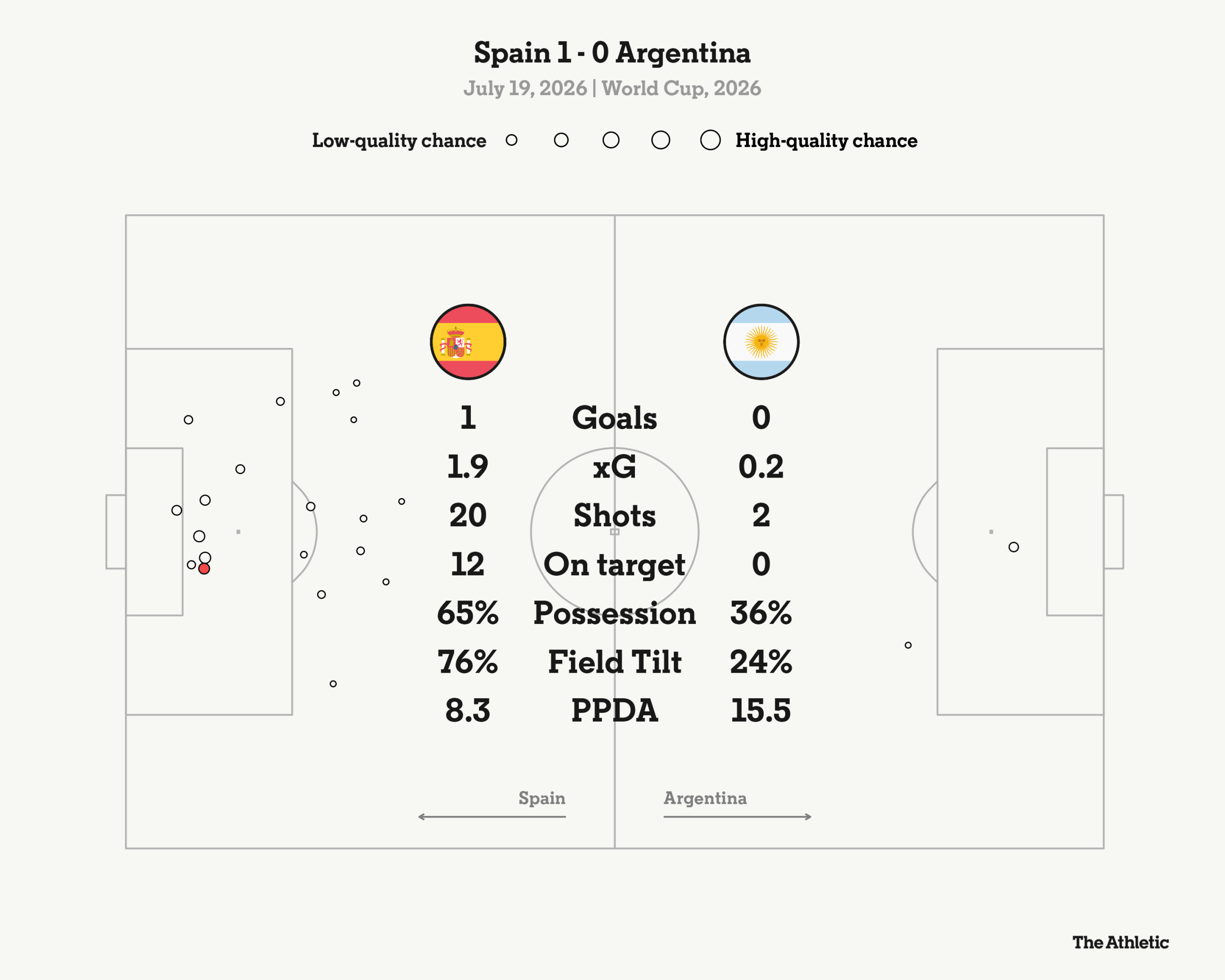
Spain claimed their second World Cup title, defeating Argentina in extra time. Substitute Ferran Torres emerged as the hero for Spain, scoring in the 106th minute. His goal shattered Argentina’s hopes of consecutive World Cup wins. The 39-year-old Lionel Messi had his quietest match, with minimal touches in the first 15 minutes.
Argentina failed to record a shot in the first half, struggling against Spain’s dominance. Despite superior play, Spain only found the breakthrough when Torres completed a well-crafted move. The match included a lengthy half-time show, featuring performances by Madonna, BTS, Justin Bieber, and Shakira.
Argentina’s Struggle
Argentina found themselves at a disadvantage when Enzo Fernandez received a second yellow card. His dismissal came after a reckless challenge on Spain’s Pau Cubarsi. Spain capitalized on their numerical superiority, exerting control throughout the 30 extra minutes. The decisive moment occurred when Torres scored past Emiliano Martinez.
Spain displayed teamwork and resilience, outplaying aggressive opponents and maintaining their defensive strength.
Messi’s Unremarkable Finale
Messi, usually pivotal for Argentina, surprisingly did not influence the match. His reduced involvement mirrored a decade-old experience at the same venue, when he considered retiring from international play. Despite this, his career boasts remarkable achievements, including a World Cup and Copa America victories.
Messi sought a fitting end in New Jersey but faced adversity as Spain stifled his influence.
Post-Match Incidents
Conflicts arose post-match, with Argentina and Spain players clashing on the pitch. Nahuel Molina confronted Spain’s Rodri, escalating the tension. Amid arguments, Eric Garcia and Leandro Paredes engaged in an altercation. Despite attempts to calm the situation, it marked a disappointing conclusion for Argentina.
Fernandez’s Costly Red Card
Fernandez’s actions took a toll on Argentina. Initially cautioned for dissent, he later received a second yellow for fouling Cubarsi in added time. This left Argentina vulnerable, forcing tactical adjustments. Without Fernandez, Argentina had limited options, relying on penalties as their last hope.
Referee Decisions and Match Dynamics
Referee Slavko Vincic’s decision-making influenced the match dynamics. Delayed yellow cards for Alexis Mac Allister and others could have impacted early fouling strategies. Vincic opted for leniency until later, booking Nicolas Tagliafico in the 41st minute.
In major matches, referees balance authority with preserving the game’s flow. Vincic chose caution before sending off Fernandez for his dangerous tackle.
Spain’s Effective Strategy
Spain effectively neutralized Messi, and by extension, Argentina. Dominating possession and relentlessly pressing hindered Argentina’s play. Messi struggled to find space, thwarted by Spain’s high defensive line and rapid pressure.
Rodri’s Dominance
While Messi previously showcased brilliance, Spain’s midfielder Rodri influenced the tournament with exceptional passing and pressing. Integral to Spain’s strategy, Rodri orchestrated plays and maintained control, countering Argentina’s aggressive tactics.
Rodri’s performance highlights his significant tactical and technical impact, solidifying him as a standout player.
Unnecessary Half-Time Show
The World Cup final featured an extended half-time show, a departure from tradition. While entertaining, the 27-minute spectacle interrupted the athletic momentum. Prominent figures like Madonna and Ronaldo added flair, yet it overshadowed the footballing essence.
Future shows should prioritize timing to preserve the match focus.