
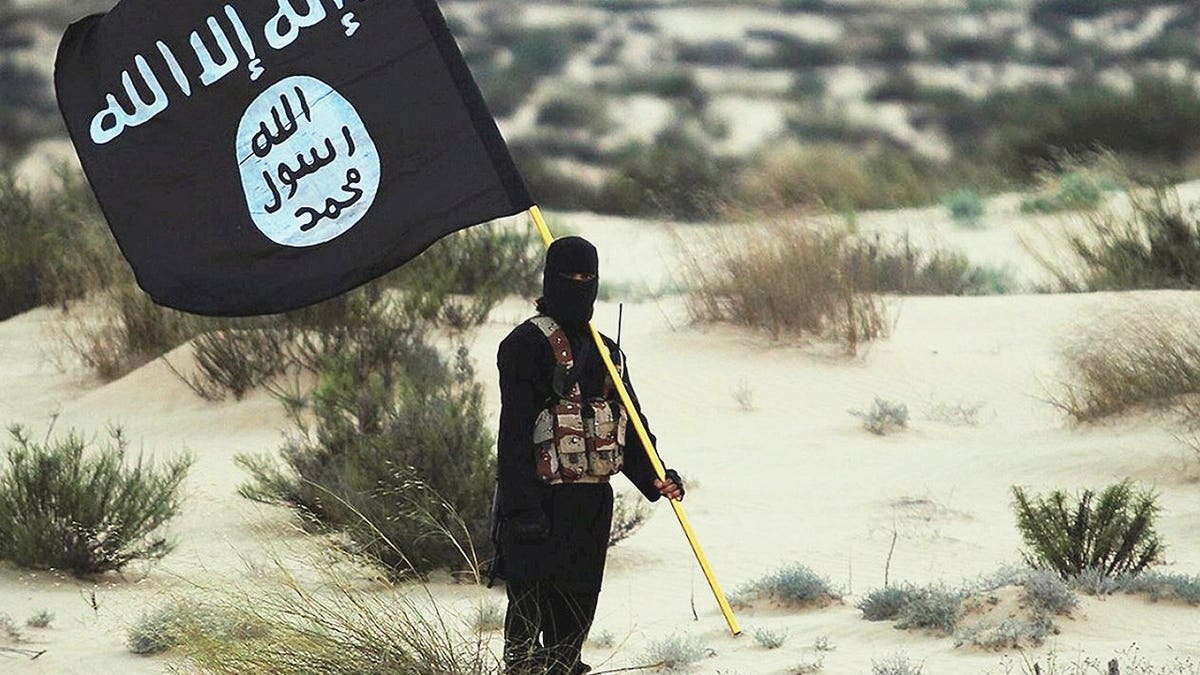
The Islamic State (ISIS) is quietly rebuilding its presence as the United States prepares to complete its military withdrawal from Iraq by the end of September. Dr. Omar Mohammed, a regional security expert, has warned that this situation might create a security vacuum that ISIS could exploit. With the focus shifting to domestic challenges, Baghdad is trying to manage Iran-backed militias, marked as a potential danger zone as ISIS eyes opportunities.
Dr. Omar Mohammed, a counterterrorism expert with George Washington University’s Program on Extremism, stated, “ISIS is waiting actively in the gaps, as it historically always has.” This suggests a looming threat could become significant once U.S. troops vacate Iraq.
Mohammed notes a double challenge looming on September 30—the withdrawal of American forces paired with Baghdad’s attempt to neutralize militia groups like Kataib Hezbollah and Asaib Ahl al-Haq. This could lead Iraq into an unstable phase echoing the period when Mosul fell to ISIS in 2014.
The interplay between militias and ISIS is complex, as each force justifies the existence of the other. Mohammed explained, “Militias claim the ISIS threat to maintain their armament, while ISIS capitalizes on grievances fostered by militants.”
After ISIS captured Mosul—a northern city approximately 250 miles from Baghdad—the Iraqi security forces’ defensive lines crumbled. ISIS built its networks through various means such as assassinations, extortion, and infiltration. This advantageous trail eventually enabled the declaration of its caliphate by Abu Bakr al-Baghdadi.
In response, Dr. Mohammed initiated “Mosul Eye,” a covert blog mapping life under ISIS. This offered vital intelligence support to American forces. As the coalition recaptured Mosul in July 2017, these efforts were critical.
Following the conclusion of the U.S. combat mission in 2021, ISIS persisted in some areas within Iraq and Syria. Approximately, the number of ISIS combatants has risen from 2,000 to nearly 10,000 post the collapse of Bashar Assad’s government in 2024.
The Popular Mobilization Forces (PMF), an integrated component of Iraq’s security, remains active despite ISIS’s territorial defeat. Mohammed estimates PMF’s strength at about 238,000 members with extensive funding and ties to Iran, showing a complex armament picture challenging Baghdad.
Also, Iran’s involvement plays a critical role as Iraq grapples with faction stability inside state authority limits. Mohammed remarked that Iran’s strategic valuation has become more significant due to recent U.S. strikes against proxy networks. Iran watches how shifting power dynamics and military decisions could shape future regional stability.
With more focus on upcoming situations post-September, Mohammed’s insights highlighted a broader issue. “Mosul fell not due to strong ISIS forces,” he remarked, “but amidst widespread neglect in monitoring factors that could have mitigated risk.” This suggests an evaluation of vigilance and strategic planning during withdrawal phases.
Iraqi Prime Minister Ali al-Zaidi’s meeting at the White House drew criticisms from Tehran. The event announced the remaining U.S. troops’ departure despite strategic concerns from Iran leadership.
Dr. Mohammed reiterated that Iran’s ambitions and influence hang in balance, especially against how Baghdad conducts disarmament. He expressed anxiety about the outcome of ISIS’s potential rise or stabilization relative to Iran’s interests, emphasizing the impact after American forces pull out.