
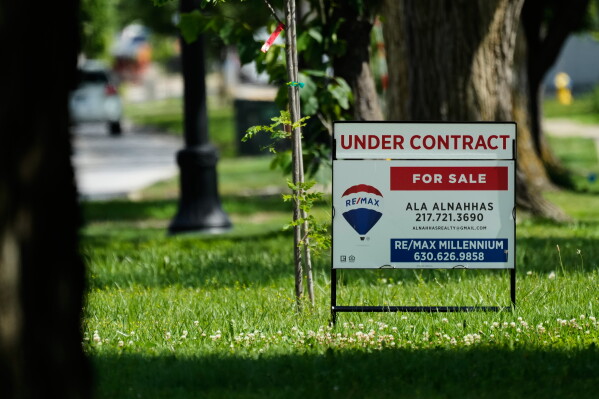
The average long-term mortgage rate in the U.S. increased this week to its highest level in almost a year, impacting borrowing costs for homebuyers. Freddie Mac reported that the 30-year fixed-rate mortgage rose to 6.55% from 6.49% the previous week. Last year, the rate was 6.75%.
Higher mortgage rates mean additional monthly expenses for borrowers, reducing purchasing power amid ongoing affordability challenges for potential homeowners. Mortgage rates are influenced by factors like the Federal Reserve’s interest rate decisions and bond market expectations for the economy and inflation. Typically, they align with the 10-year Treasury yield, which helps lenders determine home loan pricing.
This year, mortgage rates have increased as crude oil prices surged due to the conflict with Iran, raising inflation expectations. This has resulted in higher long-term bond yields compared to pre-conflict levels in late February, pushing mortgage rates upward.
As of midday Thursday, the 10-year Treasury yield was 4.57% on the bond market, up from 4.54% a week prior. It was 3.97% late February before the conflict began. Currently, the 30-year mortgage rate is the highest since August 28, when it was 6.56%. In late February, the rate briefly dipped below 6%, marking the lowest point since late 2022.
Borrowing costs on 15-year fixed-rate mortgages, favored by those refinancing, also increased this week, rising to 5.93% from 5.82% the previous week. A year ago, the rate stood at 5.92% according to Freddie Mac.
This week’s report showed consumer prices for gas, clothes, and other goods decreased last month, potentially reducing pressure on the Federal Reserve, which might consider interest rate changes. Although the Federal Reserve doesn’t set mortgage rates, its short-term rate decisions influence bond investors and can affect 10-year Treasury yields.
“The cooler inflation reading is encouraging, but without a drop in mortgage rates, buyers still face high borrowing costs even as other conditions improve,” noted Hannah Jones, a senior economist at Realtor.com.
Despite being lower than last year’s rates, the upward trend has affected home sales. Recent data on pending home sales indicates possible sluggishness in summer transactions. The National Association of Realtors stated pending sales dropped 5.4% in June from the previous month and 0.3% from June last year. This data, reflecting a lag between contract signing and sale finalization, serves as a near-term housing market indicator.
Mortgage application data further points to caution among homebuyers due to rising rates. The Mortgage Bankers Association reported a 2.7% decrease in applications last week, primarily due to a 7% decline in home purchase applications.