
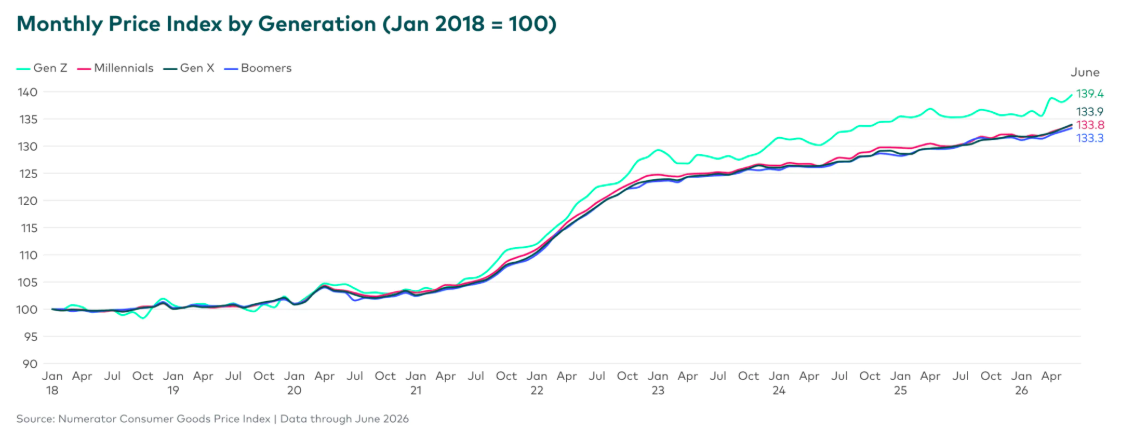
Generation Z is confronting inflation more intensely compared to other generational groups, according to recent data from Numerator, a consumer data and tech firm. The company’s June 2026 Consumer Goods Price Index revealed that individuals born between 1997 and 2012 encountered a 39.4% increase in prices for common household items since January 2018. In contrast, the national average increase for other generations is 33.8%.
Paul Stanley, Numerator’s senior economist, discussed with Newsweek the complex factors contributing to higher inflation rates among Gen Z and low-income consumers. He pinpointed quick-service restaurant inflation as a significant factor. These consumers are likely to spend more on quick-service eateries, where prices have surged by 54% compared to the national average of 33.8%, significantly affecting their inflation experience.
Stanley further noted that low-income consumers face added hurdles as they tend to shop at value retailers and purchase private label brands. This shopping preference constrains their options to mitigate rising costs.
Additional remarks from Hakan Yilmazkuday, an economics professor at Florida International University, affirmed the financial challenges faced by Gen Z. He praised the data’s basis on verified household transactions, which offers a more accurate depiction of these consumers’ struggles compared to general population inflation.
The current situation intensifies Gen Z’s financial stress, impacting personal relationships as evidenced by reports. LendingTree indicates rising reliance on personal loans to manage daily living expenses amidst worsening affordability issues.
The situation is compounded by escalating food prices, attributed to a strong El Niño in the Pacific. Organizations like the World Meteorological Organization and NOAA predict continued price hikes.
Gen Z’s Dining Habits Amplify Inflation Exposure
Gen Z, who are now aged approximately 14 to 29, exhibit specific spending habits that heighten their vulnerability to inflation. Menumiz, a restaurant management app, reports they dine out more frequently than other generations, with 71% intending to further increase this habit through 2026. Notably, Gen Z’s expenditure per meal averages $51 for dine-in and $36 for takeout, more than any other age group.
As dining costs rise consistently, reported by the National Restaurant Association to be increasing monthly by 0.2%, Gen Z users are acutely exposed to inflation’s effects.
Yilmazkuday adds that Gen Z is more susceptible due to their specific buying patterns across categories like groceries, household goods, and personal care items. Despite general retail adaptations during price hikes, such as brand switching or downsizing, Gen Z shows less flexibility, continuing to endure elevated costs.
Rising Costs of Everyday Goods
Numerator’s June 2026 Consumer Goods Price Index highlights a continuation of rising prices for household purchases over three months, with a recent 0.70% rise in June, following increases in April and May. Compared to the previous year, prices rose 3.4%.
Analysts cite decreasing gas costs as offering minimal relief; inflation persists, especially burdening lower-income households.
Numerator derives its insights from 200,000 U.S. households using the Receipt Hog app, which tracks spending and price changes across common categories excluding major expenses like housing and healthcare. It employs a Fisher Price Index method, highly correlated with official measures such as the government’s PCE Food & Beverage index.