
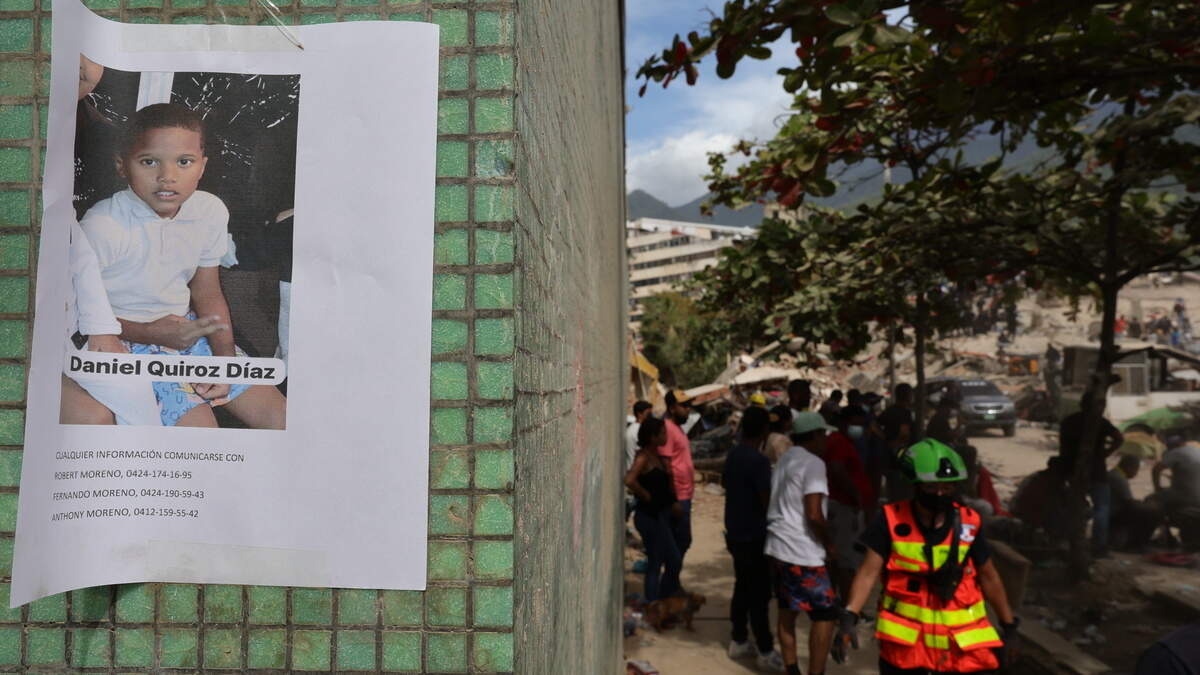
An image of a missing child on a wall reflects the devastation after a magnitude 7.2 earthquake struck Venezuela and other regions in the Caribbean on June 28, in Carabellada, La Guaira, Venezuela. Over 3,500 people have died in Venezuela, with thousands still missing, raising questions about the catastrophe’s roots.
Many angry Venezuelans blame their government for mishandling the disaster. Years of governance under Hugo Chávez and his successors contributed to a humanitarian crisis marked by leftist policies and economic control. This situation led to the exile of nearly 8 million people and left many residents to search the rubble for loved ones without aid.
Scrutiny has increased on government-constructed apartment complexes that collapsed during the earthquakes on June 24. Concerns about construction quality, often highlighted by residents and experts, appear justified. In Caraballeda, a collapsed public-housing building revealed white Styrofoam mixed with concrete.
Public housing in La Guaira, part of the Misión Vivienda project, experienced significant casualties. This initiative began in 2011 under Chávez, using oil revenues for rapid construction without sufficient public disclosure. Even before the earthquakes, some buildings were demolished due to poor construction.
Venezuelan news outlet El Estimulo reported in 2017 that Misión Vivienda lacked transparency in materials and investments. Delcy Rodríguez, acting President of Venezuela, claimed most collapsed buildings weren’t state-built, a claim contested by many. Under Chavismo, accountability remains scarce.
The Venezuelan government still praises Misión Vivienda for building over 5.5 million homes. Yet, Venezuelans, especially in South Florida, criticize Chavismo’s rise for economic and social decline, highlighting corruption issues within undemocratic regimes.
The potential link between substandard housing and deaths demands attention. If true, this situation presents a disaster exceeding a natural calamity.
Background on Editorials
Editorials are opinion pieces reflecting the Miami Herald Editorial Board’s views. This board operates separately from the newsroom to provide community thought leadership on local and state issues. The board includes opinion editor Amy Driscoll and editorial writers Isadora Rangel and Mary Anna Mancuso.
Op-eds differ from columns in being authored by non-board contributors. The board decides topics to address through daily meetings and detailed reporting. This editorial aims to promote justice and fairness in economic, educational, and social opportunities.