
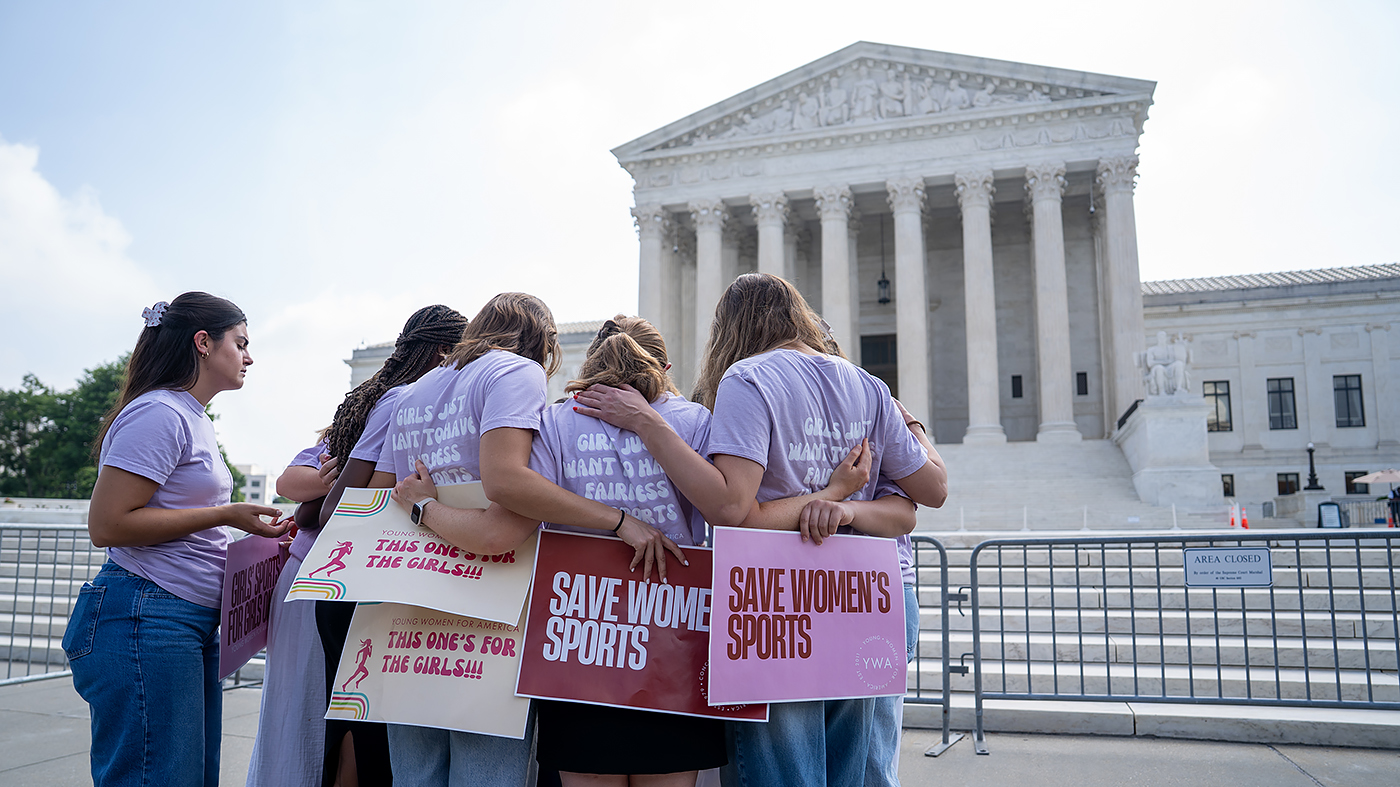
The Supreme Court recently delivered important rulings in favor of protecting women’s rights in sports. On June 29, 2026, the court ruled in State of West Virginia v. B.P.J. and Little v. Hecox cases, affirming that there are biological differences between men and women. This unanimous decision supports the principle that men cannot compete as women and upholds states’ rights to enforce sex-specific sports protections under Title IX.
Title IX is a federal law designed to ensure equal opportunities for women in education. The court’s decision was unanimous at 9-0, supporting state efforts to protect female athletes. Additionally, in a 6-3 ruling, the court determined that the Equal Protection Clause of the 14th Amendment supports these protections as well.
Concern arose regarding how society reached a point where such a basic concept needed validation from the highest court. Several organizations, including Alliance Defending Freedom, with support from Idaho Attorney General Raul Labrador and West Virginia Attorney General JB McCuskey, defended laws that prioritize protection for women’s sports. These laws recognize inherent differences in strength, speed, muscle mass, and physiology between sexes.
Despite these biological truths, there are challenges against protections arising from gender ideology. Such challenges have impacted athletic fields and locker rooms, undermining biological realities that these policies were supposed to protect. A notable example involves B.P.J., a male student who competed in women’s high school track-and-field events, affecting opportunities and scholarships for many young women. In a recent event, B.P.J. claimed victory in the women’s state shot put championship. In another case, B.P.J. reportedly used inappropriate language against a teammate, leading to the departure of Adaleia Cross from the sport.
Organizations, including Alliance Defending Freedom, represent young women like Kallie Keeler, who sued Washington state officials after an incident involving sexual assault by a male opponent. These cases highlight the risks involved when gender perceptions override biological truths.
At first, institutions ignored biological realities, assuming personal gender feelings could replace them. These actions led to regulations that created confusion around key terms like “sex” and “woman,” which affected not just sports but broader societal protections. Navigating this confusion, lower courts struggled to address the rights of women appropriately.
During Supreme Court hearings, attorneys faced challenges in defining core terms, exposing weaknesses in their cases. Had the court sided with them, the repercussions would extend beyond sports, affecting locker rooms, restrooms, and similar facilities.
“How can a legal system that cannot define ‘woman’ be expected to protect women?”
The court’s agreement to allow states’ protection of women’s sports through Title IX emphasizes the importance of adhering to truths about gender. This ruling works as both a protective measure and a reminder.
With 23 states still lacking laws to secure girls’ sports rights, immediate action becomes crucial. It ensures that girls have fair chances in sports. The ruling indicates that while the law validates truth, its application remains the pressing matter.
The narrative supports that the protection of women’s rights in sports should not be a debatable topic.
Kristen Waggoner holds the position of CEO, president, and chief counsel at Alliance Defending Freedom.